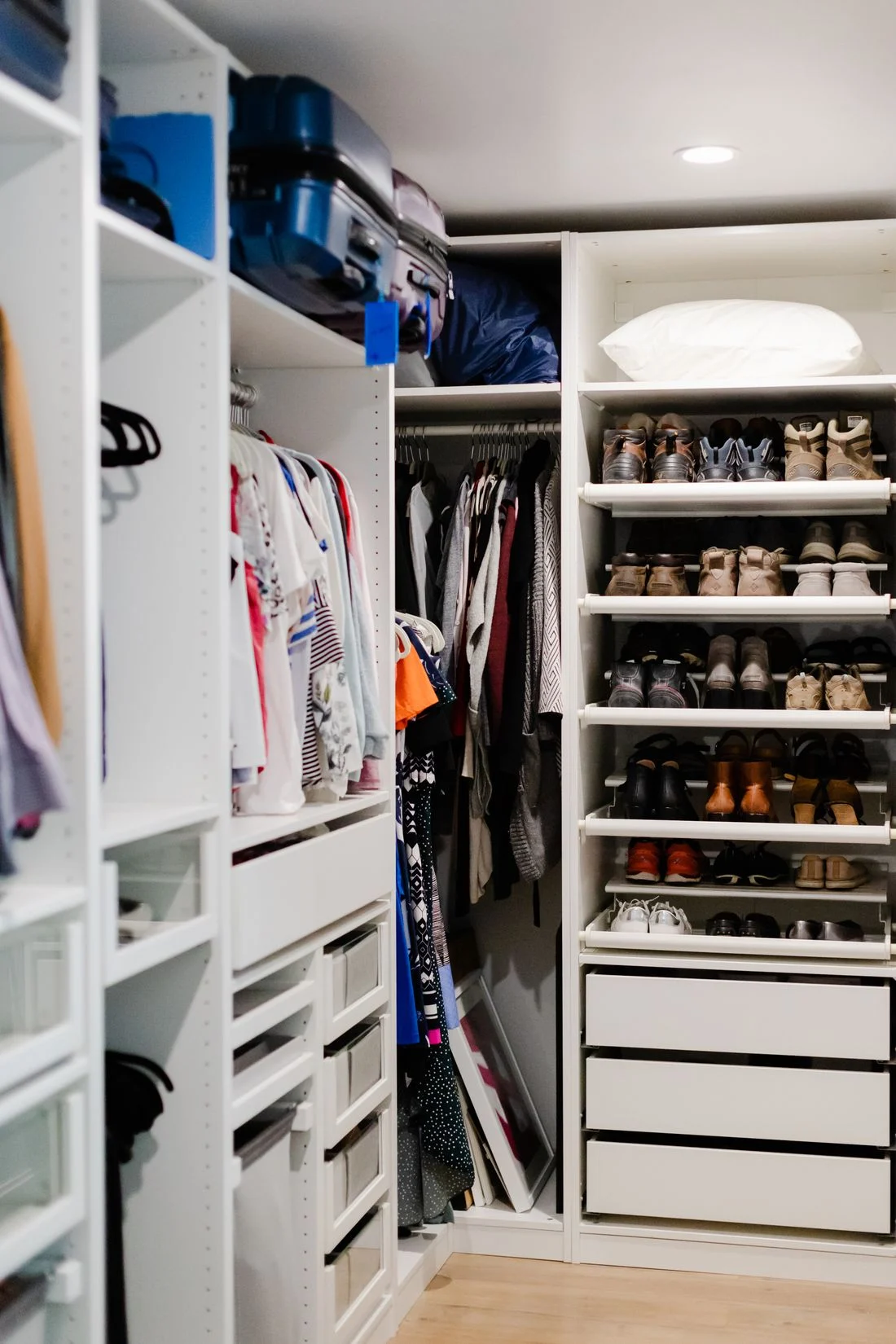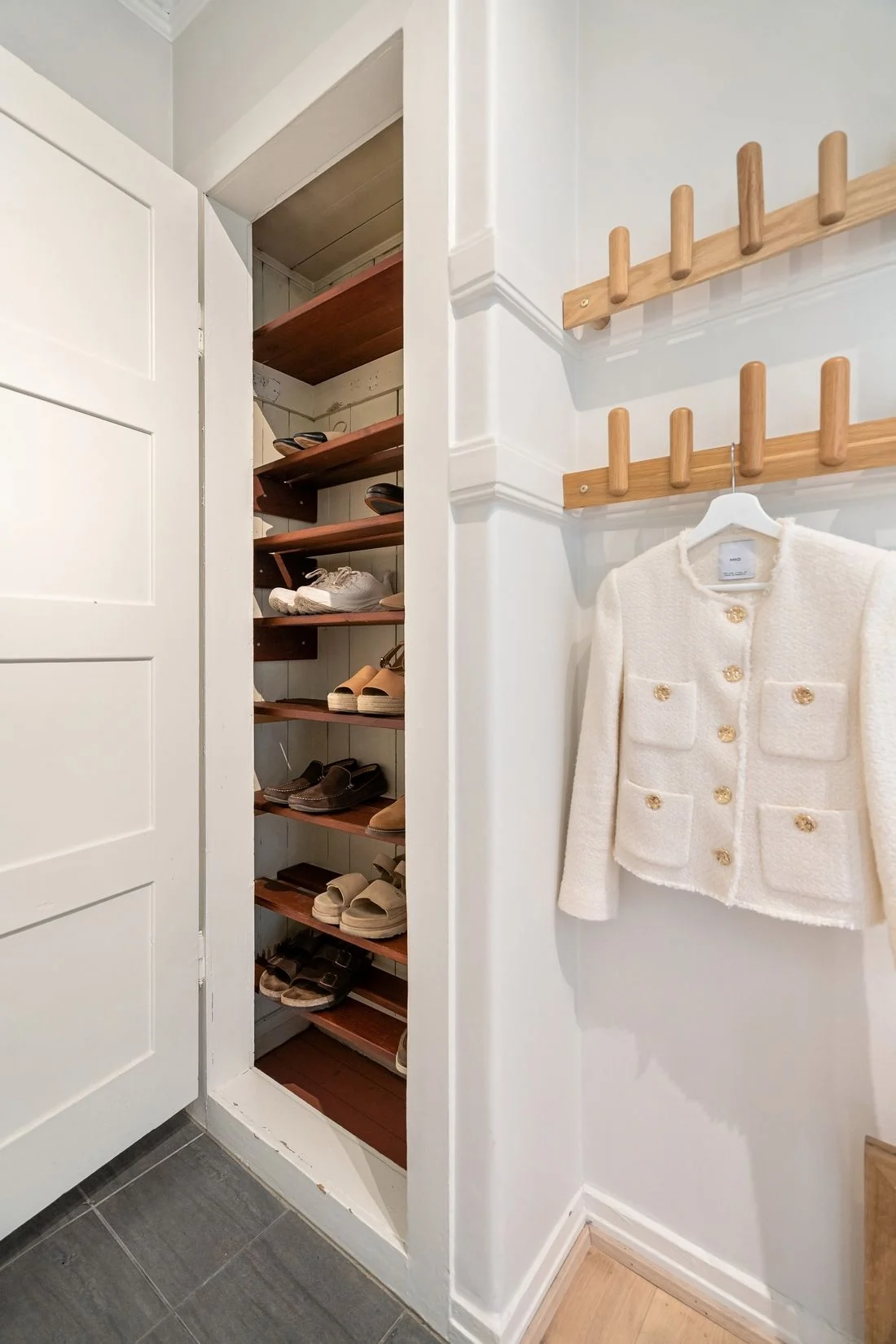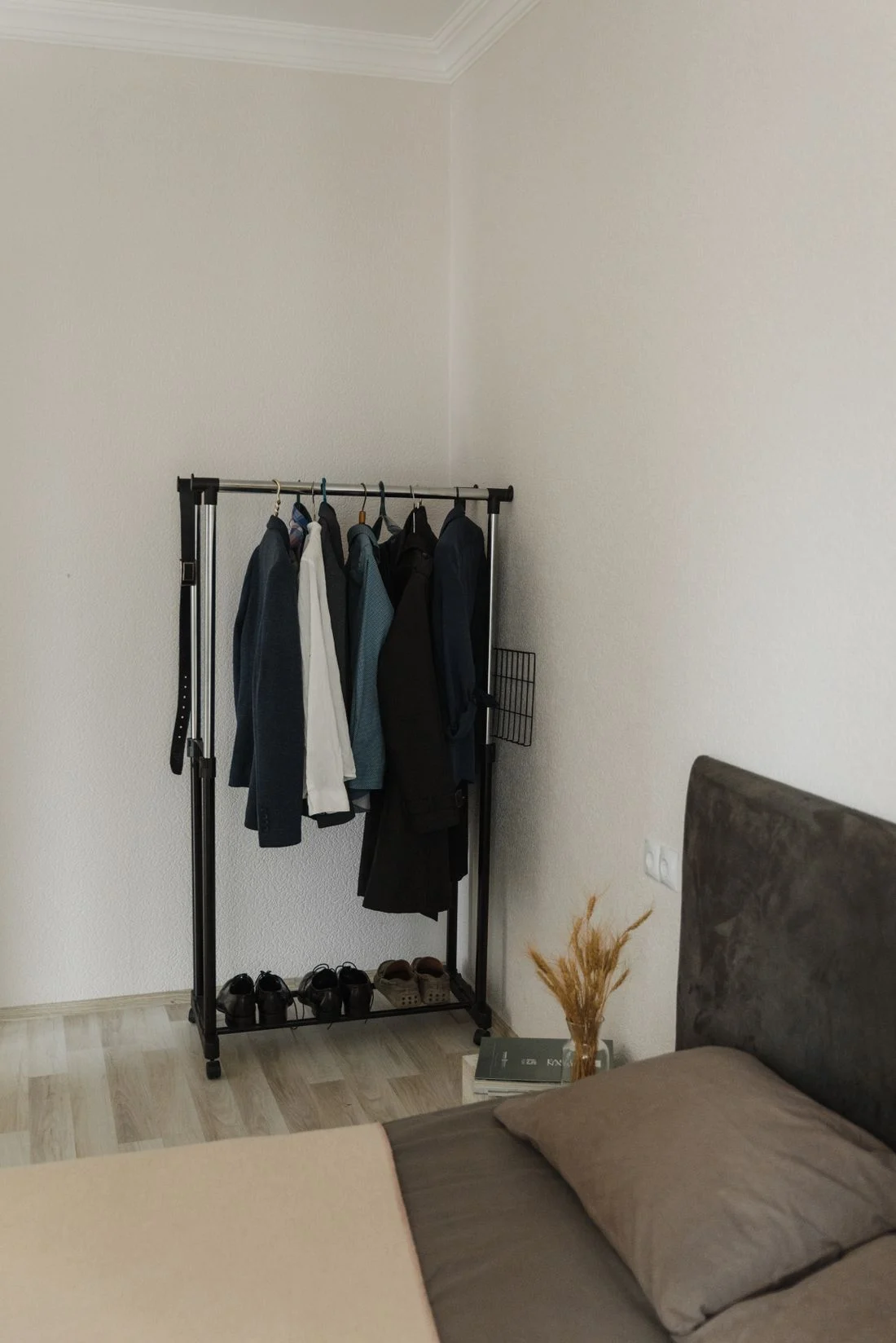
An open garment rack brings clothing into the room's visual composition. That can be useful in a small apartment without a built-in closet, but it also means that every shopping bag, spare hanger, and laundry pile is on display. Choose a rack because you need accessible hanging space, rather than because an empty one looks elegant in a photograph.
Allow for the clothes around the frame
The stated width is only part of the footprint. Jackets project in front of and behind the rail, long coats need floor clearance, and a wide base may prevent the unit from sitting close to a wall. Hang a bulky garment on an existing hanger and measure its depth. Then mark the occupied space on the floor with removable tape.
A rack beside a bed should leave the route to the bed and bedroom door clear. Avoid placing clothes against a radiator or where they interfere with vents. A wheeled model is helpful only if there is somewhere useful to roll it; wheels do not make a crowded floor plan disappear.
Choose one job
A rail for tomorrow's clothes needs much less capacity than a substitute wardrobe. For the first purpose, keep a small rotation and return everything else to enclosed storage. For the second, plan separately for folded knits, underwear, and accessories. Trying to hang every category usually makes the rail harder to navigate.
Check the manufacturer's load rating and assembly requirements. A lower shelf can hold shoes or a light basket, but it should not become a platform for heavy boxes unless the product is designed for them. Adjustable rails need secure locks at the selected height. Inspect these details rather than judging stability by the thickness of the photograph's frame.
Let repetition quiet the view
Using compatible hanger shapes creates a more orderly line without requiring an all-neutral wardrobe. Group clothes by type so you can find them quickly, and avoid buying decorative garments just to make the rack match the wall. A plain basket beneath the rail can hide a small accessory category while keeping the floor legible.
Because this storage is exposed, include the rail in your ordinary room-cleaning routine. If dust, daylight, or visual busyness makes you reluctant to use it, a covered wardrobe may be the better fit. Open storage should reduce the steps between wearing and putting away, not add a daily styling task.