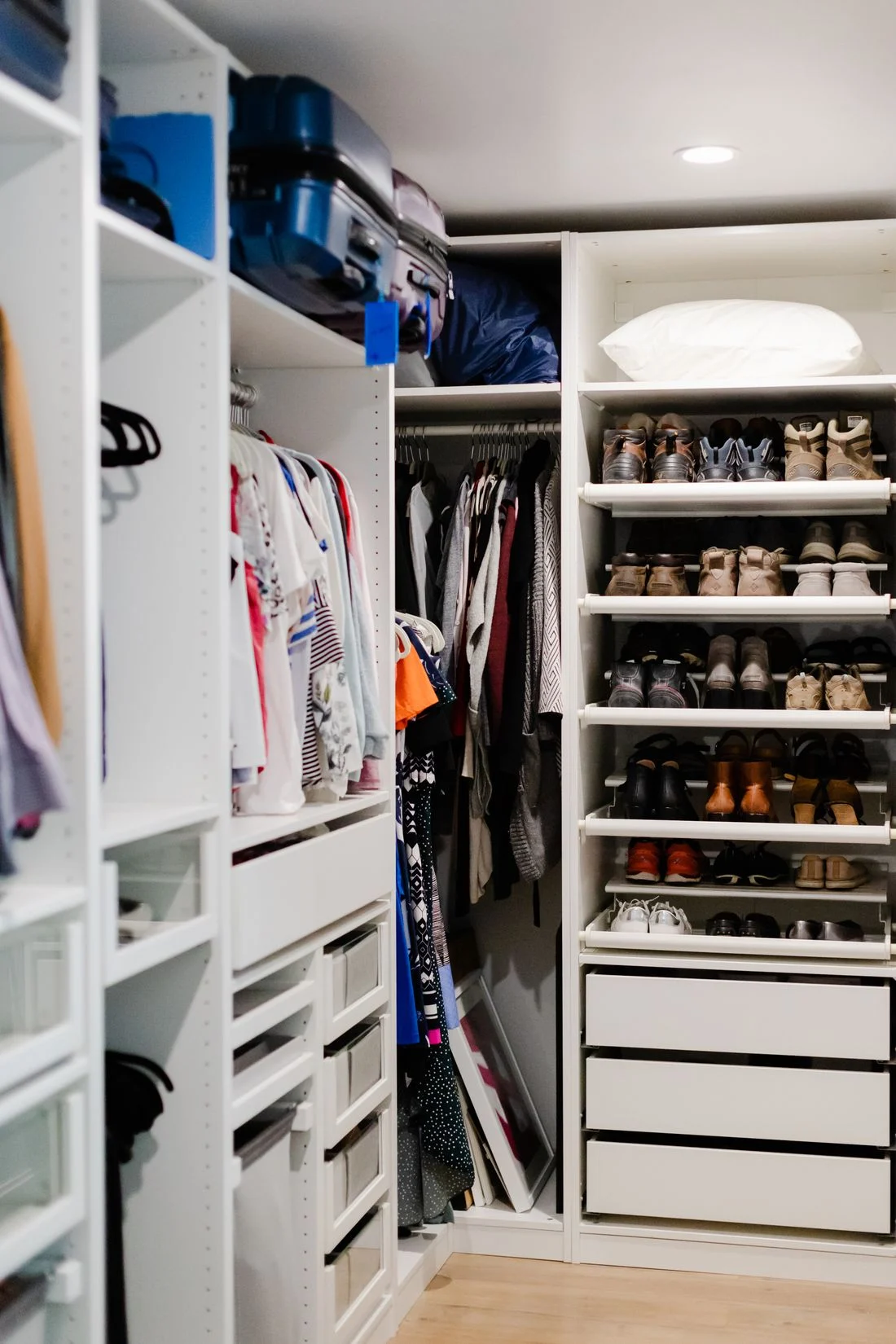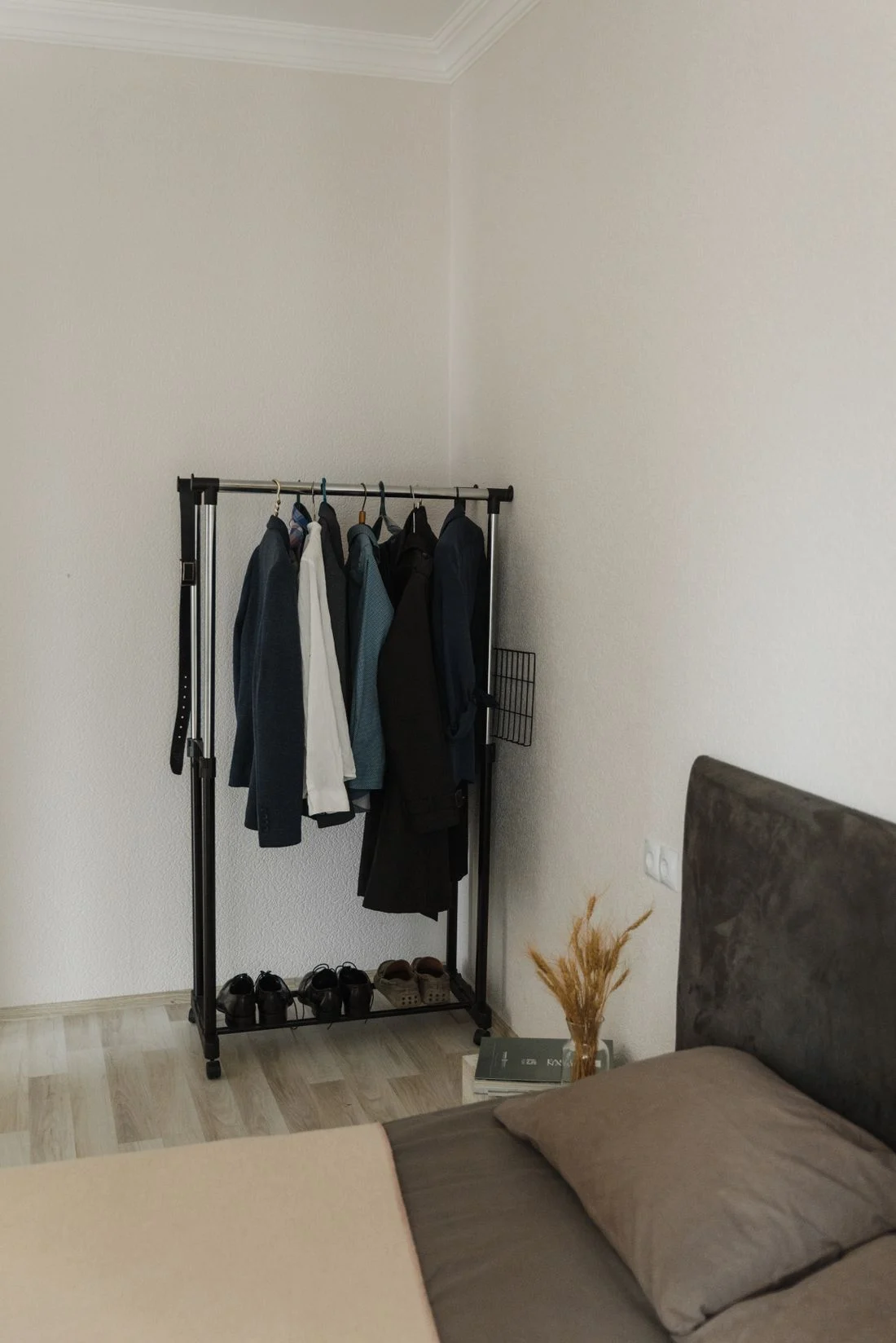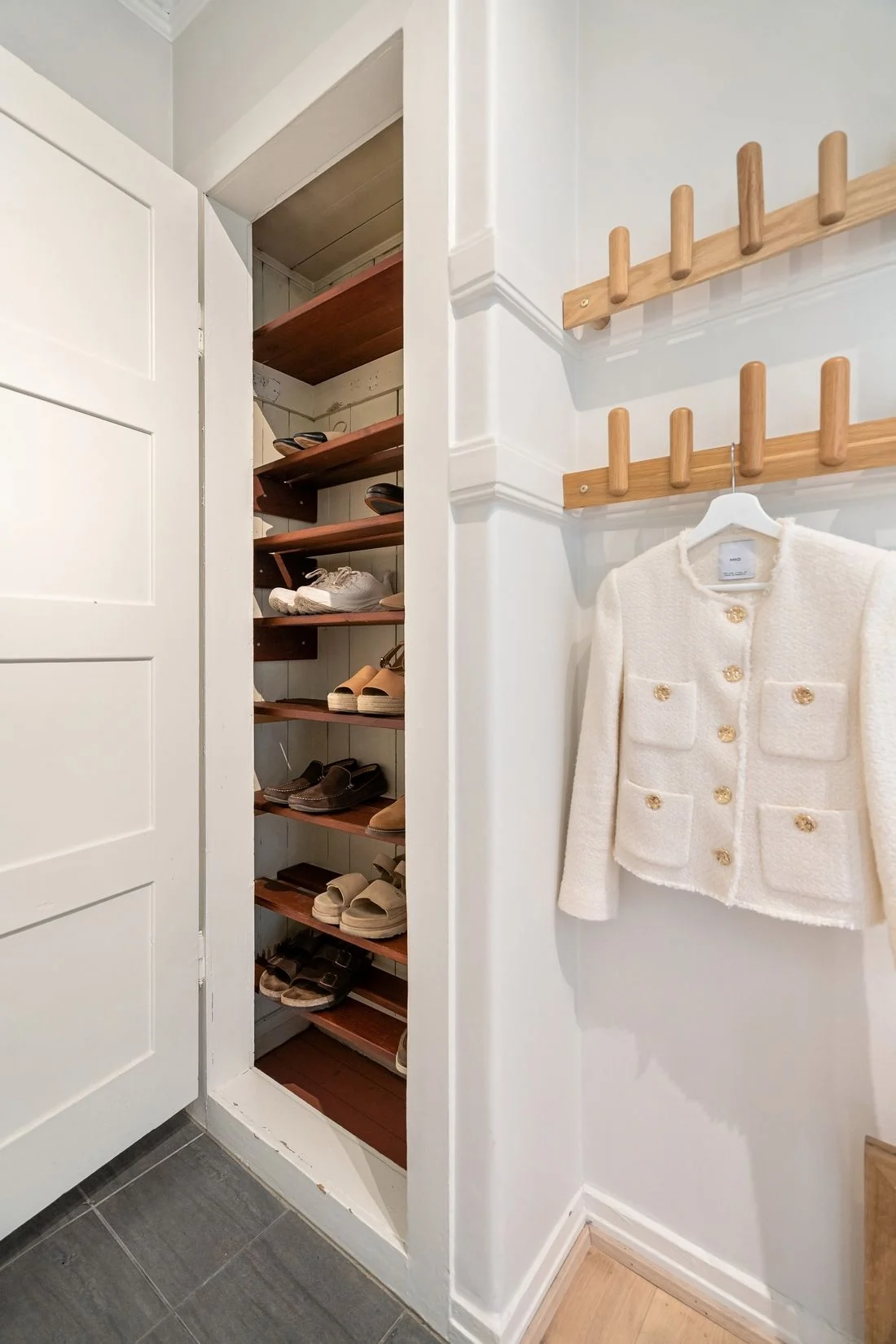
The best-looking hanger set may be the wrong one for half the closet. A narrow top, a structured jacket, and a heavy knit ask for different support. You can create a coherent rail with a few compatible types while choosing each for the garment it holds.
Start with the clothes that repeatedly slip, crease, or stretch out of shape. Those failures tell you more than the number of hangers you own. Put a problem garment on a different existing hanger before buying a large replacement set, and check the garment's own care instructions when hanging or folding is in question.
Three details to compare
First, compare shoulder width. A hanger that extends beyond a garment's shoulder can leave protruding points; one that is much too narrow offers little support. Wider, shaped shoulders suit many tailored jackets, while a slim shirt usually does not need that much structure.
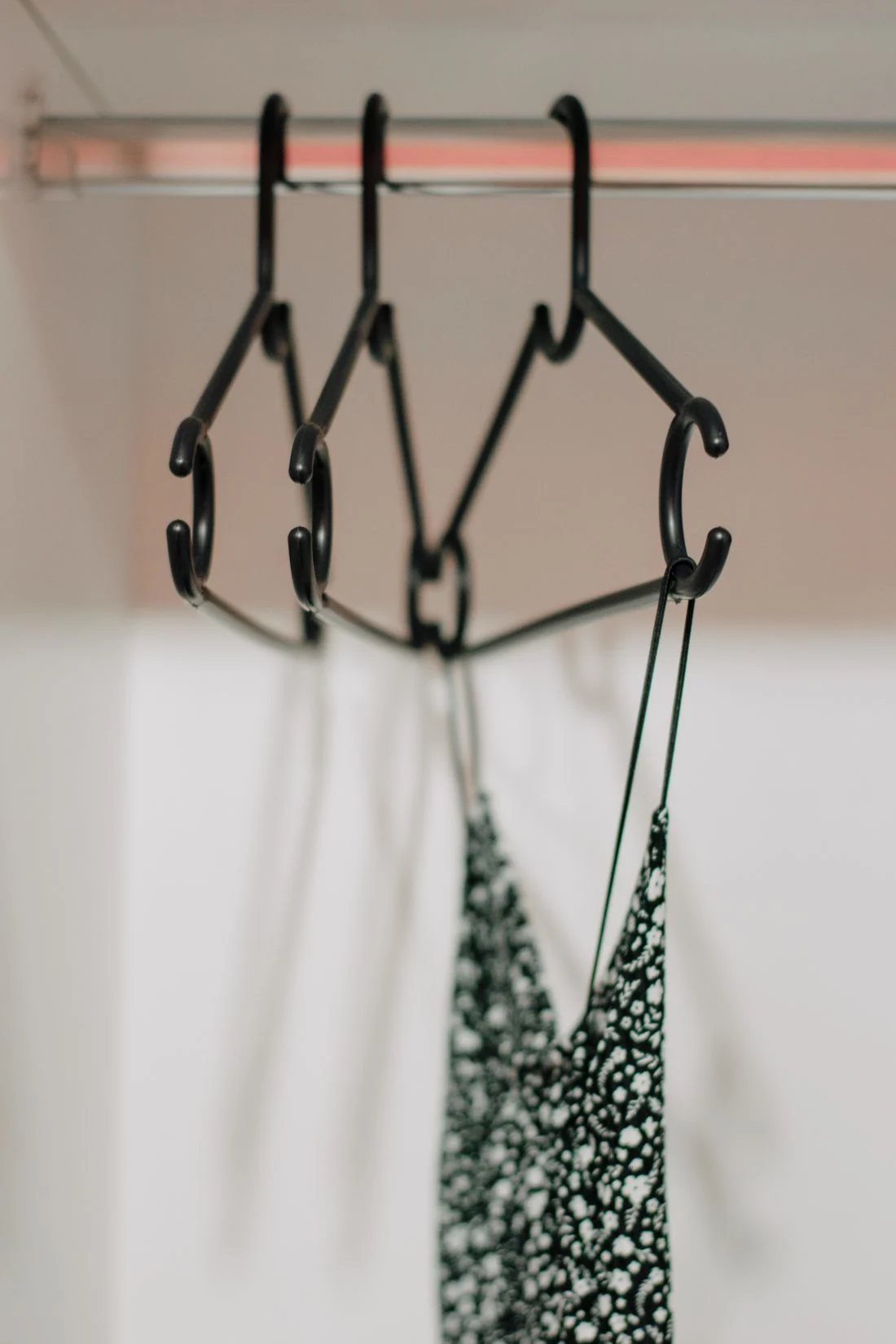
Second, look at how the garment stays in place. Notches can hold narrow straps, clips can support skirts or trousers, and a textured surface can reduce sliding. Test clips on an inconspicuous area if pressure marks are a concern. A gripping surface that grabs delicate fabric too aggressively can make dressing more frustrating.
Third, consider the hook and rail together. Some hooks rotate, others do not. A thick hook may not fit a compact rack, and a hanger's advertised slimness does not account for the clothing around it. Keep enough room to move items sideways without scraping them past neighboring shoulders.
Keep exceptions intentional
Fold garments that are better supported on a shelf, particularly items whose weight pulls them out of shape when suspended. Reserve padded or shaped hangers for the clothes that benefit from them. There is no need to force trousers, jackets, and camisoles onto the same profile for the sake of a matching photograph.
Store spare hangers together at one end of the rail instead of leaving them scattered between outfits. Limit the reserve to what you use when laundry returns. Empty hangers can disguise how much clothing space is actually available.
When replacing a set, change one clothing category first. After several laundry cycles, you will know whether the grip, shape, and spacing work. Keeping a useful older hanger is preferable to replacing it with an attractive one that makes a favorite garment harder to wear.