A shoe organizer with thirty compartments is not necessarily useful for thirty pairs. Tall boots, broad sneakers, and slim sandals occupy very different shapes. Begin by lining up the pairs you want to store, with both shoes together, and measure the largest ones. This avoids buying a tidy grid that accommodates everything except your actual footwear.
Separate arrival storage from the collection
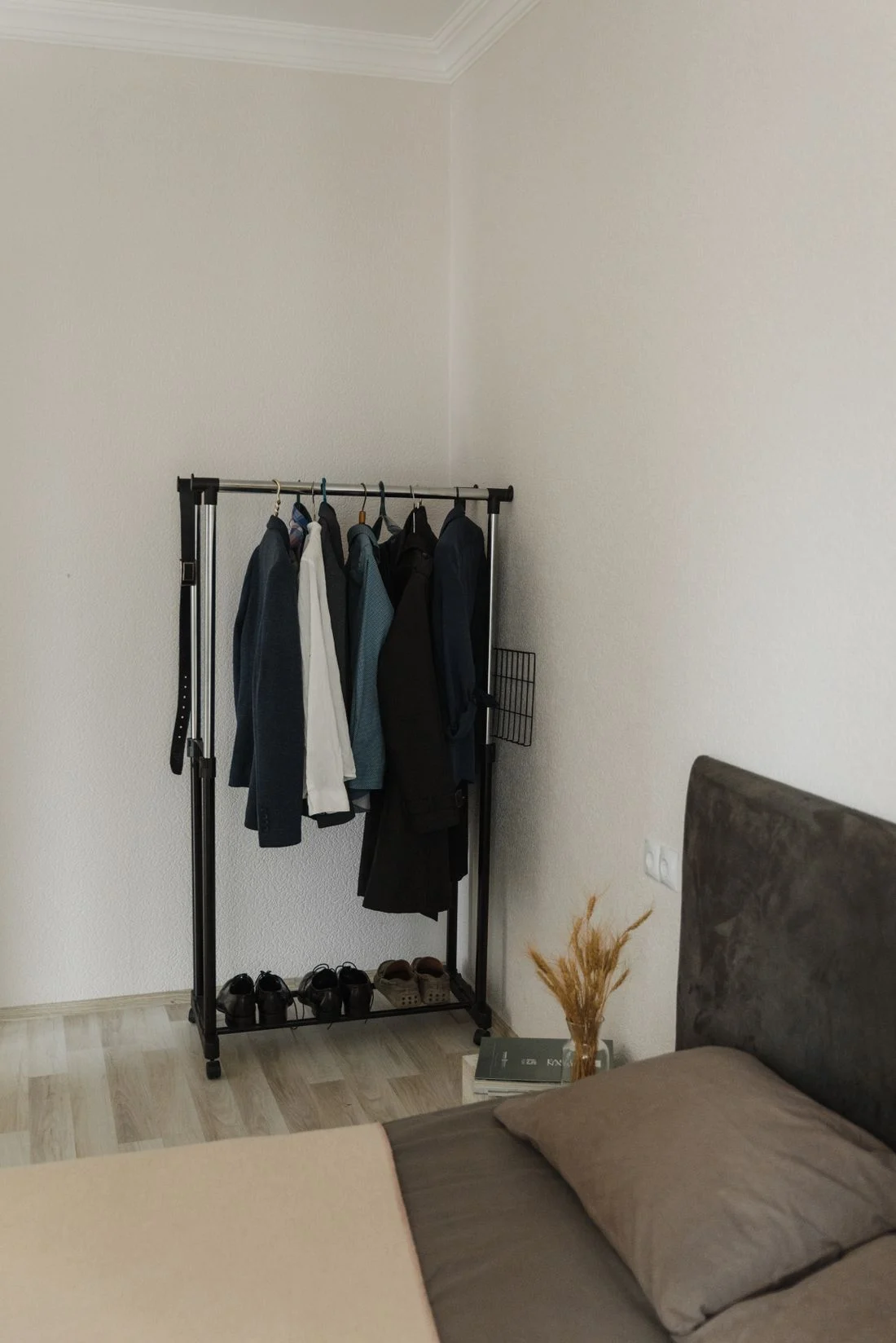
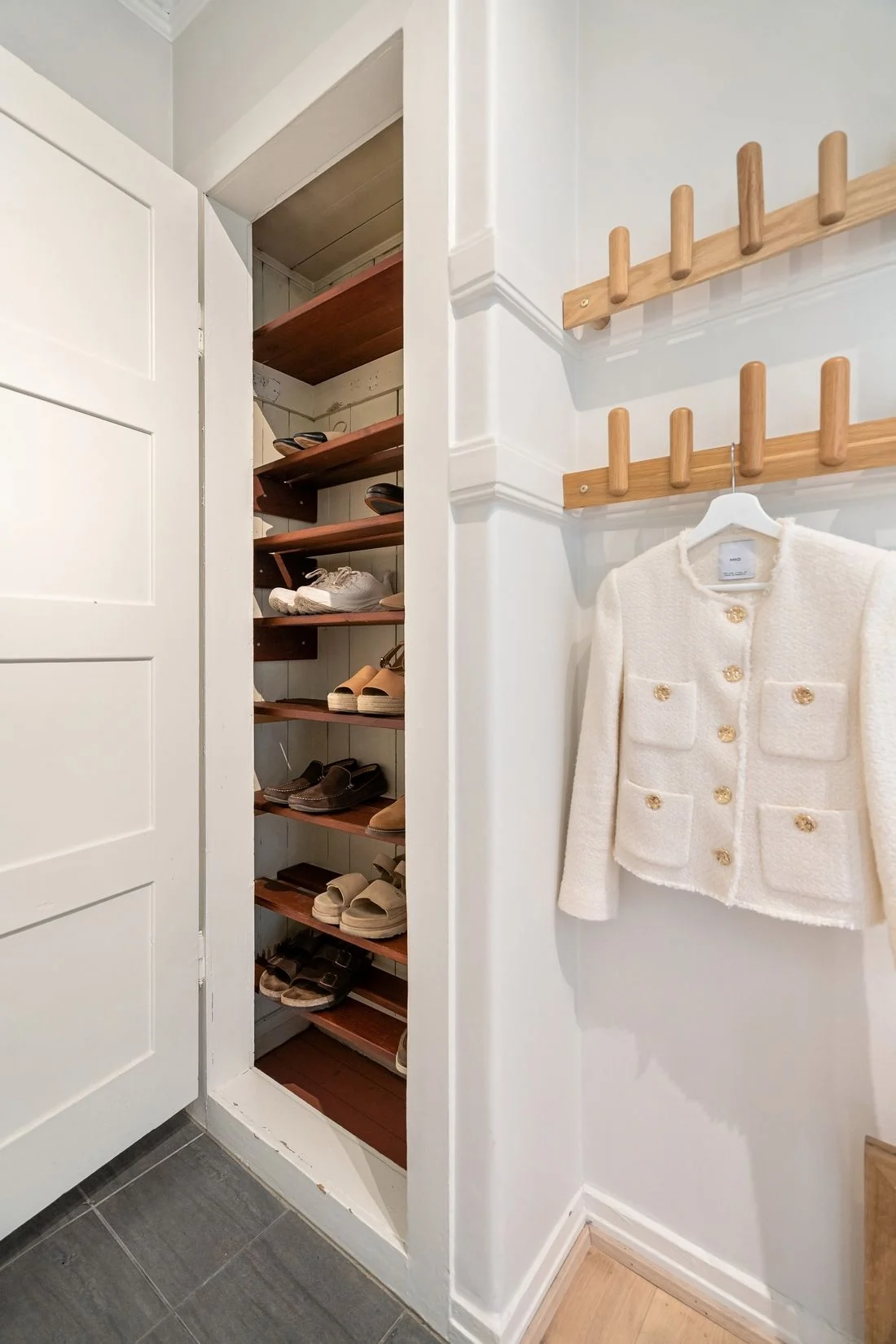
The entryway needs room for the few pairs currently in use. The rest can live in a bedroom closet or another suitable cabinet. Keeping all shoes beside the front door makes a small arrival area feel crowded, particularly when the household also needs space for bags and coats.
A shallow shelf or tray may suit daily shoes if it leaves the walking route clear. Let damp or dirty footwear dry appropriately before enclosing it; follow the footwear maker's care directions. Do not turn a closed cabinet into the automatic destination for wet boots just because its doors conceal them.
Choose access before density
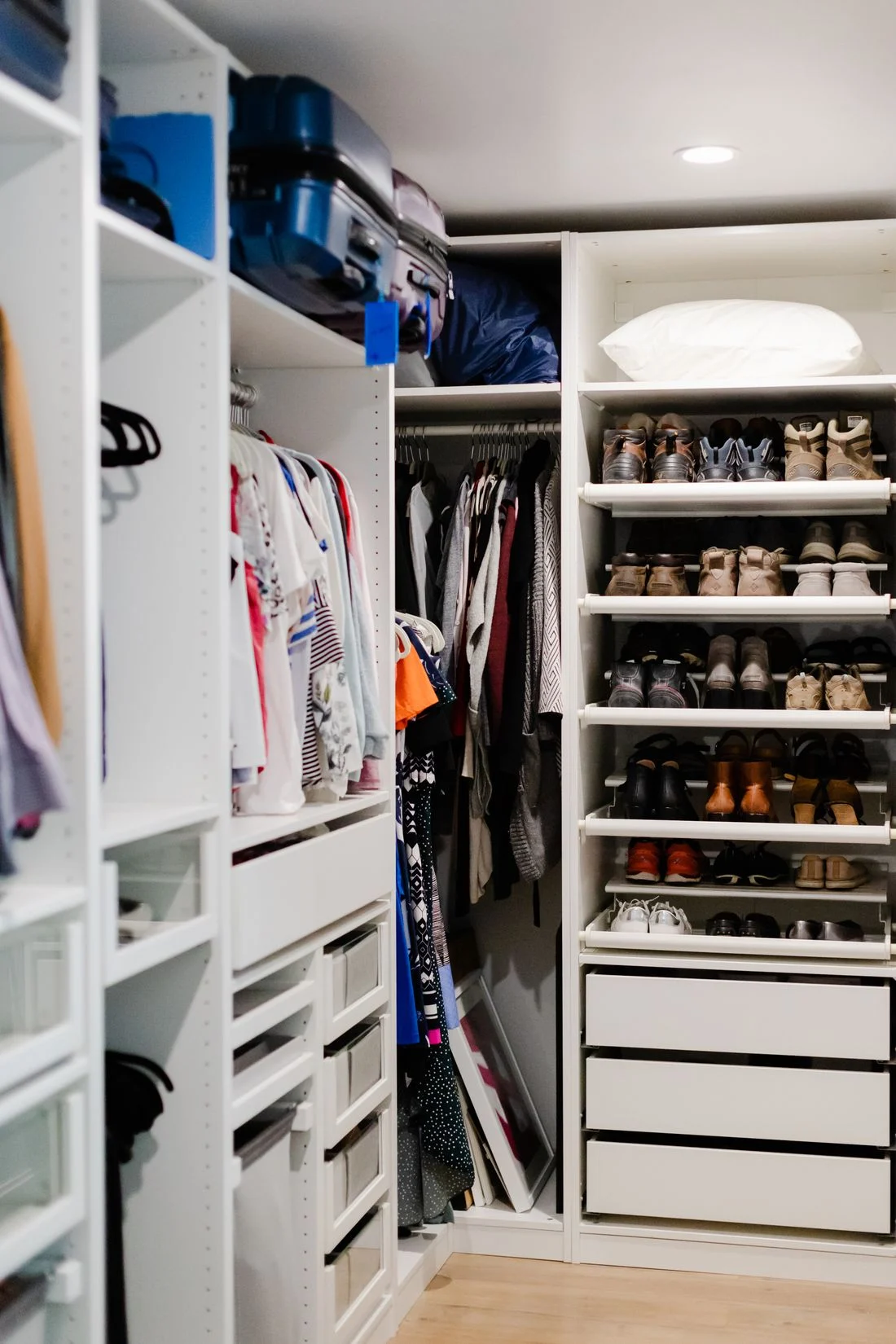
Open shelves make pairs easy to compare. Adjustable shelf heights allow room for boots without wasting that height across the whole unit. Tilt-out cabinets can fit narrow halls, but check the usable interior depth and whether larger sizes fit. Also check the space needed when a compartment opens.
Boxes protect occasional shoes from room dust and can simplify stacking. Labels or a quick reference photo reduce repeated opening, but use boxes that can be handled without pulling down a tower. A top-opening box at the bottom of a stack is unsuitable for a pair you wear every morning.
For a closet shelf, test whether shoes can be removed while clothing hangs above them. A perfectly sized rack is still awkward if every removal brushes against long coats. Leave room to reach the heel and lift the pair without scraping the shelf above.
Keep the number visible
Give each category a physical boundary: work shoes on one shelf, occasional pairs in one row of boxes. When that area fills, review the category before adding another organizer. This is a capacity decision, not a rule about how many shoes anyone should own.
If the unit is freestanding, follow its anchoring and assembly instructions. CPSC's Anchor It campaign emphasizes securing furniture against tip-overs; a slim shoe cabinet is still furniture. Finally, leave the most-used pairs at a height and position that feels comfortable to reach. The system should make leaving the house easier, not simply store the greatest possible number.