Craft supplies have two different lives: they belong to a collection, and they belong to a project in progress. A storage system that ignores that distinction often fails halfway through making something. The table fills with half-used materials, while the carefully labeled bins remain empty because putting everything away would undo the work.
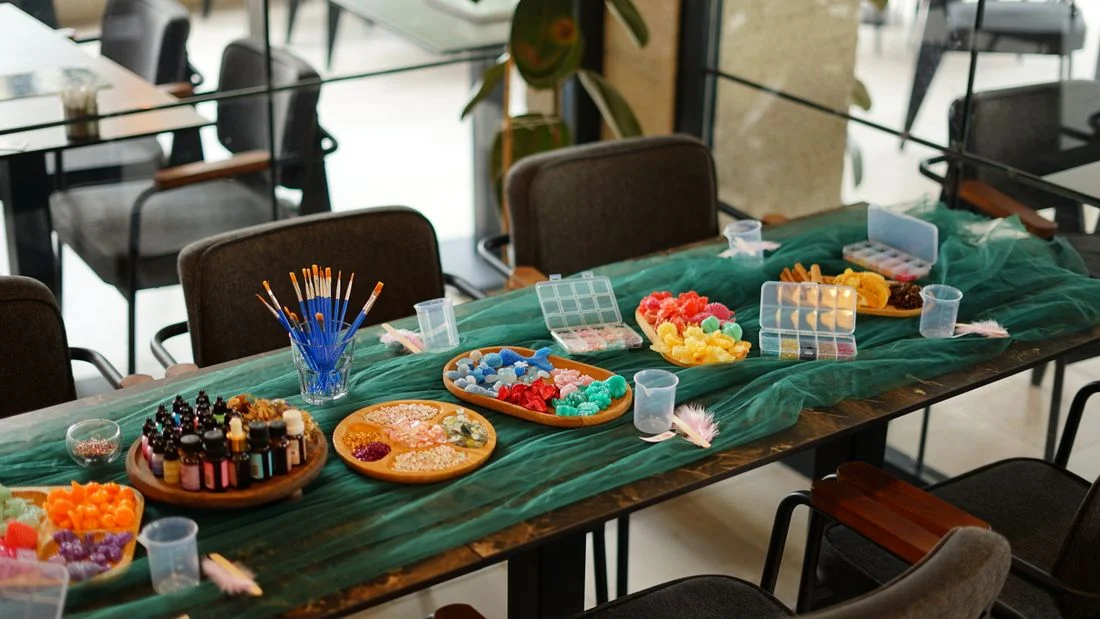
Create a home for the collection and a separate, limited home for the active project. A tray, shallow box, or small cart can hold the immediate materials together. It should be easy to move when the table is needed for another purpose, without requiring every bead or paper piece to return to permanent storage.
Sort by the way you choose materials
If you select fabric by color, a visible color arrangement can be useful. If you choose it by size or intended project, those divisions may matter more. Brushes and pencils often work in upright holders, while paper needs support that prevents bending. Keep small loose components in containers that close reliably and suit the household's safety needs.
Do not subdivide every category before understanding its volume. A few adjustable compartments can adapt as supplies change. A fixed tray with many tiny spaces may create empty compartments beside one overflowing section.
Preserve working information
Keep paints, adhesives, and other products in their original labeled containers and follow their storage instructions. Similar-looking bottles can have very different uses and precautions. A decorative decanting project is not a substitute for readable warnings, product names, and directions.
For materials bought for a specific pattern or kit, keep the instructions with the parts. A labeled envelope can contain small components that would otherwise lose their context. Separate incomplete kits from general supplies so their pieces are not unknowingly borrowed for another project.
Design around the end of a session
At stopping time, return only the excess supplies to the main collection. Put the active work and the tools needed next into the project tray. Add a short note about the next step if the project may sit for a while. This avoids using a large table as a reminder board.
Keep sharp tools, hot-tool equipment, and small components safely away from children and pets. Follow equipment instructions for cooling, unplugging, and storage. An attractive open shelf is not appropriate for every supply simply because it is convenient for an adult to reach.
Give unfinished work a capacity limit
Choose how many project trays the space can accommodate. When they are all occupied, finish, pause deliberately, or dismantle one project before starting another. This boundary is about the available room rather than a judgment about creative habits.
Review supplies when a project ends. Return useful leftovers to clearly named categories and release scraps that you do not expect to use. A collection that fits its storage is easier to browse, and an active project that can move as one unit makes it easier to start again.