A large cookware set can contain several pieces that perform nearly the same job, while missing the one shape that suits your usual meals. Before replacing anything, list a few dinners you cook regularly and note which pans are used at the same time. That overlap tells you more about the needed collection than the number printed on a box.
For a household making pasta with a sauce, one pot and one smaller pan may be needed together. A household cooking a large batch of soup has a different capacity requirement. Someone who mostly prepares small portions may find a broad, heavy pot awkward to wash and store even if it is useful for occasional guests.
Count cooking tasks, not marketing pieces
Set counts may include lids and accessories as separate pieces. Read the actual list and compare it with the roles you need: boiling, simmering, frying, or another recurring task. Two similar saucepans can be useful if they are used together, but they may be redundant if one always stays in the cupboard.
Keep any existing pan that works well. A useful collection can combine different materials and brands. Matching handles are not a reason to replace a pan whose size and cooking behavior already suit the household.
Check compatibility before appearance
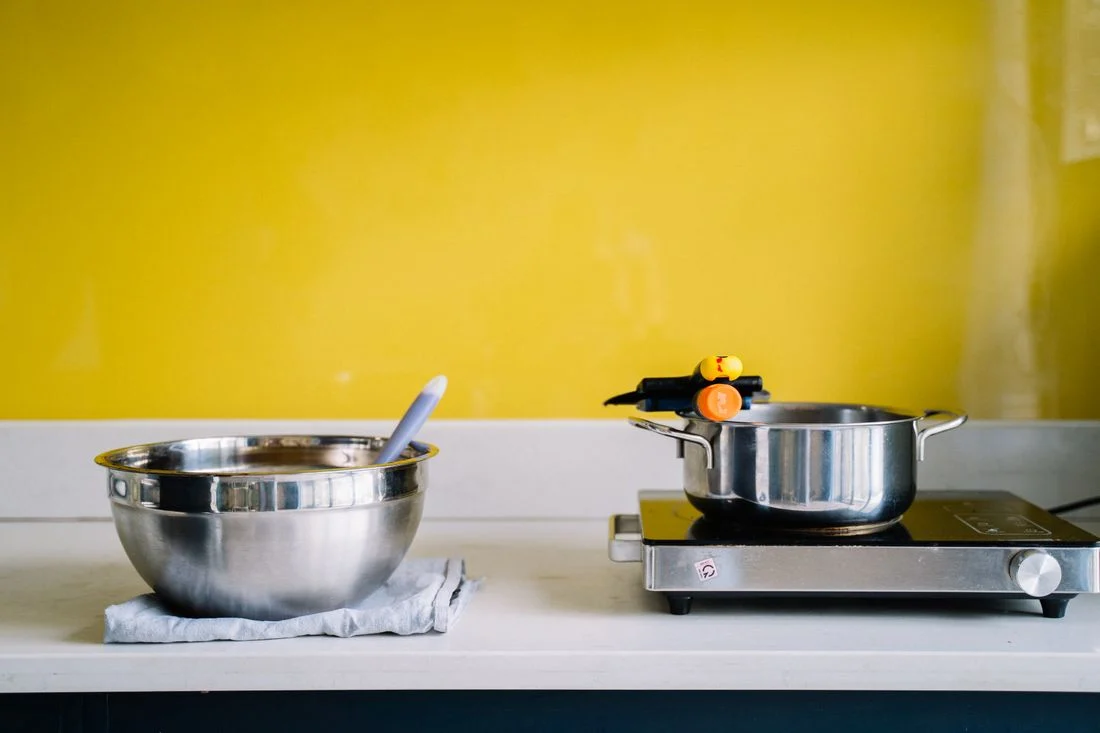
Confirm that the cookware is suitable for your cooktop, including induction compatibility where relevant. Follow both appliance and cookware instructions for burner size and use. A pan's base must work with the cooking surface; a large rim or decorative exterior does not establish that fit.
If you plan to use the cookware in the oven, check the specific limits for the body, handles, lid, and any knobs. Do not assume every part shares the same temperature rating. Likewise, read the care instructions rather than assuming dishwasher compatibility from the material name.
Evaluate the full handling cycle
Lift a candidate pan with both its usual lid and an imagined food load in mind. Can you grip the handles comfortably with the protection you normally use? Is there a helper handle on a heavy piece? Will the shape fit in the sink for washing without awkward twisting?
Compare storage dimensions including handles. A saucepan may fit the shelf by diameter but project beyond the door when the handle is counted. A broad lid can occupy as much space as the pot itself. Measure the proposed storage arrangement before buying several new pieces at once.
Choose capacity with a realistic example
Imagine making the largest meal you prepare regularly, not the largest gathering you might host someday. Note which vessel runs out of room and which remains mostly empty. That observation can justify one larger pot while keeping the rest of the collection compact.
For example, if you routinely cook a batch dish for several meals, a larger pot may earn its space. If the only reason for a very large vessel is a rare holiday dinner, borrowing or planning a different menu may be more sensible than storing it year-round. These are household tradeoffs, not a prescribed minimum cookware list.
Plan maintenance honestly
Different finishes and materials have different cleaning and maintenance needs. Choose instructions you are willing and able to follow. A pan that performs well but requires a care routine you repeatedly postpone may be a poor everyday match. Store manuals or product care pages where they can be found later.
Buy the most clearly needed piece first and cook with it before expanding the collection. After a few weeks, the remaining gaps will be more obvious. A smaller group of well-used pans can cover a wide range of meals while leaving room in the cupboard to remove each one without a clatter.