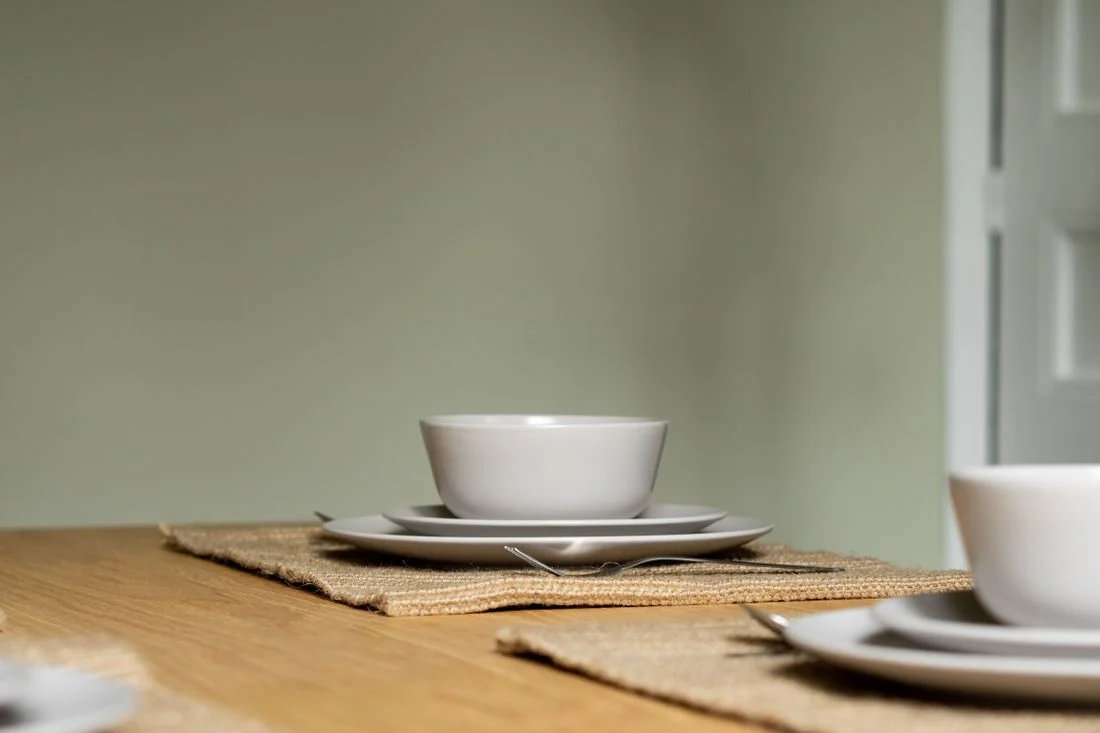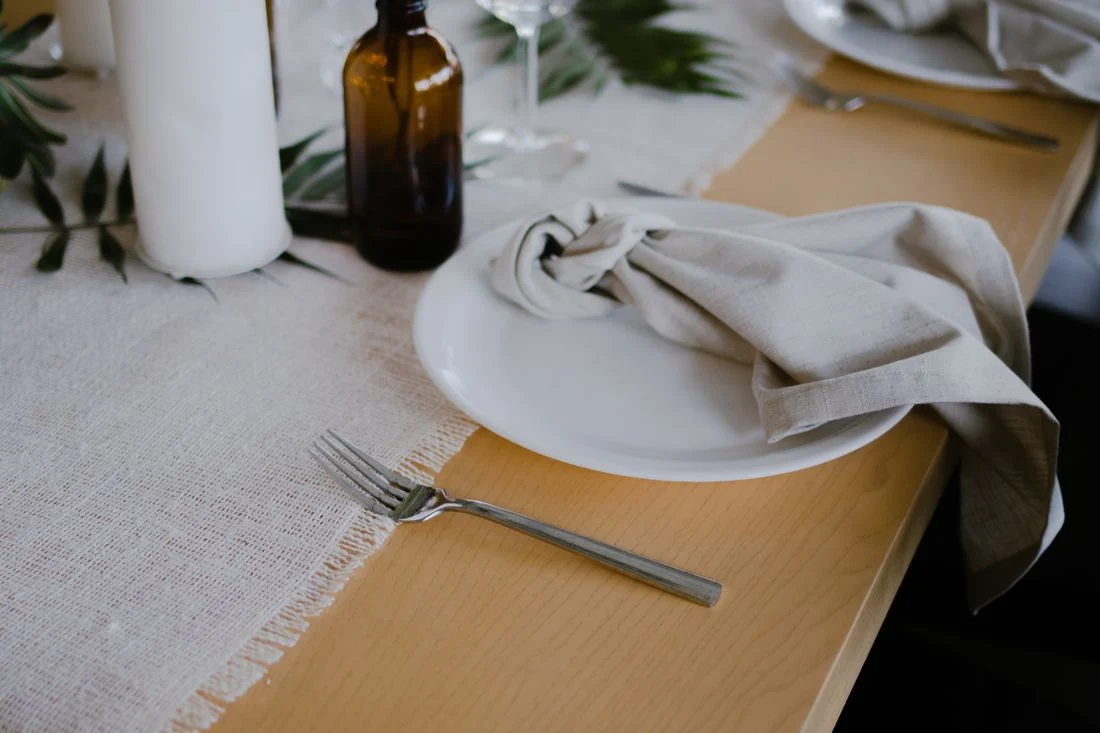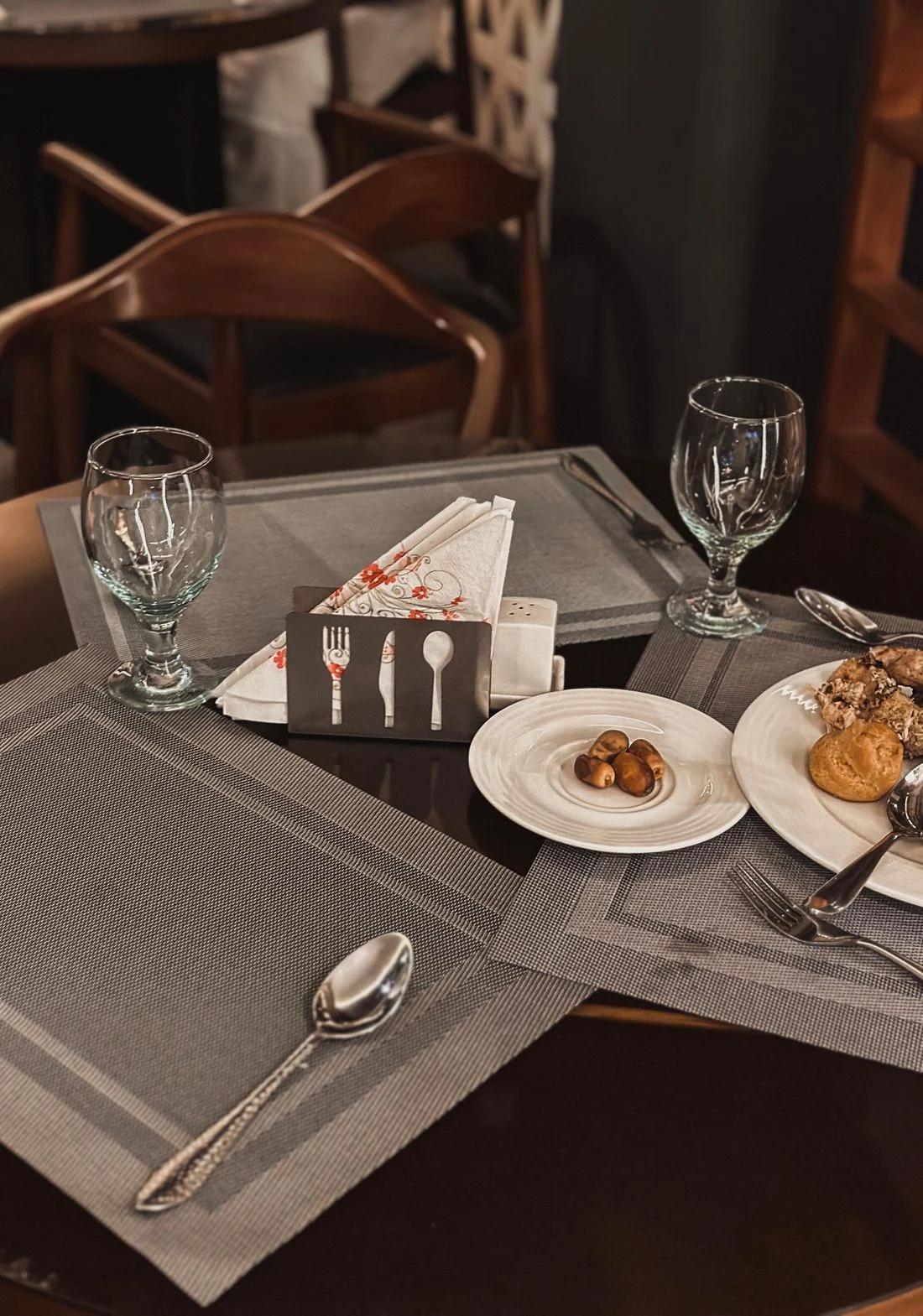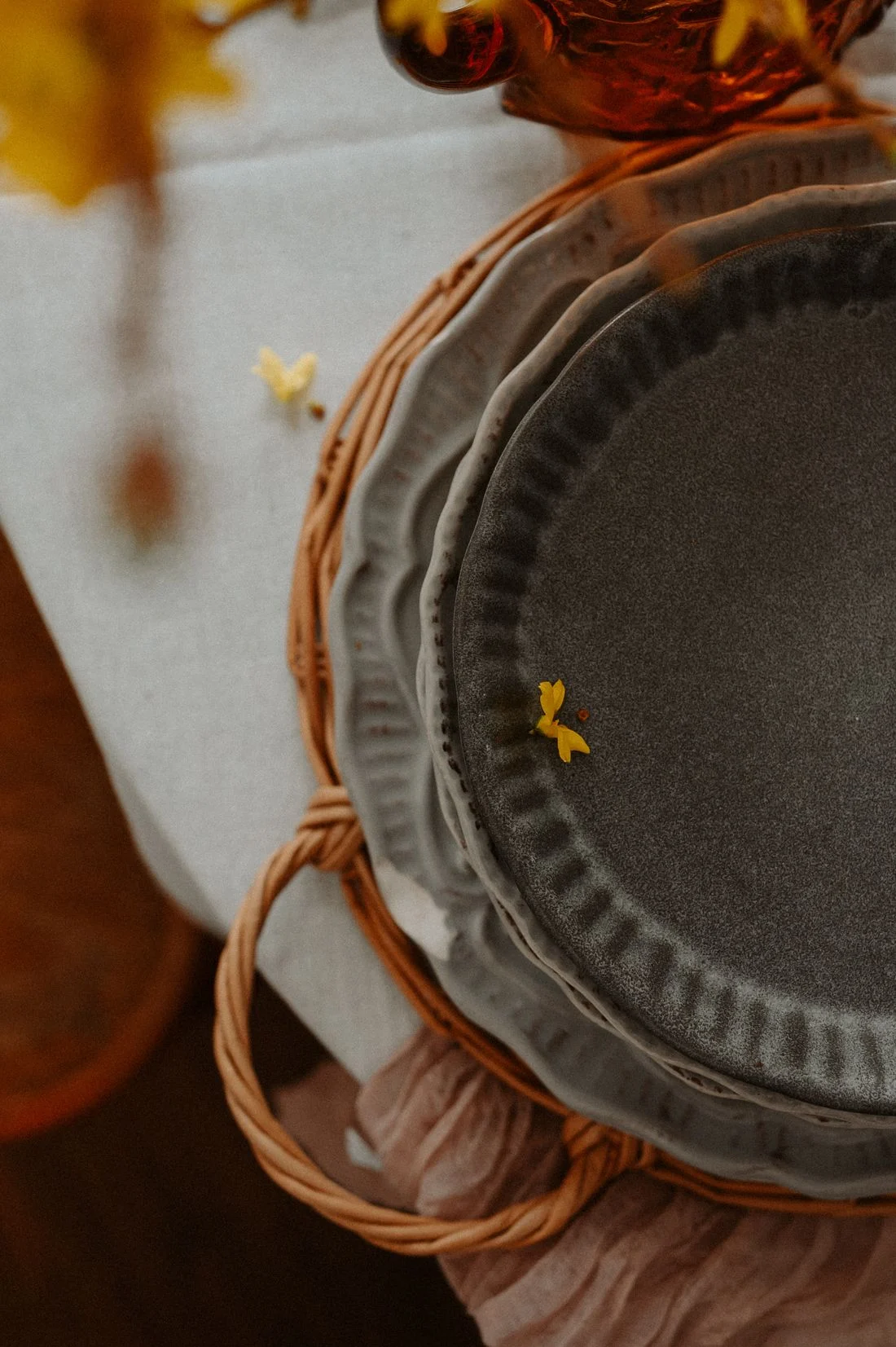
Mismatched dinnerware can feel collected rather than accidental when the pieces share a recognizable connection. That connection might be a color, a rim shape, a quiet pattern, or a similar visual weight. It does not have to be a complete matching service.
Lay the pieces you already own on the table before shopping for additions. Look at the whole setting, including glasses, cutlery, and the tabletop. A patterned plate that seems busy on its own may settle comfortably beside a plain bowl and a simple napkin.
Choose one anchor
Use the most numerous or most frequently used pieces as the base. White dinner plates can support varied small plates; a group of earthy bowls can connect with several neutral plate shapes. Repeating the anchor across the table gives the eye something consistent to follow.
If every setting differs, repeat another element such as the same drinking glasses or napkin color. You do not need to coordinate all the variables at once. Keeping the surrounding table simple allows the dishes to carry the variation.
Check physical compatibility
A bowl should sit securely on the plate beneath it if you plan to layer them. Avoid balancing a small foot on a strongly curved rim. Stacks in the cupboard also need to remain stable; similar colors do not guarantee compatible shapes.
Mixing older and newer dishes requires attention to their intended use and condition. Decorative or unidentified vintage pieces should not automatically be assumed suitable for serving food. Use maker information where available, and choose pieces specifically intended for the way you plan to use them.
Let the meal reduce the display
You do not need to place every layer on the table at once. If there is no salad course, leave the small plate in the cupboard. A single interesting dinner plate with a plain bowl may be more effective than an elaborate tower that must be dismantled before eating.
Test the combination with actual food or the serving plan. Dark dishes, pale dishes, and patterned dishes create different contrasts, but personal preference matters more than a universal rule. The setting should make the meal comfortable and easy to navigate.
When adding pieces, buy to solve a real gap, such as needing enough bowls for guests. A small collection tied together by one deliberate feature is easier to use and store than a large assortment purchased solely to create a mismatched look.