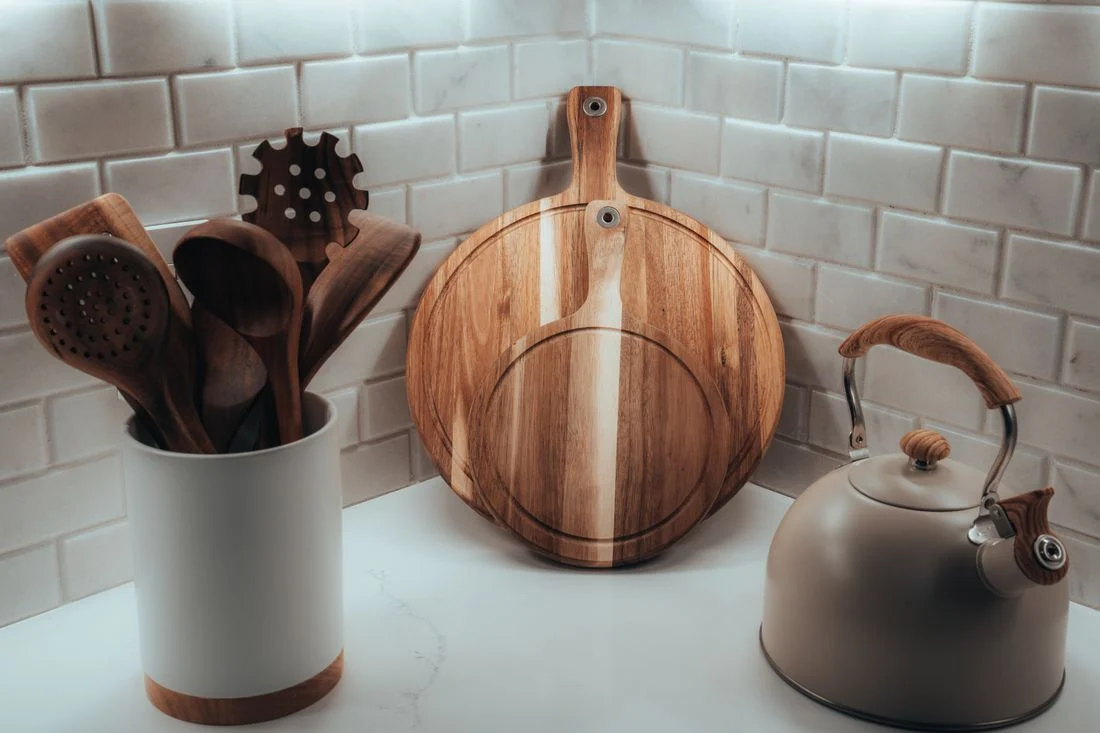
A utensil crock is convenient until it holds every spoon, whisk, spatula, and rarely used gadget in the kitchen. Handles catch together, the tool you need disappears into the middle, and lifting one item pulls out several more. Treat the crock as a short list of active tools rather than the entire utensil collection.
Choose from recent meals
Look at the tools used during a normal week. Keep those in the crock if you prefer them visible. Store duplicate serving pieces and occasional gadgets in a drawer or another defined location. A small group is easier to grab with one hand and easier to return without looking closely.
Match the container's height to the tools. A low vessel may let long handles topple outward, while a very tall one can hide short tools. The base should remain stable as an item is removed. Test with the actual collection rather than assuming a heavy-looking ceramic pot cannot tip.
Place it outside the busiest motion
Keep the crock near the preparation or cooking area, but not where it blocks a cutting board, drawer, or appliance controls. Avoid placing it where heat or splashes exceed the tools' or container's care requirements. The most convenient position is usually nearby rather than directly against the stove.
Leave enough space above it to lift the longest utensil without hitting a shelf. A tool that must be angled sideways every time will eventually get left on the counter instead.
Make the inside easy to clean
Choose an opening that lets you reach the bottom. Check whether the crock can be washed by your usual method and let it dry properly before replacing tools. Do not put damp utensils into a container that traps moisture around the handles.
Keep sharp knives in storage designed for them, rather than mixing exposed blades into a general crock. Small items that sink below the rim belong in a drawer or a separate shallow container where they can be seen.
For visual consistency, repeat a material or color already present in the kitchen. The crock need not be a statement piece, especially if the utensils themselves create a varied silhouette. A simple container with a useful collection often looks more settled than a decorative vessel overflowing with tools that rarely cook anything.