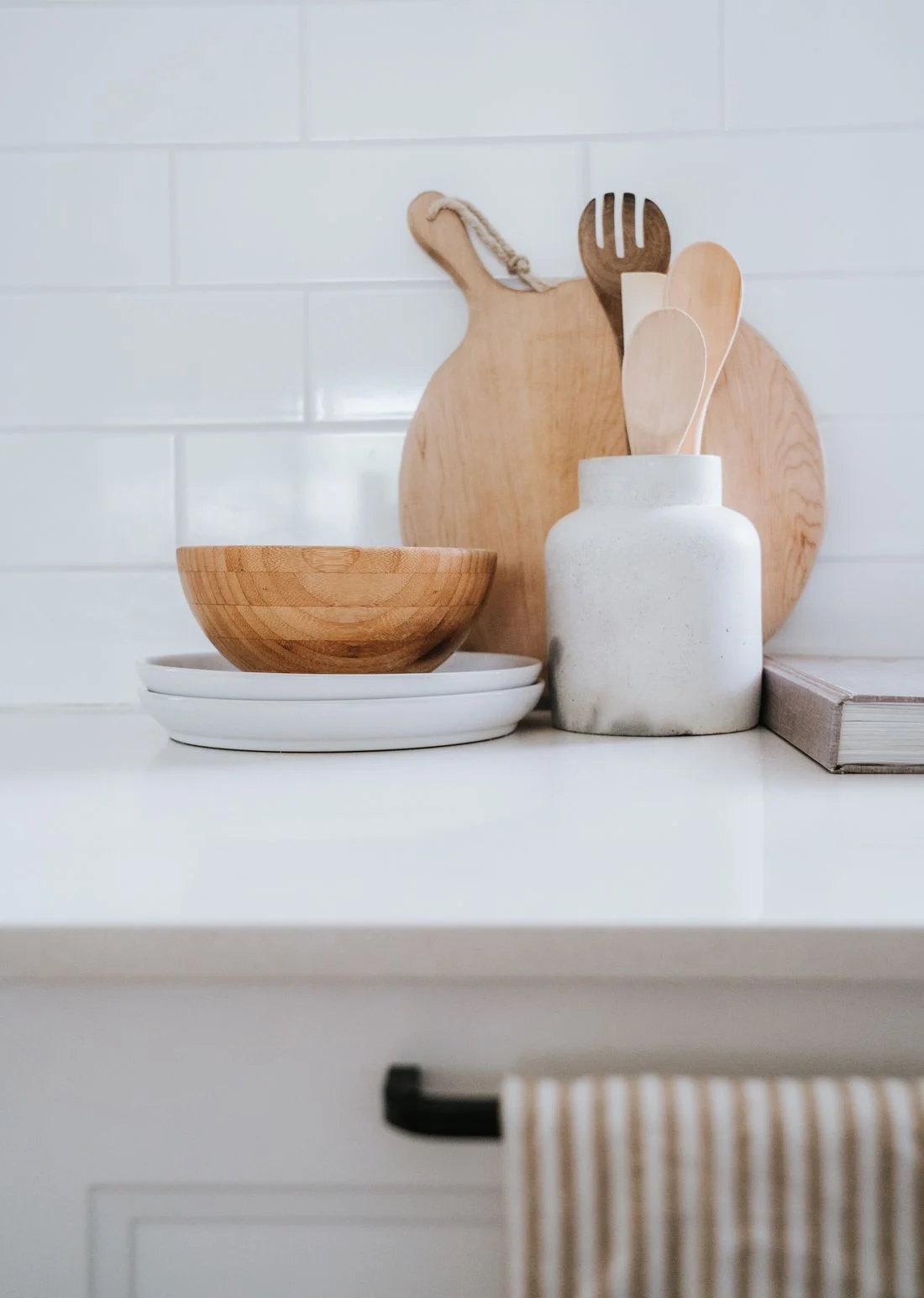
A white kitchen can feel warmer with a wooden bowl, a cutting board, or a small shelf. The effect comes from the contrast between surfaces, not from the number of objects. Choose pieces that have a real role in the kitchen and leave the working areas available.
Look at the existing undertones
White cabinets may lean creamy, gray, or slightly blue under the room's light. Compare a wood sample or an existing wooden item beside them during the day and in the evening. The same finish can appear quite different under each condition.
You do not need every wood tone to match exactly. Repeating one tone in two small places can connect the room, while a contrasting older piece can add variety. If the floor is already strongly patterned wood, keep the countertop accents simpler so the surfaces do not compete for attention.
Choose functional shapes
A board you actually use, a utensil holder, or a suitable serving bowl can bring texture into the room without becoming additional clutter. Check each item's intended use and care instructions. A decorative wooden bowl is not automatically suitable for food, and a display board is not necessarily designed for chopping.
Keep moisture-sensitive pieces away from repeated splashes and allow washed items to dry as directed. Do not trap a damp wooden object between the counter and backsplash simply because that is where it looks best.
Balance the arrangement
One upright board and a low bowl create different heights without needing a large grouping. If several objects are kept together, leave enough space to lift them for cleaning. Avoid lining the entire backsplash with boards when that blocks outlets, reduces work space, or interferes with appliance clearances.
A larger wooden element, such as a dining chair or table, may already provide all the warmth the room needs. In that case, a small repeated accent can be enough. The kitchen does not need a wooden version of every accessory.
Let the room remain a kitchen
Judge the arrangement while preparing a normal meal. If the decorative objects repeatedly move to the dining table, reduce their number or give them a more useful home. Materials can shape the mood of a room while still respecting its daily work.
The most convincing result is often modest: pale cabinetry, a clear preparation surface, and a few wooden pieces whose shapes and wear belong naturally to the household.