A dining centerpiece works best when it respects the space people need to eat and talk. A tall vase or a wide decorative tray can dominate an empty table, then become an obstacle as soon as dinner is served. Build the arrangement around the occupied table rather than the empty one.
Set two places before styling
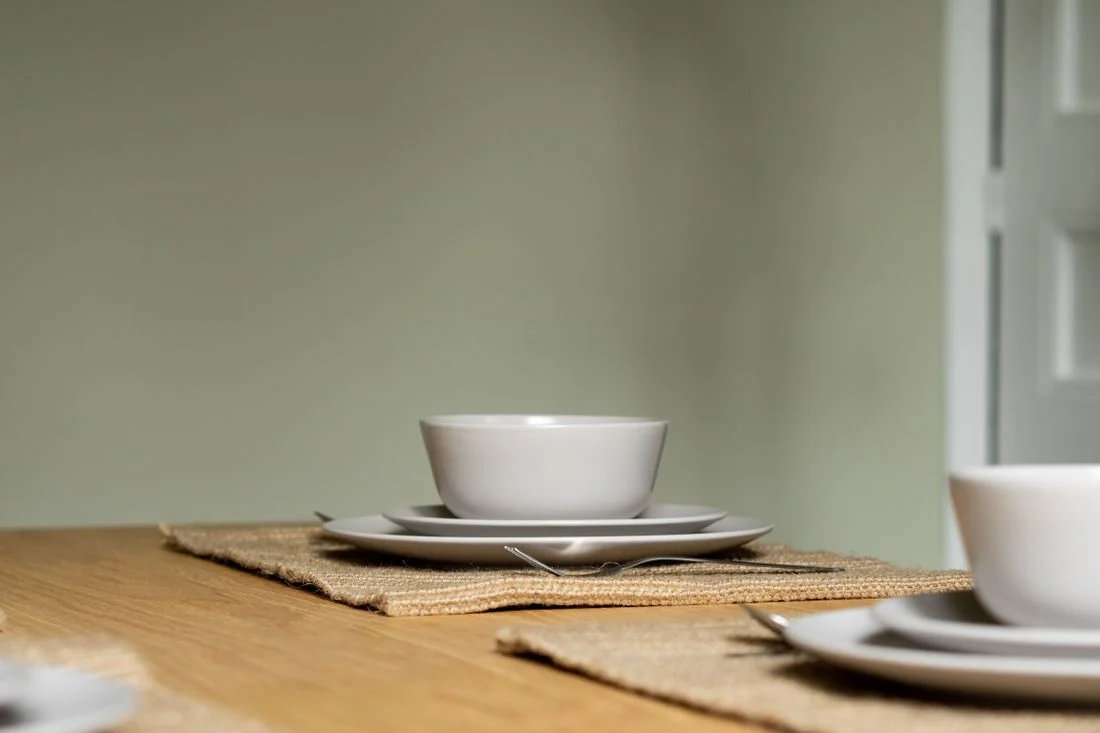
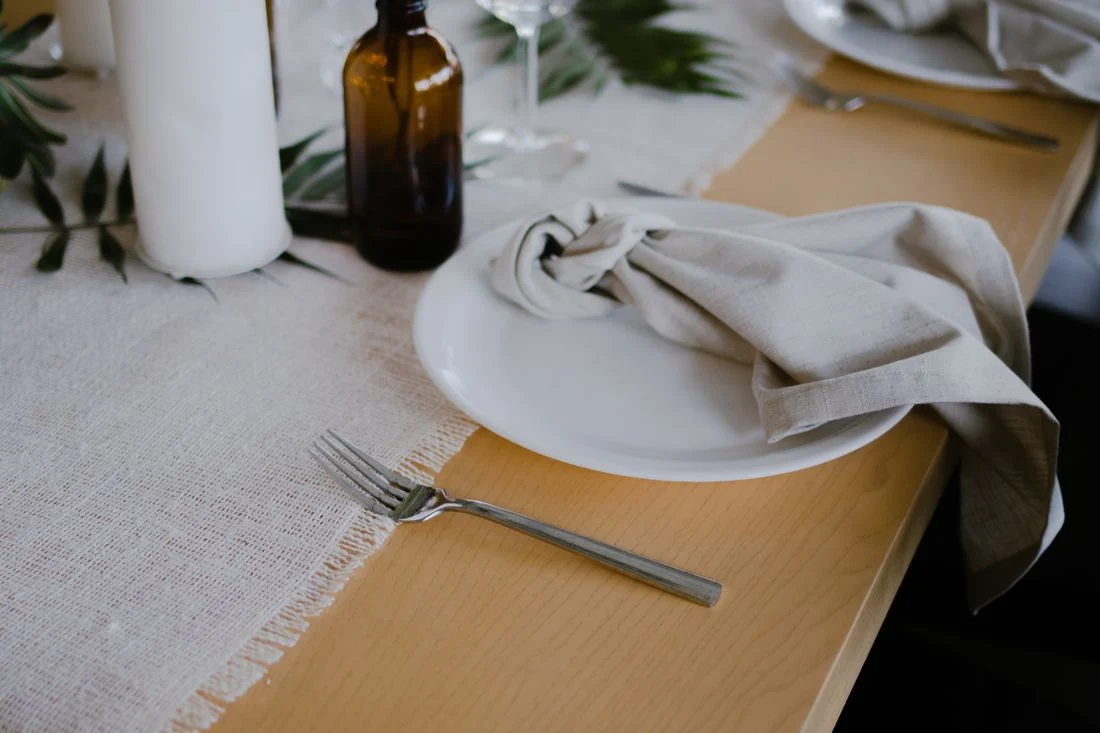
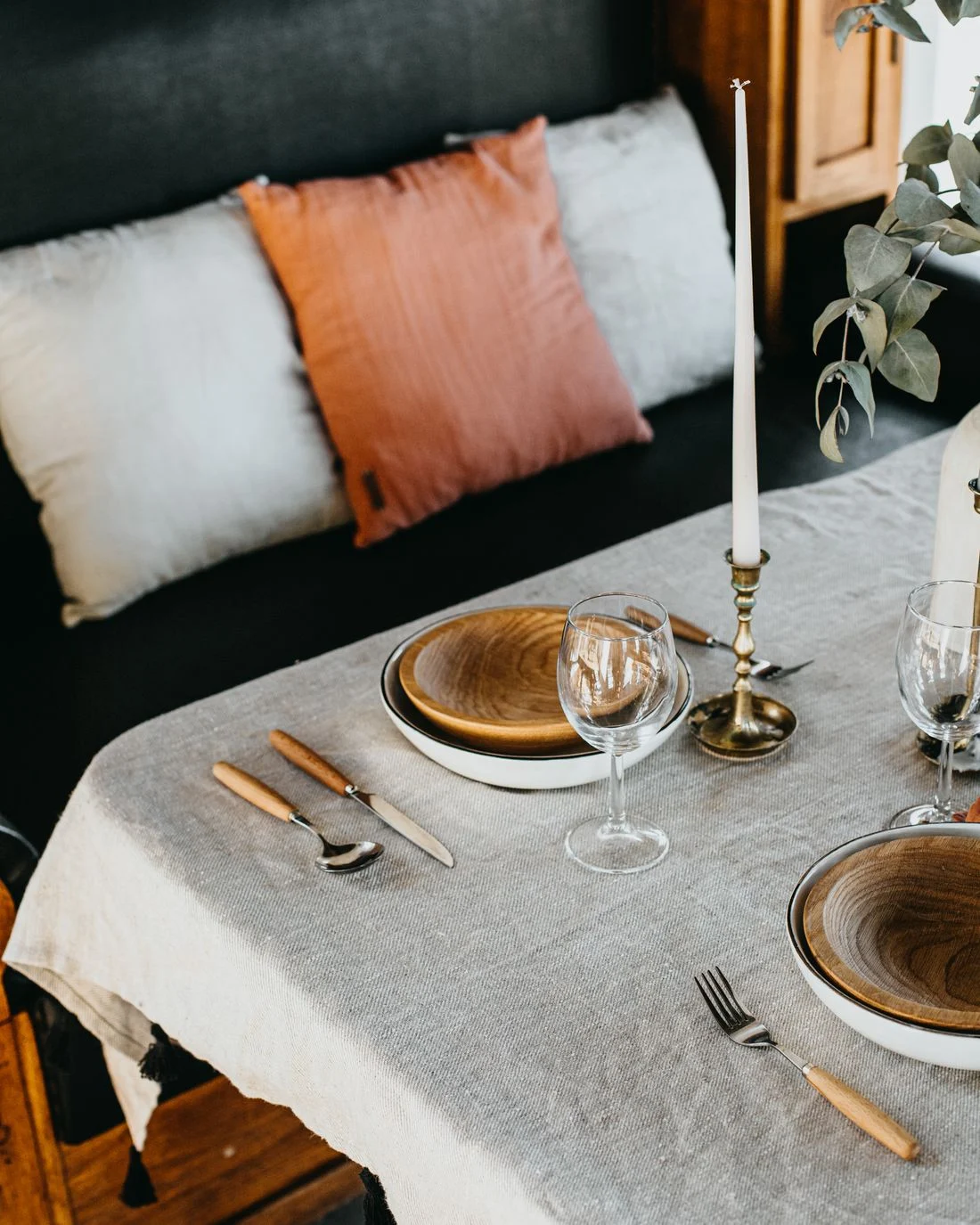
Put down the plates, glasses, and utensils normally used. Add the serving dishes if food is shared from the table. The remaining space is the realistic area available for decoration. On a small table, that may be one low object or nothing during the meal.
Sit in opposite chairs and look across the table. A centerpiece should not require leaning sideways to see another person. Check the reach to water, condiments, and shared dishes as well. A visually narrow object can still be awkward if it sits in the path of every serving motion.
Choose a compact composition
A low bowl, a small vase, or a few objects grouped closely can feel intentional without filling the center. Repeat a color or material already present in the room if you want a quiet connection. Avoid spreading many small pieces along the whole length of the table unless there is genuinely enough room.
If flowers or branches are used, keep loose material away from food and consider strong scents or household sensitivities. Choose plant material suitable for the household, including any pets. A decorative branch should not project into a seated person's face or catch clothing as someone passes.
Plan for easy removal
A stable tray can let a small arrangement move as one unit, provided the contents remain secure. Give the tray a destination nearby so it does not end up on a chair or the floor during dinner. A centerpiece that must be dismantled piece by piece is less likely to be moved when it should be.
Candles introduce separate fire-safety requirements. Follow the product's instructions and use a safe placement away from combustible decorations; flameless alternatives can provide light without an open flame. Do not let the desire for a layered display override those requirements.
After the meal, return only what belongs on the table between uses. The centerpiece should not become a container for mail, spare keys, and unrelated objects. A restrained arrangement leaves the table ready for its next purpose while still giving the room a finished focal point.