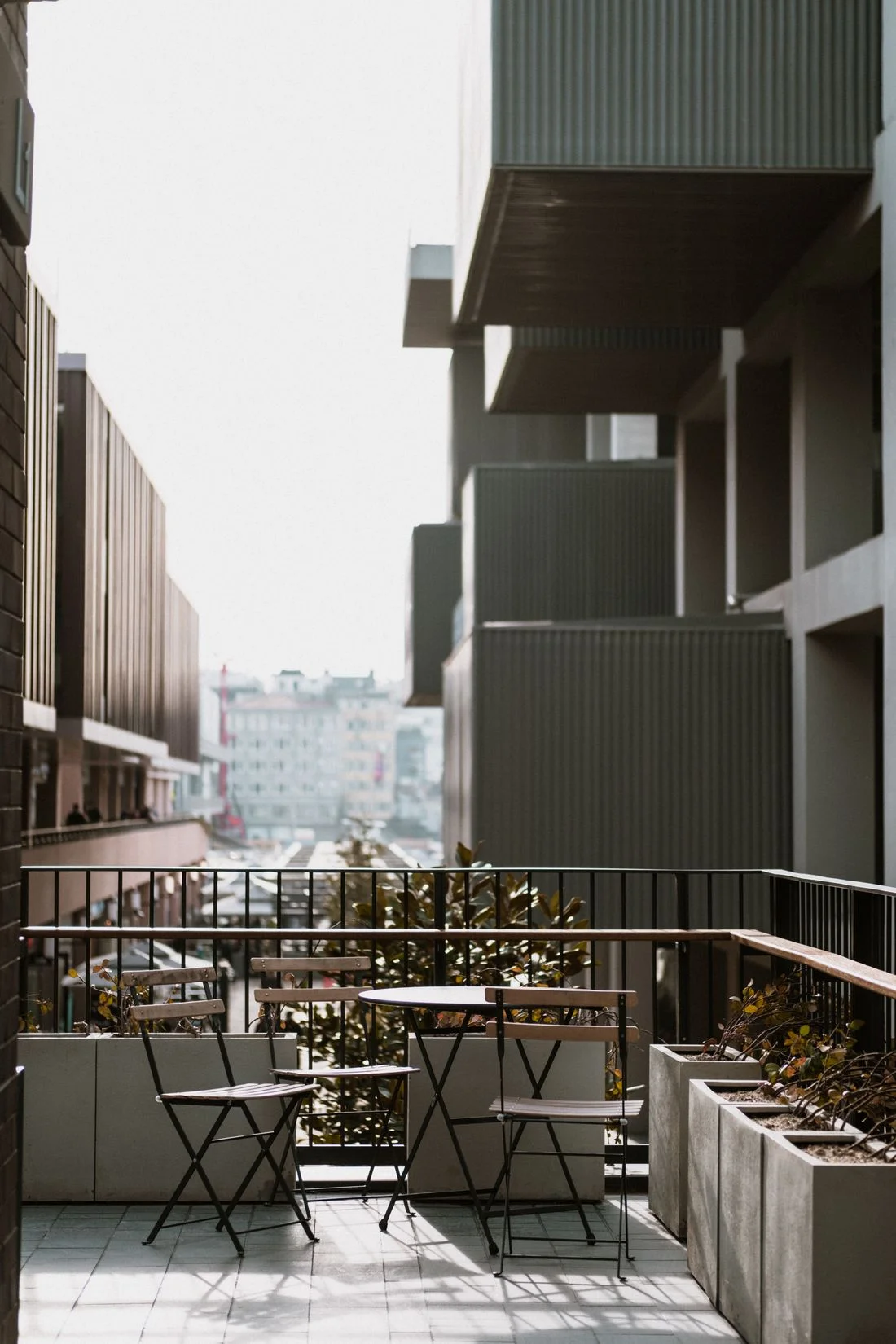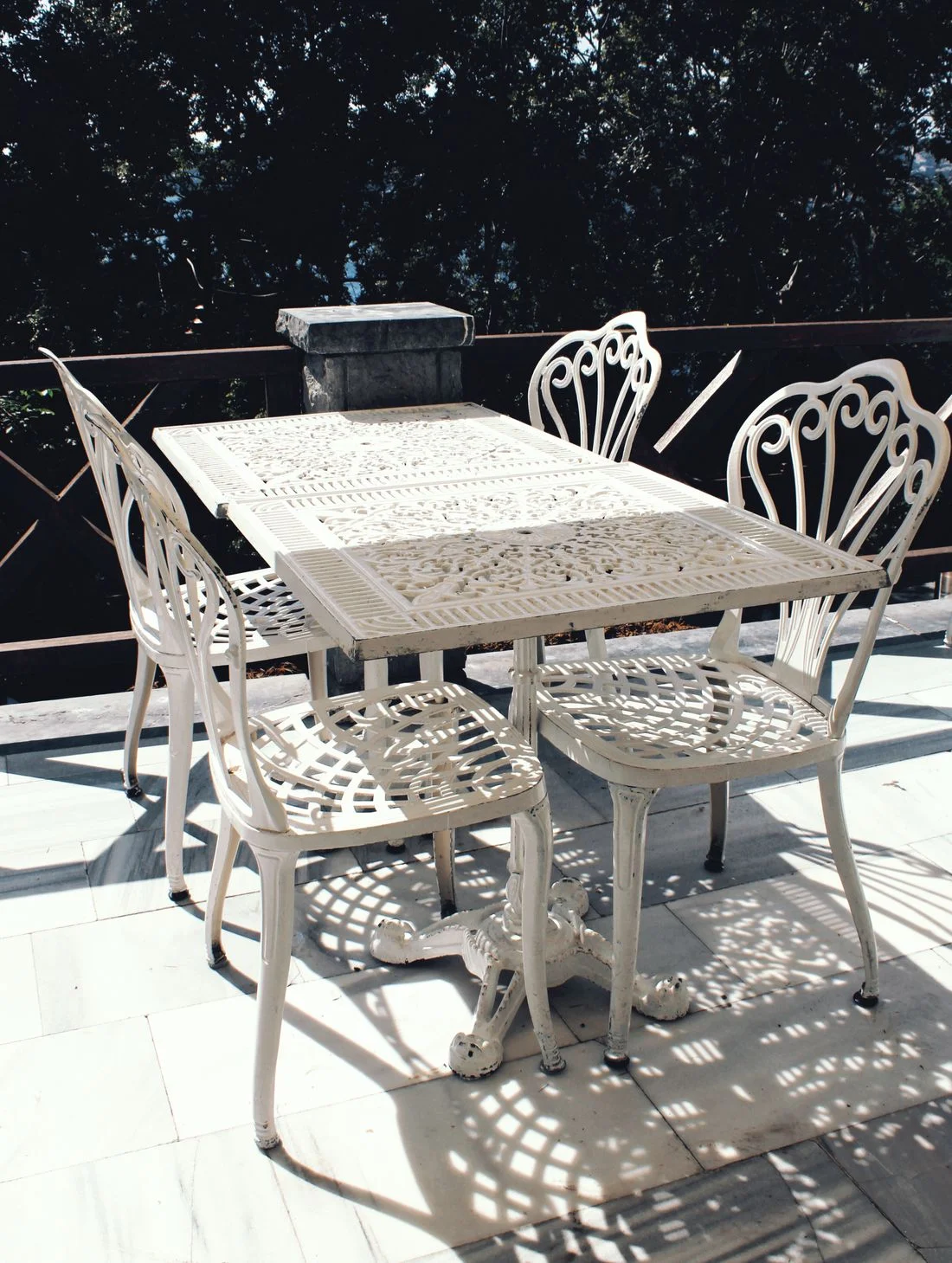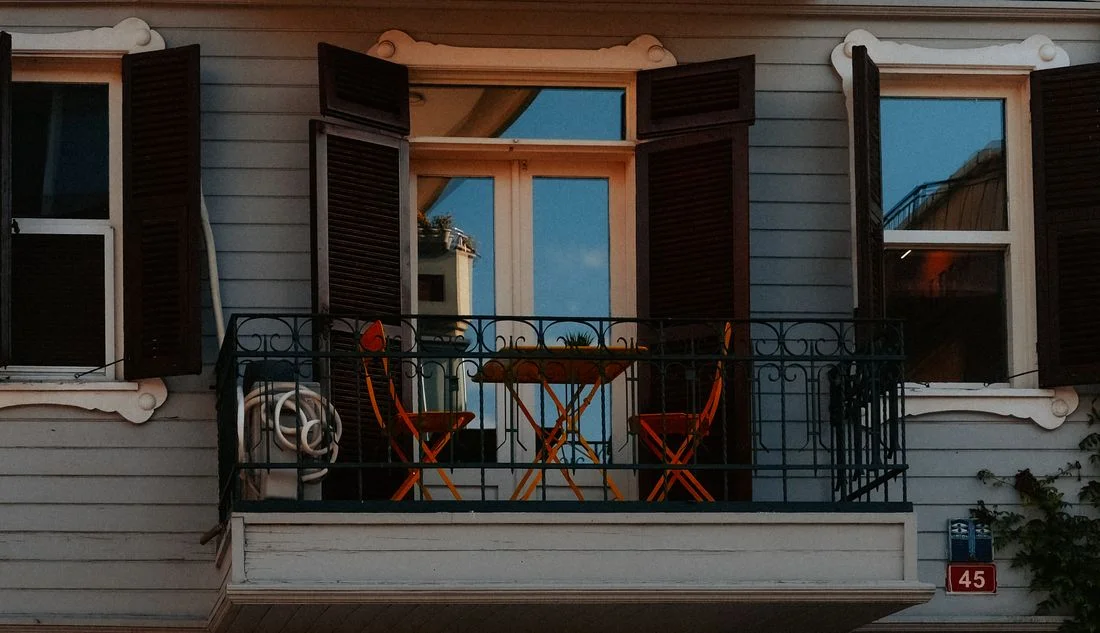
A small balcony can hold two chairs and a table yet still be unpleasant to use. The missing space is often the space between the furniture: the route from the door, the room needed to pull out a chair, and the place your feet go when you sit. Measure those actions before judging a set by its tabletop diameter.
Begin with the balcony door fully open. Mark the area it occupies and keep that route clear. Note thresholds, drains, utility access, and any building rules that affect furniture or planters. The usable rectangle may be smaller than the dimensions in a floor plan.
Choose the main activity
Two people drinking coffee need a different table from two people eating dinner. For coffee, a small side table between angled chairs can work better than a dining set. For meals, the table needs enough surface for plates and the chairs need a comfortable relationship to its height. A low lounge chair paired with a tall bistro table is not a compromise you will enjoy for long.
Try the activity indoors with furniture you already have. Sit with a mug or plate and measure the arrangement that feels comfortable. You are not finding a universal minimum; you are learning what your own use requires. Include chair arms, which may prevent the seats from sliding beneath the table.
Test the footprint on the balcony
Use paper or removable tape to outline each piece's full dimensions. Then mark the chairs in their occupied positions, not just tucked in. If a 24-inch tabletop seems ideal, remember that its legs, chair backs, and seated people create a much larger group. Manufacturer dimensions should include the widest parts of the furniture.
Walk from the door to the far end carrying a tray. Sit down and stand up without moving the second chair. Open the door again. If any of these actions feels awkward with paper on the floor, adding actual furniture will not improve it.
A round table avoids projecting corners, but its base still matters. A central pedestal can offer useful legroom; a wide splayed base may occupy the very space you hoped to save. Rectangular tables can sit neatly near a wall, yet they may encourage one person to sit in the door route. Evaluate the complete shape.
Decide what can fold
Folding chairs are useful if the balcony changes jobs, but check where they will be stored when folded. A pair that must live in the bedroom all winter may not be the best choice. Look at the folded thickness, the ease of the mechanism, and whether the finish is suitable for the conditions it will face.
Do not count a chair as space-saving merely because it folds. If you use it every morning, it will probably remain open. Buy for the normal arrangement and treat folding as a secondary benefit.
Add plants after the seating works
Place pots around the settled furniture rather than asking the chairs to fit around a finished plant display. Keep leaves out of faces and away from the door handle. Reserve a clear spot for watering and lifting pots, and avoid using the railing as an improvised shelf.
Finally, look outward from both chairs. A slightly angled pair may give each person a better view and make conversation easier than two chairs lined up against the wall. The balcony does not need to resemble a restaurant terrace. It needs a comfortable place for the two people who will actually use it.