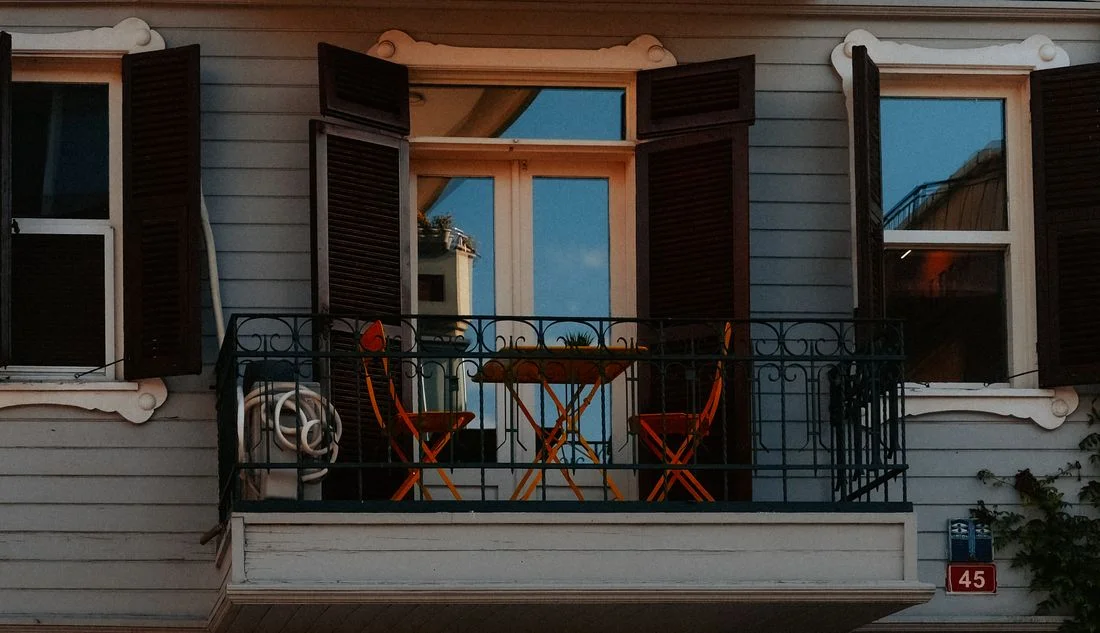
A pair of orange chairs can do more for a small balcony than a dozen little decorations. Strong color creates an immediate point of interest, which is useful when the available space must remain mostly clear. The key is to let that color have a defined role instead of spreading it onto every surface.
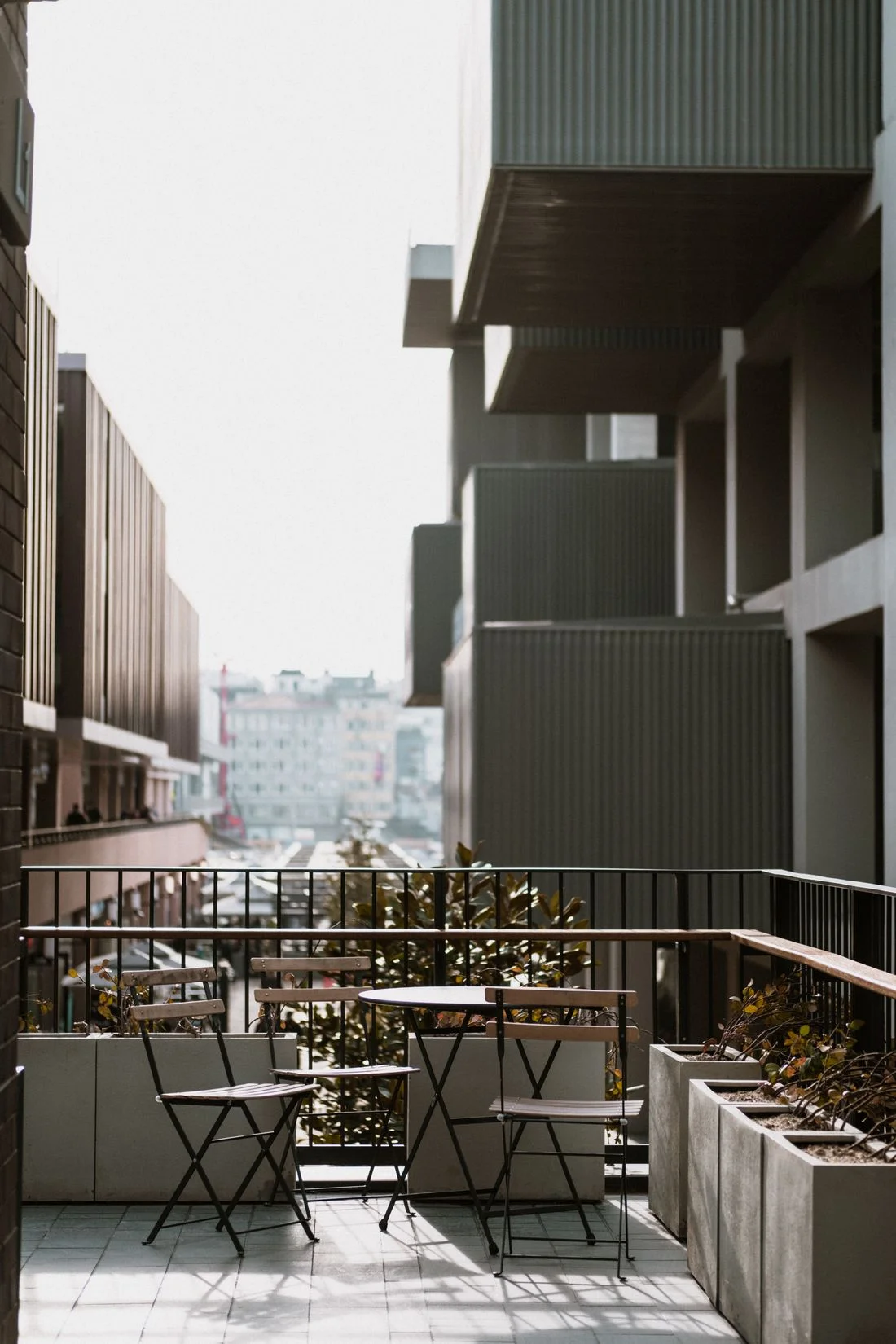
Start with the colors you cannot change: brick, siding, railings, paving, and the view beyond. A warm accent can stand out against gray masonry, while a softer green may sit quietly among plants. Look at the actual finish outdoors; bright sunlight and deep shade can make the same color feel quite different.
Choose the main colored object
Furniture is a good candidate because it already has a useful job. Two chairs create a pair; a small table can become a single focal point. If the existing furniture is neutral, cushions or a planter can introduce color with a smaller commitment.
Avoid changing everything at once. Put one colored item in place and look from inside the home as well as from the balcony. This space is often seen through a window or glass door, so its palette becomes part of the adjoining room's view.
Repeat once, then stop
A small echo can make the choice feel deliberate: a flower in a related shade, a stripe in a cushion, or a little pot near the door. The echo does not have to be an exact match. Keep the rest of the objects in a quieter family of materials and colors.
Remember that plants contribute color too. A mixture of bright blooms may compete with the furniture. Green foliage or a narrower flower palette can give the accent more space, particularly on a balcony that already has a busy city backdrop.
Choose items specified for their intended outdoor use and follow their care guidance. A painted indoor chair is not automatically ready for an exposed balcony. Once the useful furniture is in place, leave some floor visible and keep the route to the door open. The color should make the small space feel intentional, not more crowded.