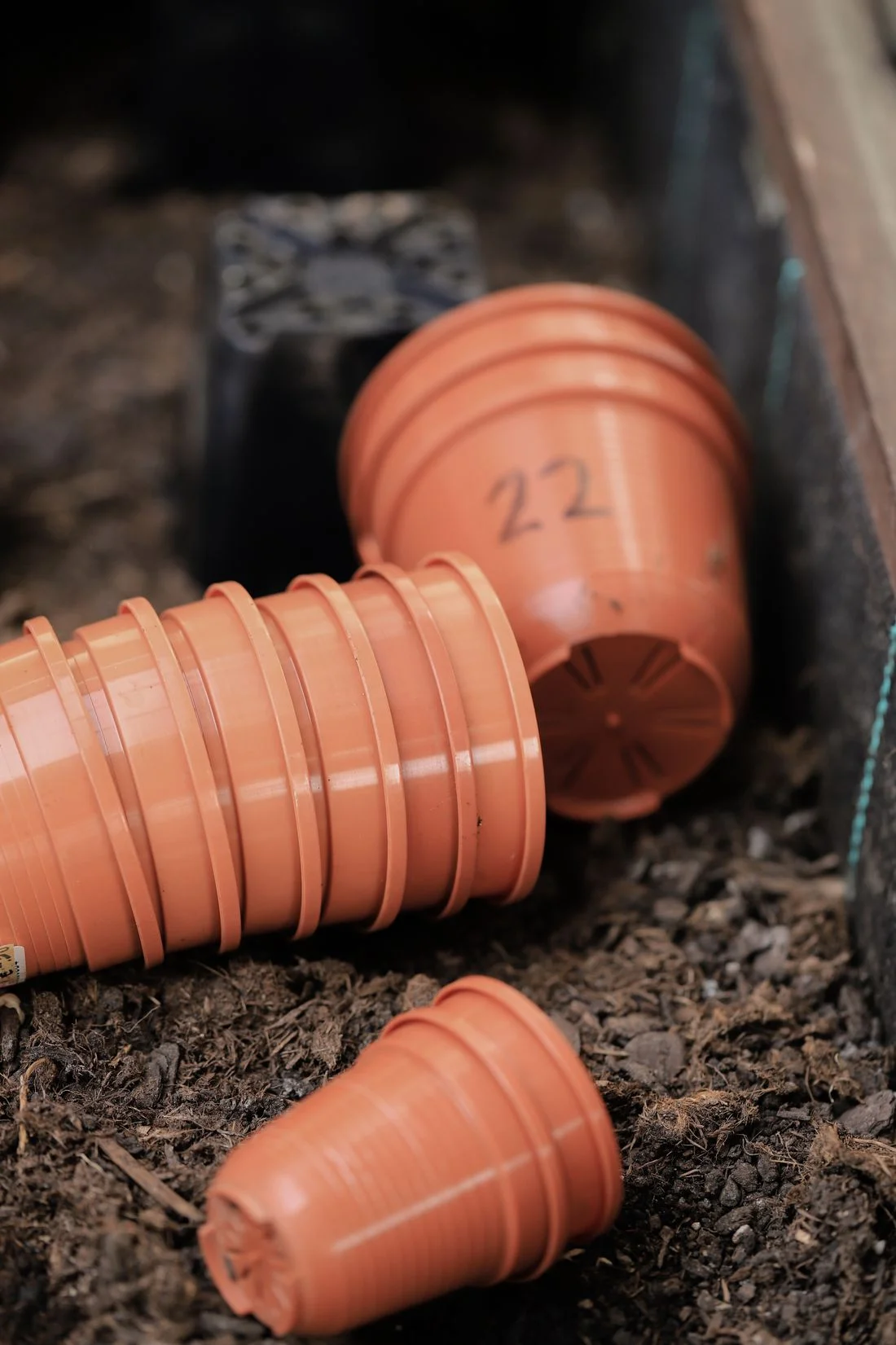
A terracotta-colored pot is not necessarily terracotta. Plastic nursery pots often use the same warm orange-brown color, while glazed ceramic pots may look like unglazed clay in a photograph. Check the material description first, then compare how the container will function in your actual location.
The useful choice depends on the plant, the growing medium, the exposure, and your watering habits. A material that works well for one person on a sheltered porch may be inconvenient for someone tending a sunny balcony or a high indoor shelf.
Weight changes the daily job
Plastic containers are often easier to lift for watering, cleaning, and seasonal moves. A larger clay pot can become difficult to handle once it contains wet growing medium and a mature plant. Compare the filled arrangement, not just the empty pot's weight.
A heavier pot is not a substitute for secure placement, and a light pot is not automatically unstable. Consider the plant's height and spread, the shape of the base, and the surface beneath it. On balconies and elevated decks, follow building requirements about loads and where containers may be placed.
Understand the moisture difference
Unglazed terracotta is porous, so it generally allows moisture to leave through its sides more readily than plastic. The University of Maryland notes that nonporous materials retain moisture longer than porous containers. This is a reason to check the plant differently, not a promise that one material prevents watering mistakes.
A small clay pot in a hot exposed spot may need attention more often than expected. A plastic pot in a cool dim room may remain moist longer. Plant size, root growth, the mix, and weather still matter. Learn the individual container rather than assigning every clay pot one schedule and every plastic pot another.
Check drainage and the outer container
Look for drainage appropriate to the plant and the intended setup. A decorative outer pot without holes can hold a separate nursery pot, but you need a way to remove excess water and keep the inner pot from standing in it. Leave enough clearance to lift the plant out without pulling on stems.
Indoors, use a suitable protective arrangement beneath the container and inspect it after watering. A saucer is useful only if it fits and you manage the collected water. Do not assume that a decorative finish or a pot's apparently dry exterior guarantees protection for a wooden shelf.
Match the care to your routine
Ask how the specific pot should be cleaned and whether it is rated for the outdoor conditions it will face. Glazed finishes, thin plastic, and different clay products have different limitations. Follow the maker's guidance for freezing weather and storage instead of generalizing from the material name.
Think about replacement and reuse too. A simple nursery pot inside a decorative container lets you change the plant without repotting purely for appearance. A visible terracotta pot can be attractive on its own and may suit a collection with a consistent material palette.
If you are uncertain, start with one pot in the new material and observe it alongside a familiar container. Keep notes on how often you check it and how easy it is to move. The best choice is the one that supports the plant's needs while fitting the care you can actually provide.