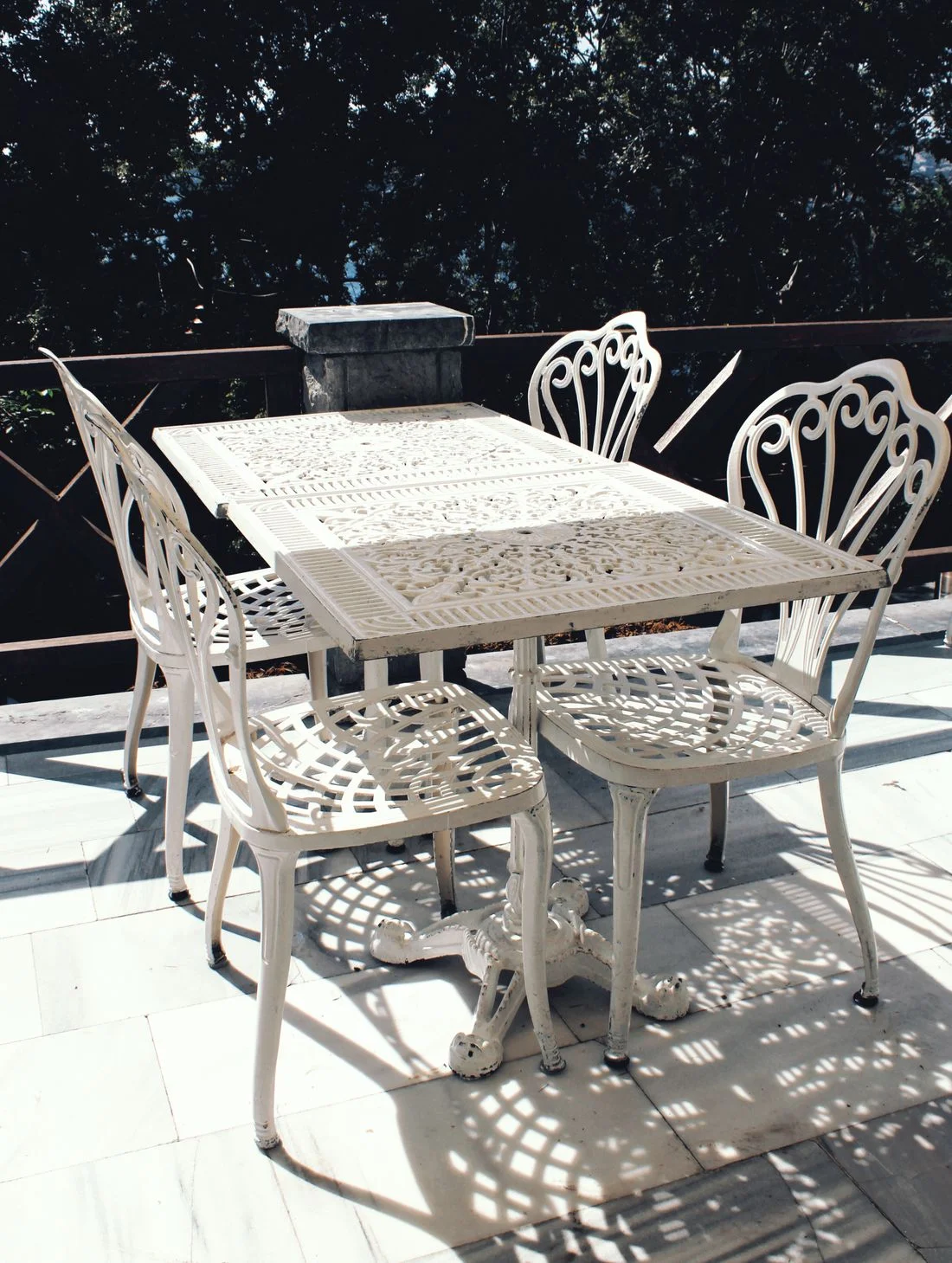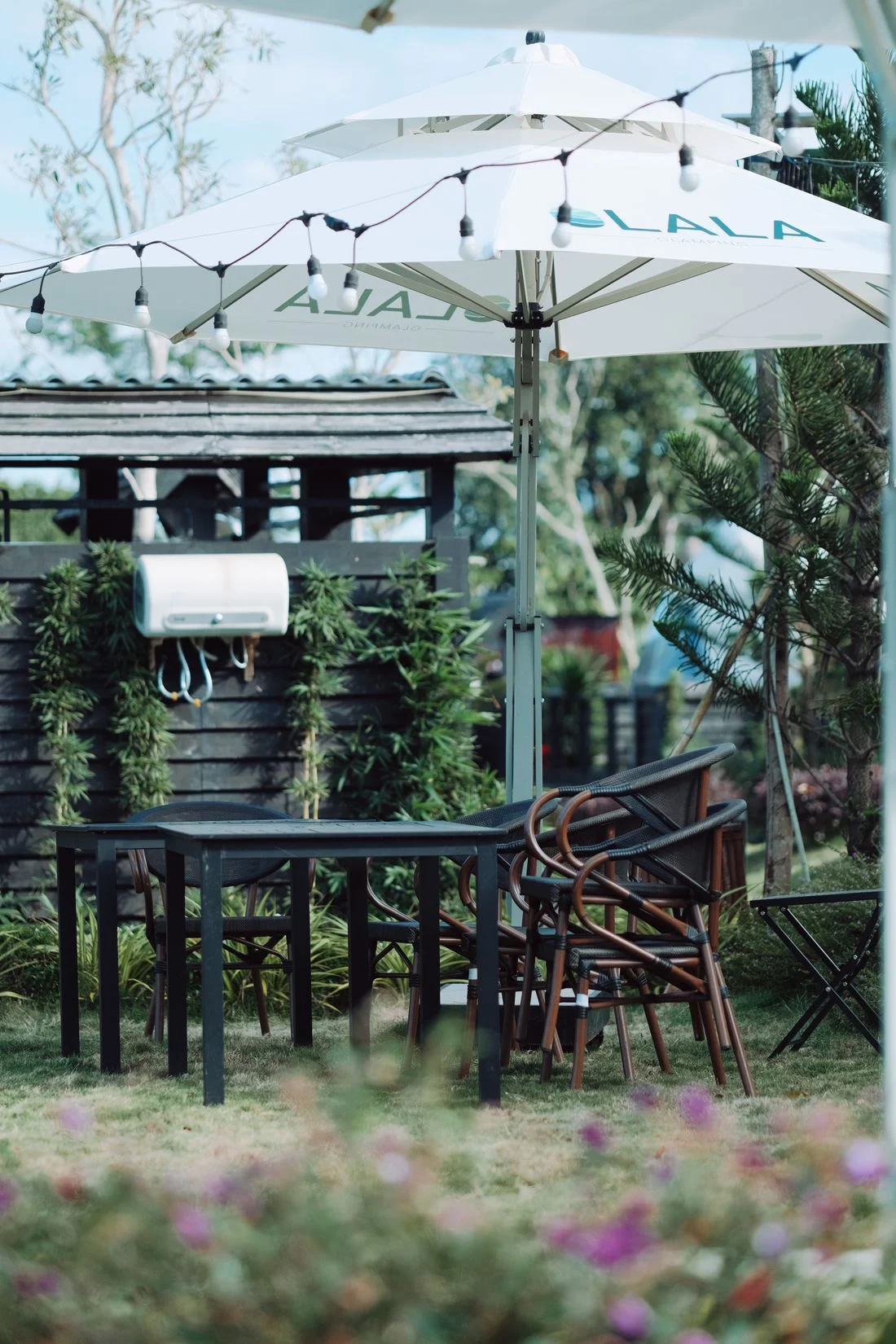
A patio umbrella is often chosen from the table size alone. That misses several parts of the decision: where the sun is when you sit outside, where the base will stand, how the canopy opens, and whether the whole arrangement is suitable for the site's exposure. Start by watching the patio, not by choosing a fabric color.
On a day representative of the season you plan to use it, note the sunny and shaded areas at breakfast, midday, and late afternoon. A chair that is comfortable at noon may be in direct sun during dinner. Photograph the space from the same position at those times so you can compare the movement.
Shade the activity you actually use
Decide whether the priority is a dining table, two reading chairs, or a children's play area supervised nearby. These activities occupy different footprints and may need shade at different times. A large canopy is not automatically the best answer if its shade falls beyond the seating by the hour you use it.
Use the manufacturer's canopy dimensions to sketch the overhead outline. Then think about the sun's angle rather than treating that outline as a permanent shadow. Tilt mechanisms can change coverage, but they do not solve every orientation or wind condition. Check the actual adjustment range and operating instructions.
Include the base in the floor plan
A center-pole umbrella needs a compatible table opening if it is intended to pass through the table, plus the specified base and support arrangement. The table itself should not be assumed to provide sufficient support. A cantilever design moves the pole aside but often introduces a substantial base footprint.
Mark that footprint on the patio. Walk around the chairs in their occupied positions and check whether the base creates a trip obstacle or blocks a door. Consider how you will move it if the product is movable: a base that seems manageable empty may be very different once correctly filled or weighted.
Follow the exact model's base, installation, and anchoring requirements. Do not substitute a lighter base because it fits neatly beneath the table. For balconies or elevated decks, check building restrictions and load considerations with the responsible manager or professional before choosing heavy equipment.
Leave room to open and close
An umbrella needs clearance during operation as well as when fully open. Check nearby walls, roof edges, lights, trees, and railings. Imagine closing it with the chairs still in place and carrying the cover to it. If ordinary operation requires moving half the patio, you may leave it open when it should be put away.
Look at the controls at your own height. A crank or tilt lever that is awkward to reach is a daily inconvenience. Ask whether the cover, replacement canopy, or other wear parts are available for the model, and review the care instructions before purchase.
Make weather part of the routine
Wind suitability depends on the particular product and installation. Follow its stated limits and close or store it as directed; do not use a calm-day impression as evidence that it is secure. Plan where the umbrella and cushions will go when the weather changes and whether you can handle that routine yourself.
Finally, choose the visual finish. A light neutral canopy may blend with the house, while a saturated color makes a stronger outdoor feature. Either can work if the scale, shade pattern, and support already make sense. Those decisions determine whether the umbrella improves the hours you spend outside, rather than simply filling the space above the table.