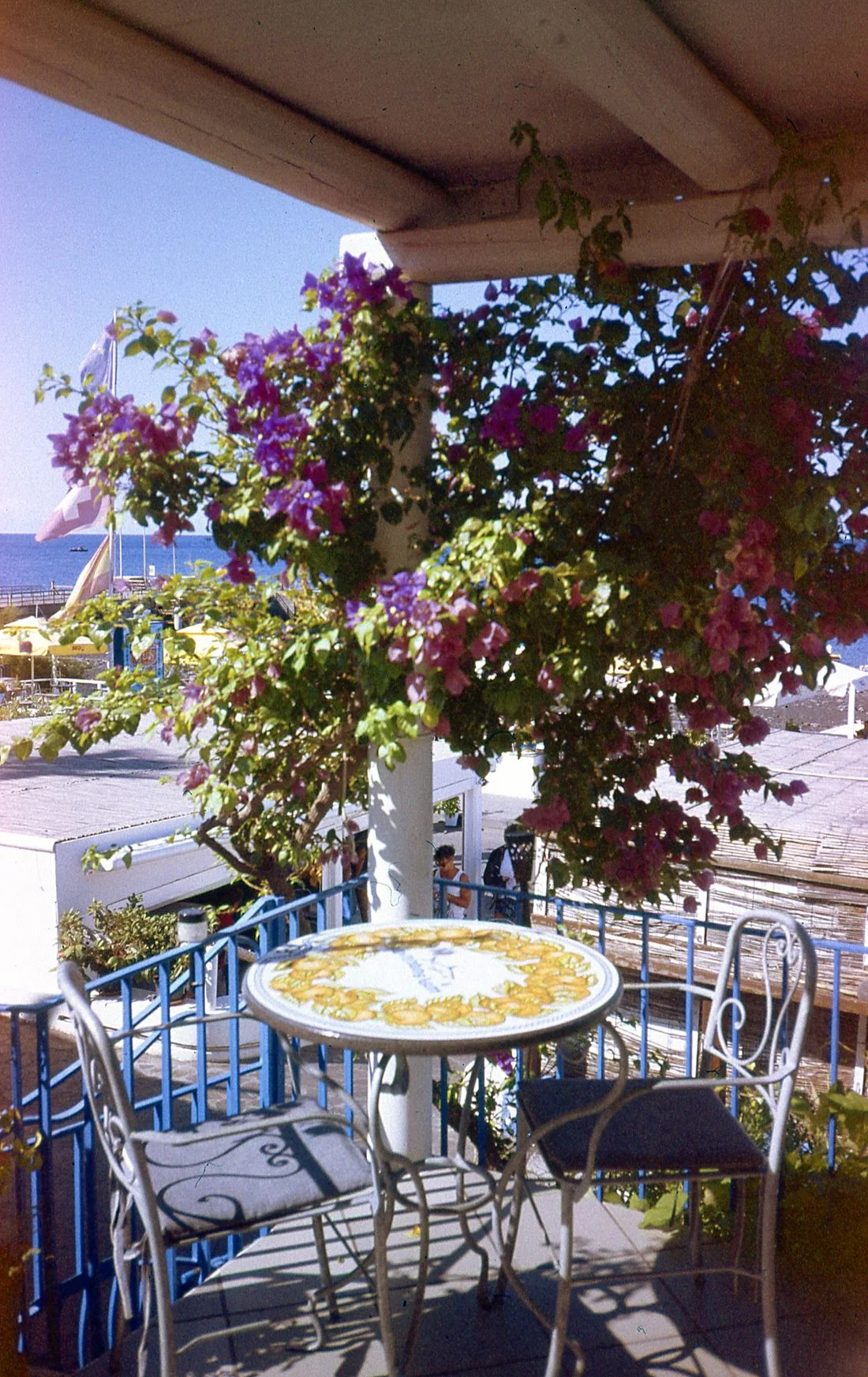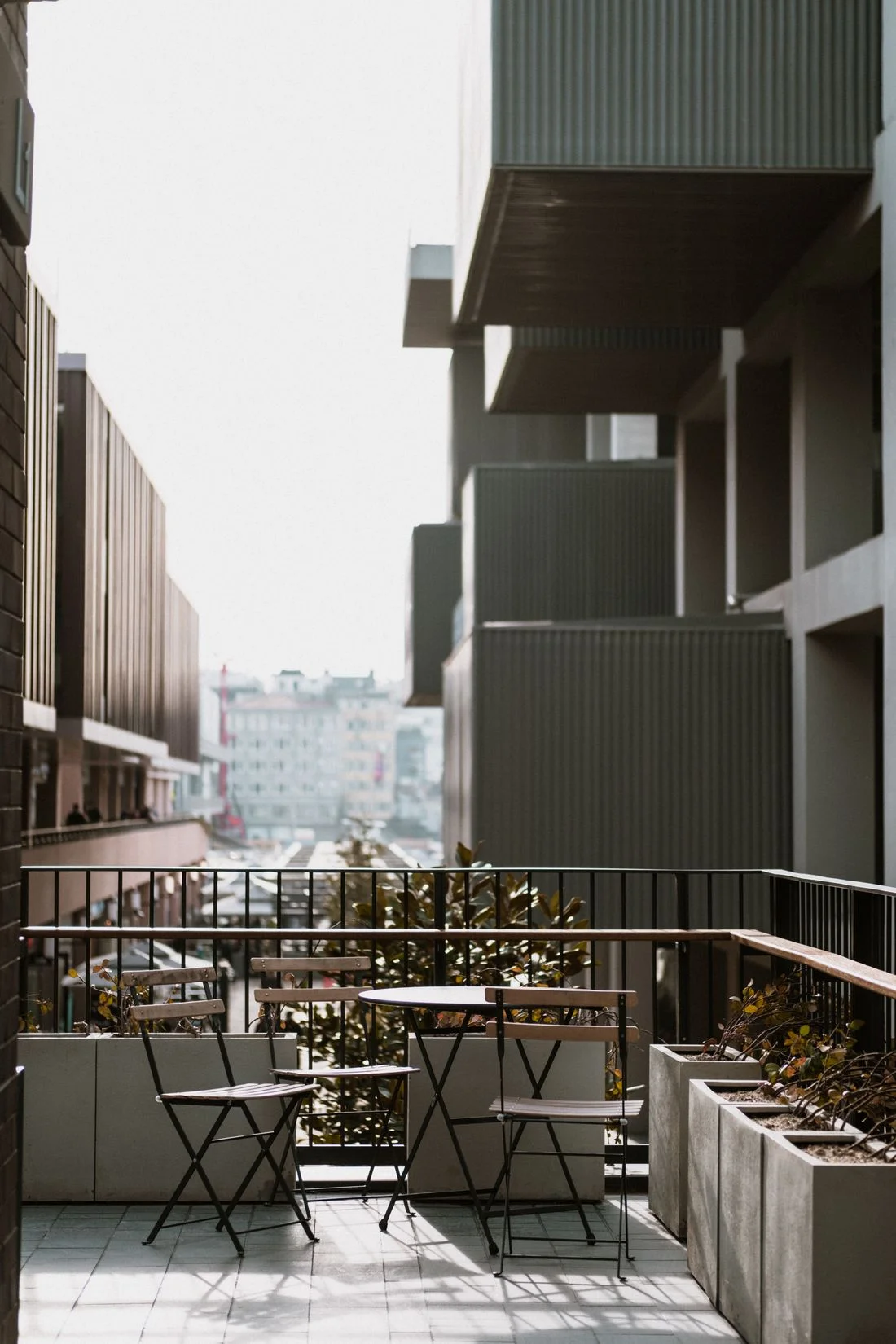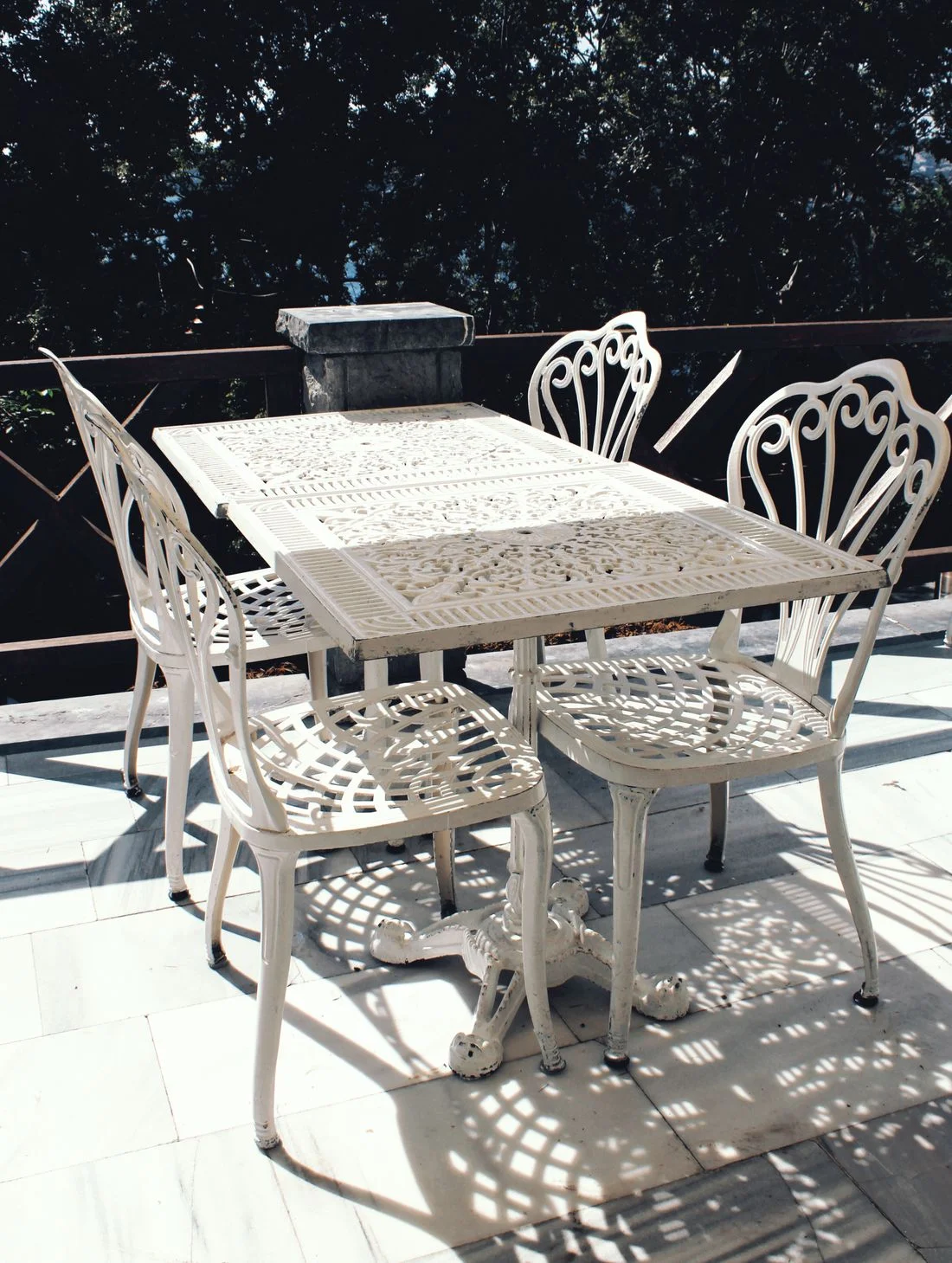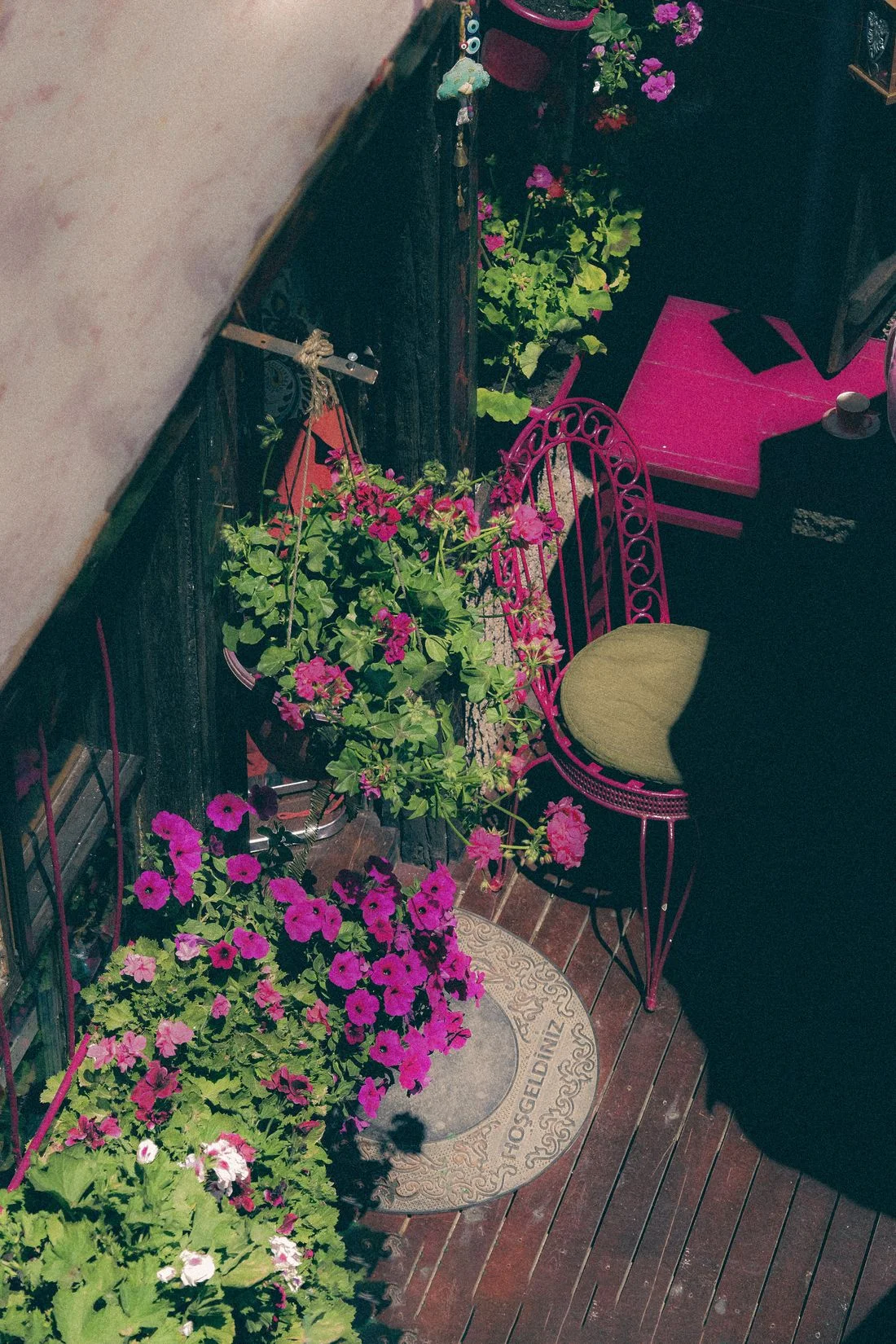
A small patio can feel full of color with only a few flowering containers. It can also become visually busy very quickly, especially beside patterned paving, bright furniture, or a dense urban backdrop. Start with the patio's existing colors before choosing a collection of flowers at the garden center.
Look at the space from inside the house. The planting may be viewed through a doorway more often than from the patio itself. Decide whether you want the flowers to stand out against the furniture or blend into a softer setting.
Choose a limited relationship
One approach is a closely related range, such as pink through soft purple, supported by green foliage. Another is a clear contrast, such as a warm flower color against a cool chair finish. You do not need to include every shade between them. A small palette is easier to read when the containers are close together.
Use white thoughtfully. It can give the eye a pause among stronger colors, but a large patch of white also attracts attention. Place it where you want that emphasis rather than adding it automatically to every pot.
Let growing conditions narrow the choice
Color comes after suitability. Identify the actual sun exposure, wind, and seasonal conditions, then choose among plants that fit them. Two flowers that look beautiful together in the store may have incompatible requirements for light, moisture, or mature space.
If you want several different plants in one container, check their needs and eventual sizes before combining them. Separate pots give you more flexibility to move or replace a plant without disturbing the whole display. They also let you keep a consistent color relationship while adjusting care individually.
Connect the containers
Repeat one pot finish or shape to bring the collection together. If the flowers are vivid, quieter containers can keep the focus on the planting. If the plants are mostly green with occasional blooms, a colored pot can supply a more constant accent.
Leave gaps between containers and keep the chair area usable. Check the flowers from a seated position so the most attractive blooms are not all hidden behind the table. As the season changes, remove tired growth and simplify where necessary. A few clear color notes can be more satisfying than trying to keep every original part of the arrangement in place.