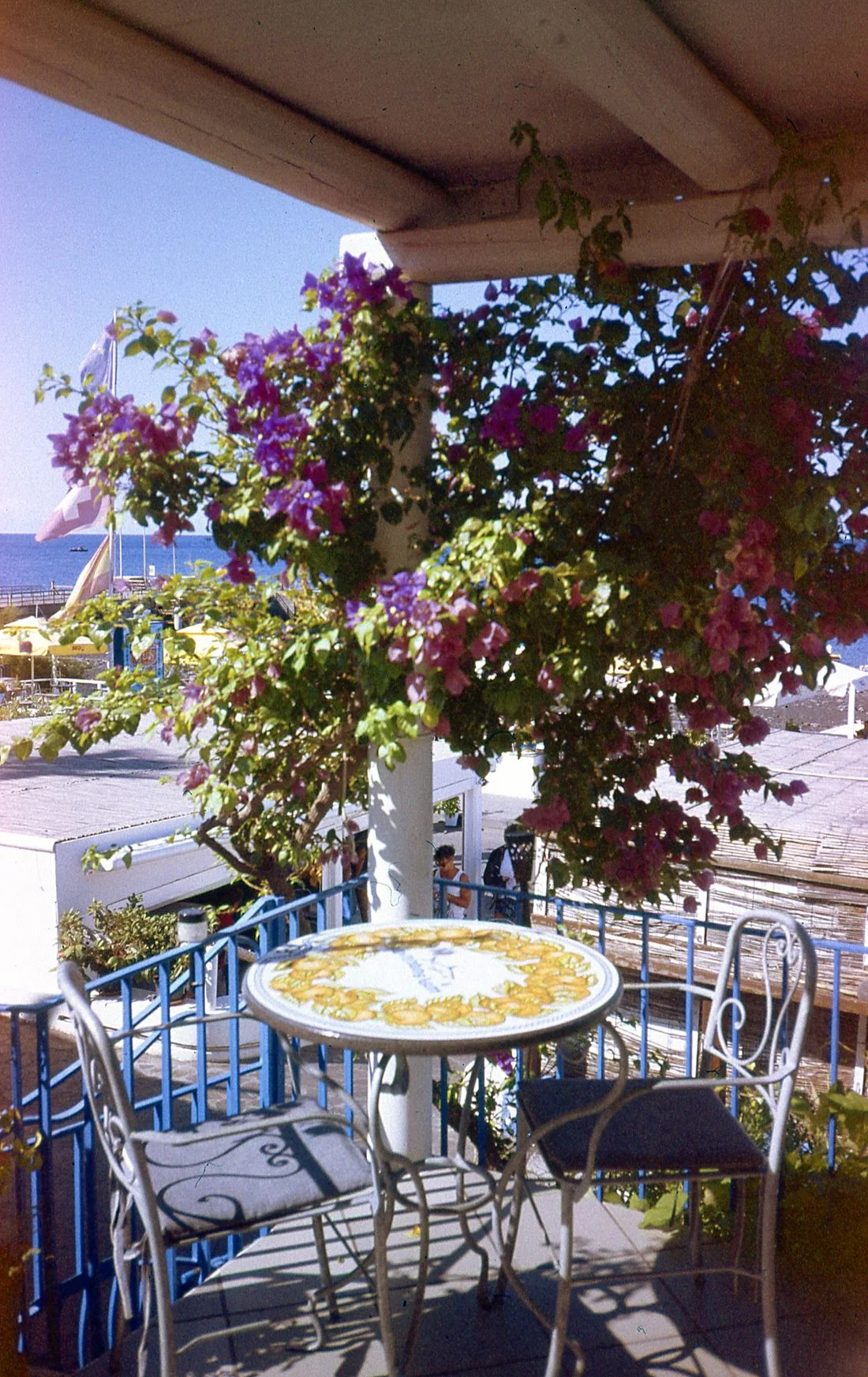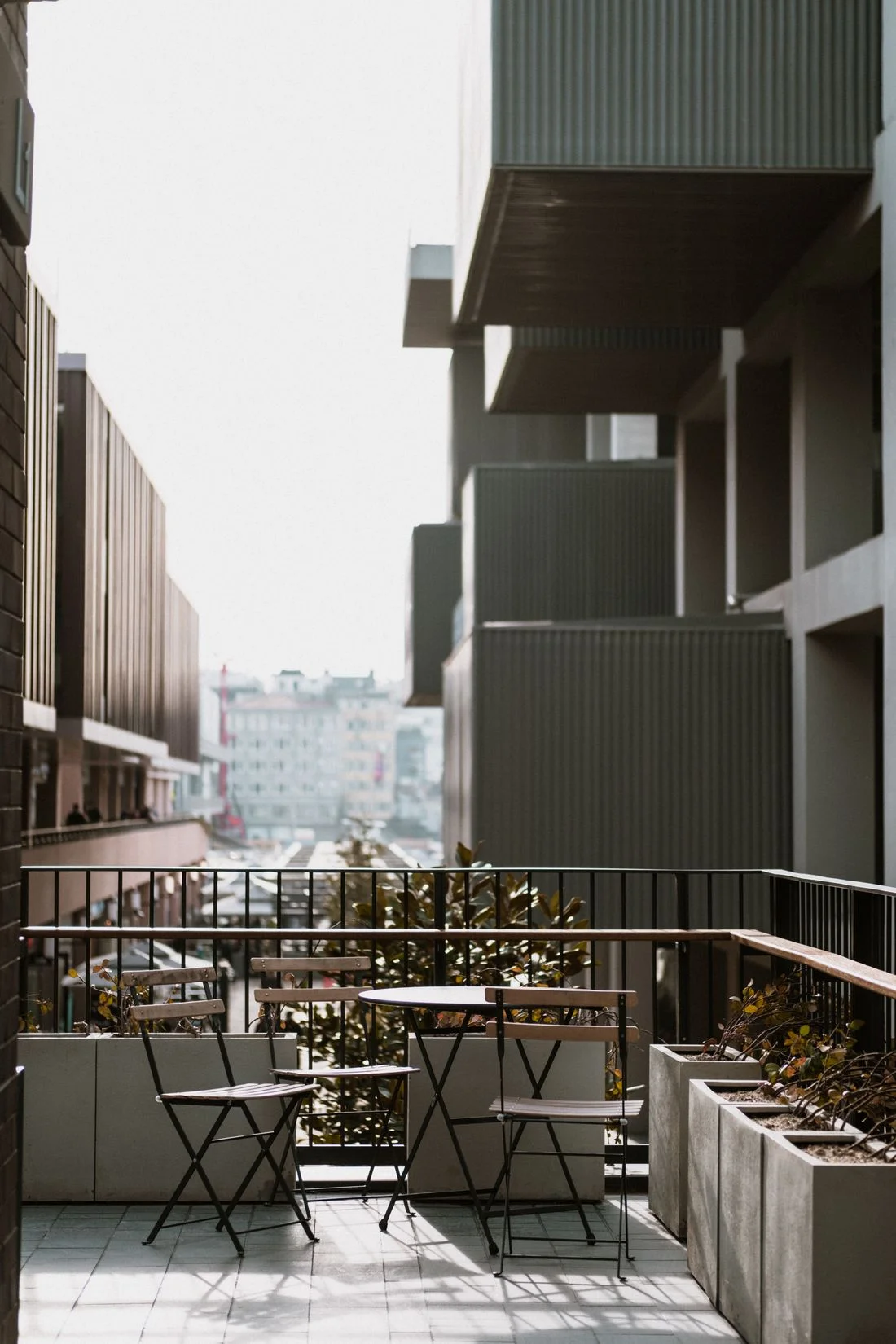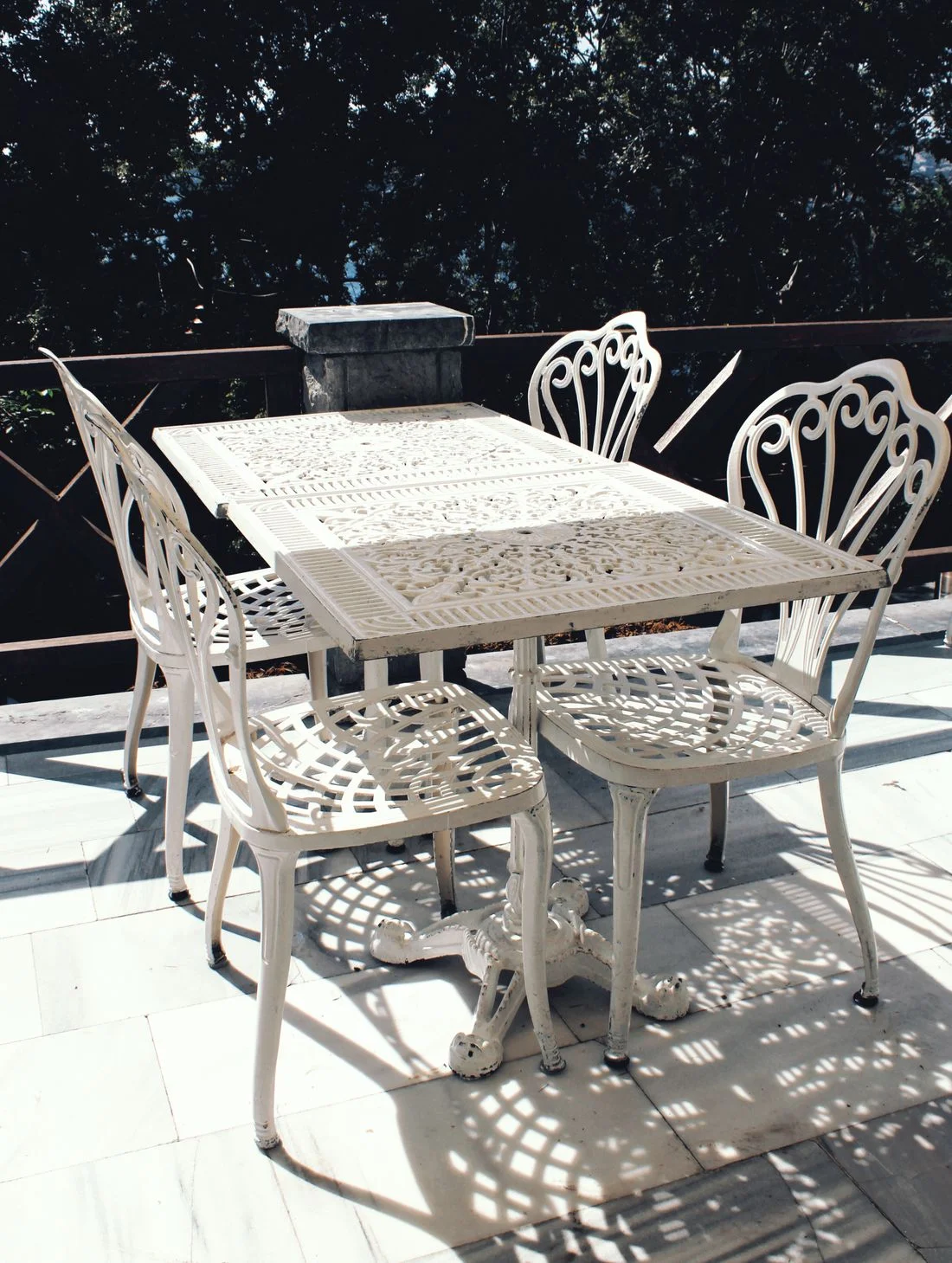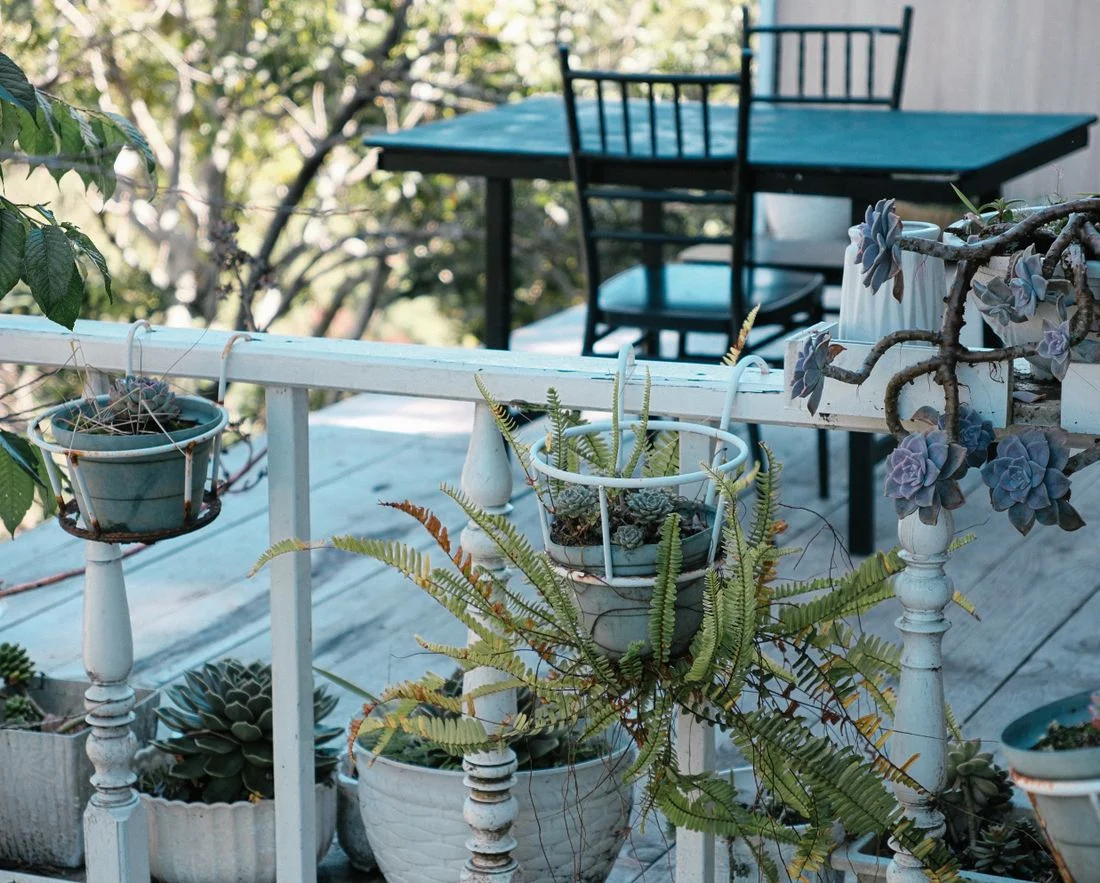
Patio plants should make the sitting area more enjoyable, not turn every trip to the table into an obstacle course. Begin with the furniture in use: chairs pulled out, doors open, and a tray moving between the house and the table. The empty spaces left after that test are the starting points for containers.
A pot can look modest when empty and occupy much more space once foliage spreads. Include the plant's expected width as well as the container diameter. A leafy edge beside a chair may be pleasant; leaves continually brushing someone's face are less so.
Draw three kinds of space
Think of the patio as seating space, movement space, and planting space. These areas can overlap visually, but they should not fight physically. Keep the route to the door and required access unobstructed, and leave drains and building services accessible.
For example, a small table in the middle of a rectangular patio might leave two corners suitable for containers. Instead of putting a pot behind every chair, group two or three in one corner and use a single lower container in the other. That gives you planting on both sides without surrounding each person with obstacles.
Build a view from the chairs
Sit down before deciding which plant belongs at the back. A tall container behind a low one may create a pleasing layered view from the doorway but look like a wall from the nearest seat. Turn the arrangement slightly or move the tallest plant away from the table's main sight line.
Use a few repeated container finishes to connect different plants. Matching every pot exactly is unnecessary, but a limited group of colors can make a mixed collection feel intentional. Let foliage provide much of the variation. If all the pots are highly patterned, the plants may become secondary.
Leave a way to care for the plants
Can you reach the soil without moving a chair? Can you lift a removable inner pot or inspect the back of the plant? Can water drain without running across the main walking route or onto a neighbor's space? These questions matter more than whether the pots form a perfect triangle in a photograph.
Choose plants for the site's actual light and exposure, then arrange suitable candidates for appearance. A shaded corner does not become a good place for a sun-loving plant simply because it needs a tall shape. If the right plant does not suit the desired spot, change the composition.
Keep heavy containers within the limits of the patio or balcony structure and follow building requirements. For movable pots, choose a support designed for the load and the surface; do not rely on an unstable decorative stool to gain height.
Edit after a week of use
Notice which pots you keep stepping around and which views you actually enjoy. Move one container at a time rather than rebuilding the entire display. Leave room for growth and seasonal changes, and resist filling every visible gap immediately. A patio with a clear floor and a few well-placed plants often feels more generous than one with a pot in every corner.