A windowsill can be a natural place for a small plant collection, but the width of the sill is only one part of the decision. You also need to open the window, move the curtains, water the plants, and protect the surface beneath them. Arrange those actions first, then compose the greenery.
Measure the usable ledge, including any slope, handle, or track. A pot should sit securely on its intended support rather than balance partly over an edge. If the sill is too shallow, a suitable nearby stand may be a better option than trying to make several containers fit.
Choose fewer plants with clear space
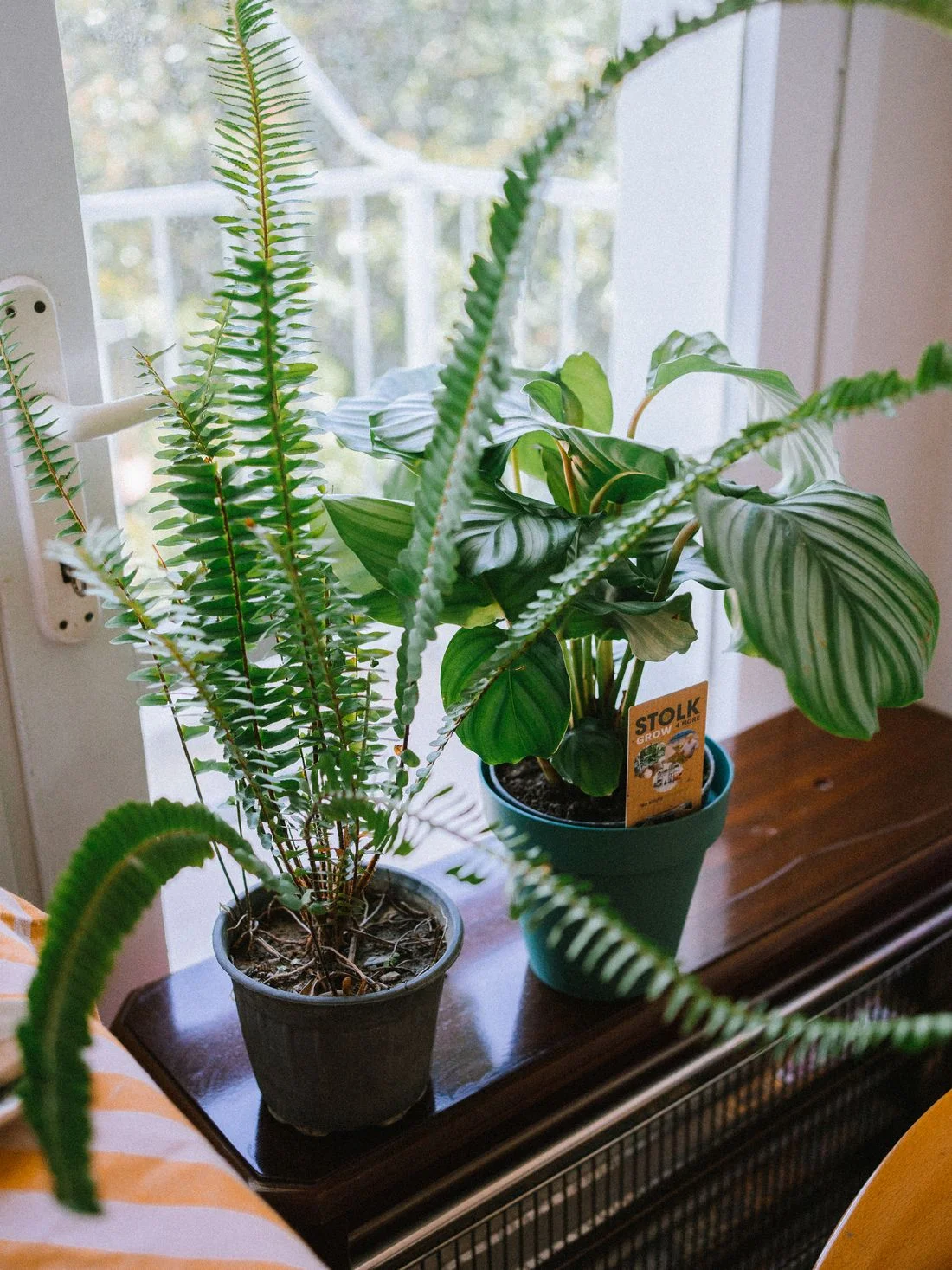
Begin with two or three pots of different but compatible sizes. Leave a gap where you can reach the window handle and enough room to lift each pot independently. A continuous row may look lush, but it can make the middle plants difficult to inspect.
Place taller growth where it will not block the most useful view or press against the glass. A low plant near the center and taller growth toward one side can preserve an opening. Check the arrangement from the chair or table where you normally look toward the window, not only while standing over the plants.
Make watering a controlled task
Decide whether the pots will be watered in place or carried to a suitable sink or tray. If you carry them, make sure the inner pots lift out easily and have a clear route. If you water in place, use a protective setup that fits the containers and manage any collected water rather than leaving it unnoticed beneath the pots.
Inspect the surface regularly for moisture. Decorative outer pots, saucers, and liners can hide a spill as effectively as they contain one. Follow the plant and container guidance, and avoid letting the appeal of a coordinated row override the individual plants' needs.
Account for the changing window
Curtains may reduce light when closed, and an opening window can change the conditions around the leaves. Check the actual exposure and choose plants suited to it. Do not assume that every species sold as a houseplant belongs in direct sun on the same sill.
Consider nearby heating equipment and keep the arrangement clear of required ventilation or access. If you cannot operate the window normally without moving everything, reduce the collection or relocate part of it.
Use containers to connect the group
A repeated material, such as simple clay-colored pots or pale ceramic covers, can make different foliage shapes feel related. Exact matching is optional. Keep the containers quiet if the leaf shapes already provide strong variety.
As the plants grow, reassess the gaps. The arrangement is not fixed: one larger plant may eventually occupy the space of two small ones. Moving a plant to a more suitable position is part of maintaining the display, not a failure of the original design.