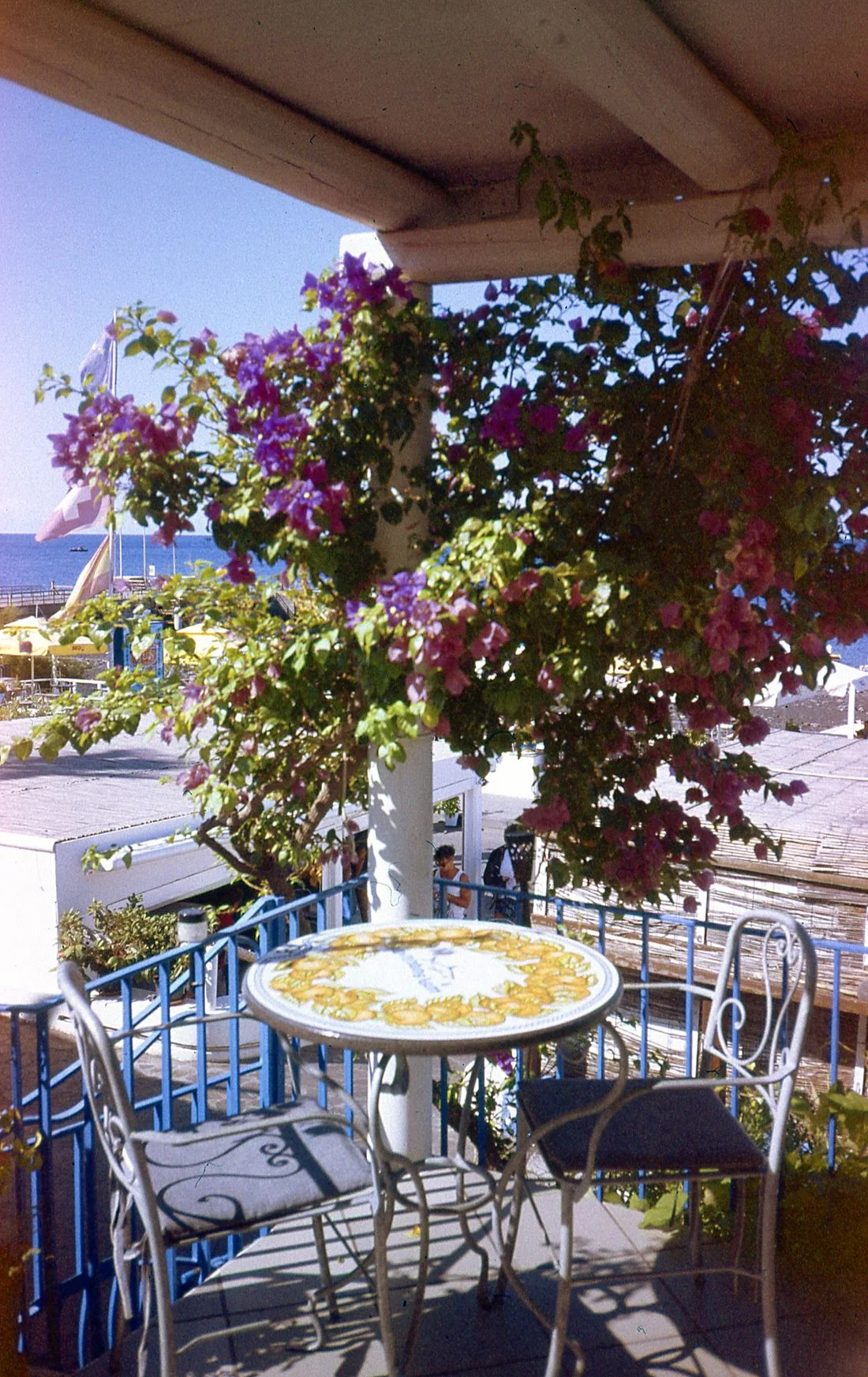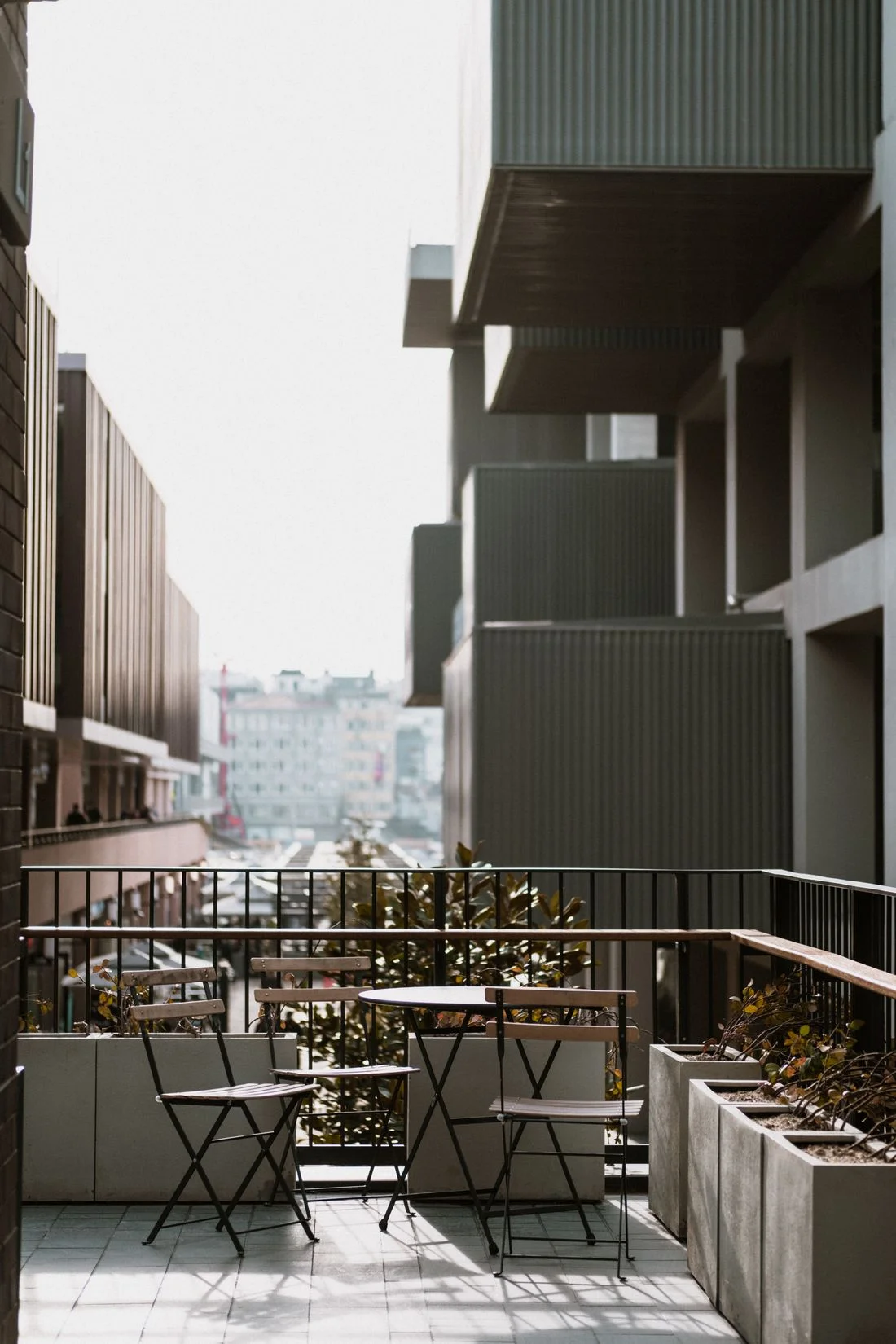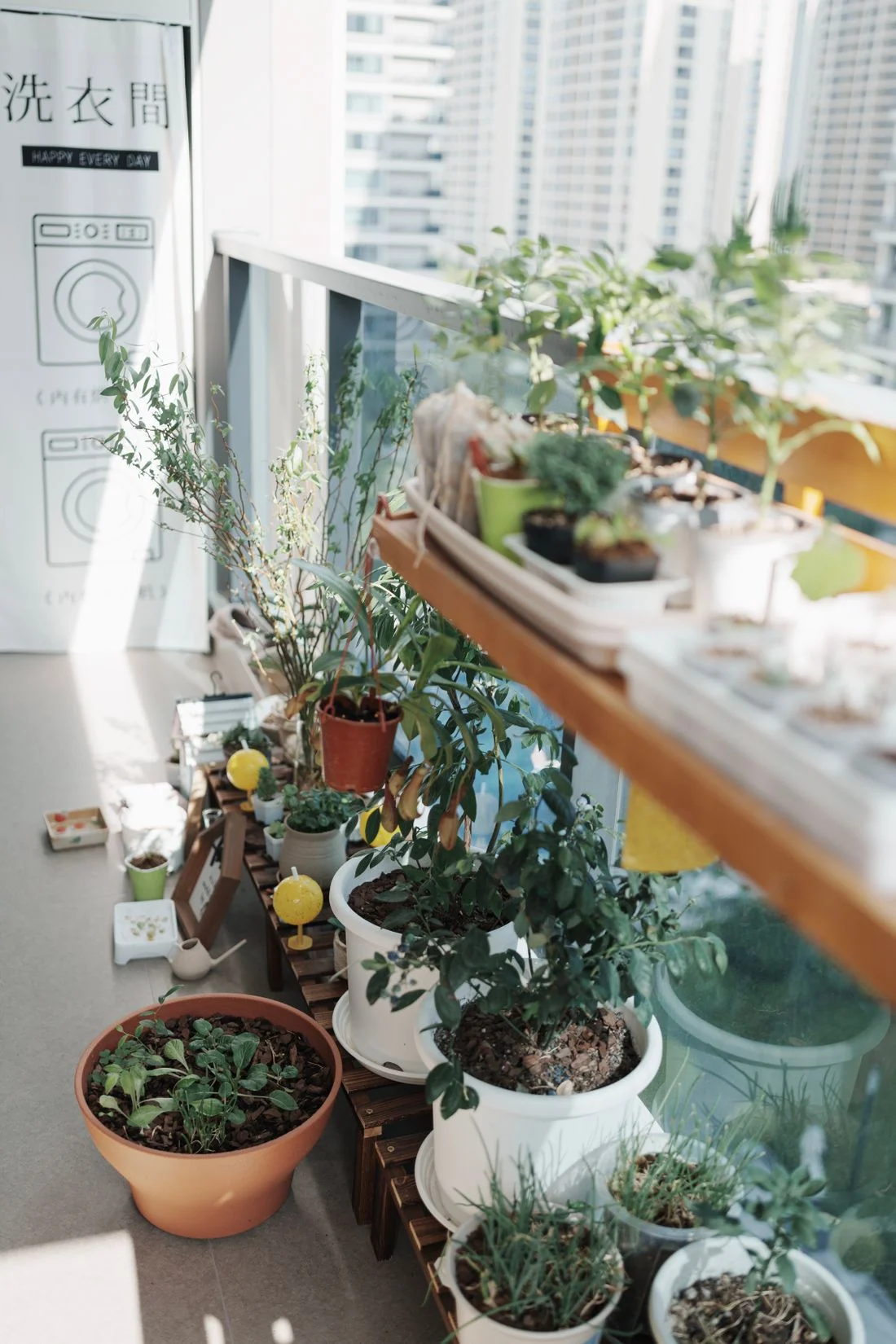
A container garden grows in two ways: the plants get larger, and the collection of pots tends to expand. On a small balcony or paved courtyard, both changes can gradually erase the route through the space. A simple layout plan helps you decide where another plant would improve the garden and where it would merely make it harder to use.
Begin with an empty-floor photograph and rough measurements. Mark doors, drains, taps, fixed furniture, and any access that must remain clear. If the space is elevated, confirm the building's rules and load limits before planning heavy containers or concentrated groups.
Protect one continuous route
Choose the path you need for watering, reaching a chair, and opening doors. Keep it continuous instead of relying on several tiny gaps between pots. Walk it carrying the watering can you actually use. If you have to turn sideways or step over a saucer now, the route will be worse when leaves spread.
Consider a narrow balcony with a door at one end. A line of pots along both long sides may look balanced, but it can create a cramped central corridor. A deeper group at the far end and a shorter group on one side can leave a more useful open stretch near the door. The right arrangement depends on the actual door swing and building requirements.
Group by care as well as appearance
Containers that need similar attention can sit together, provided the location suits each plant. Keep plants needing frequent checks where you can reach the soil easily. A beautiful tall container at the back of a dense cluster is a poor home for something that needs constant monitoring.
Use plant labels or a simple note to distinguish different care needs. Do not assume that pots of the same size will dry at the same rate. Species, exposure, container material, and growth all affect how you manage them. The University of Maryland recommends checking container moisture rather than watering automatically on a fixed schedule.
Use height with restraint
A low pot, a medium plant, and a taller plant can create depth without requiring a shelf. If you use a plant stand, choose one designed for the intended conditions and loaded weight, including water. Follow its assembly and securing instructions. A decorative indoor stand is not automatically suitable for an exposed balcony.
Keep the tallest growth away from door handles and places where it will brush people. Think about the view from inside: a group that looks lush outdoors may block most of the daylight through the only window. Leave openings that preserve the connection between the room and the garden.
Leave working space
Reserve somewhere to set down a pot while checking it, remove dead growth, or sweep spilled mix. If every inch contains a plant, small maintenance jobs require moving the entire collection. A clear patch of floor or a suitable compact work surface makes care much less disruptive.
Buy containers in stages. Live with the first arrangement long enough to notice the hot corner, the awkward reach, and the route you actually take. Then add only what has a clear place. A container garden feels abundant because the plants are healthy and visible, not because every available square inch holds a pot.