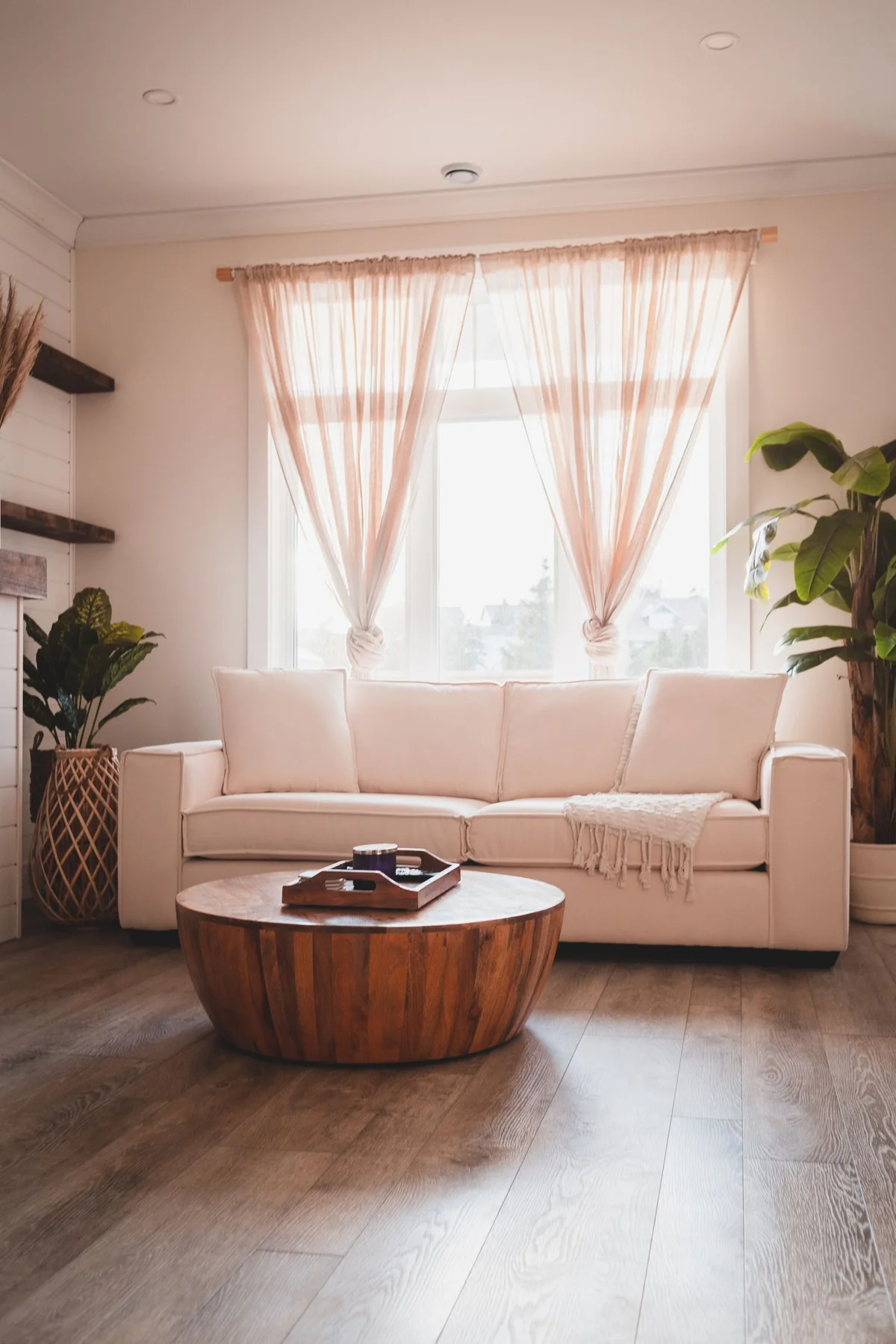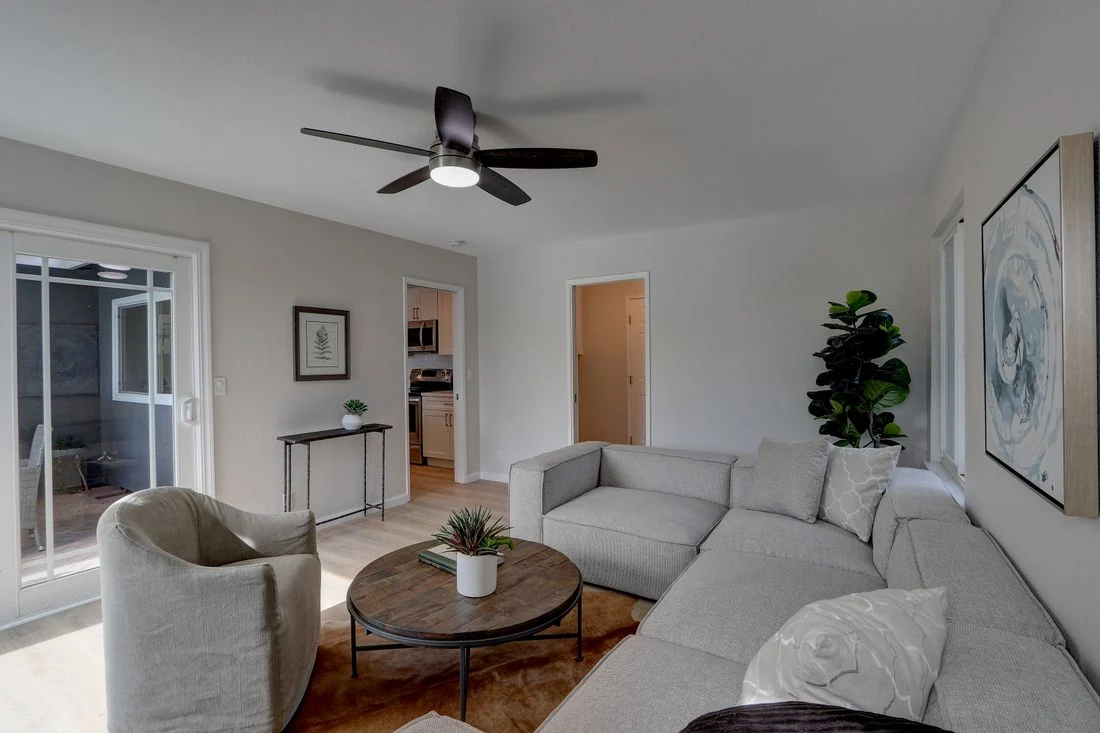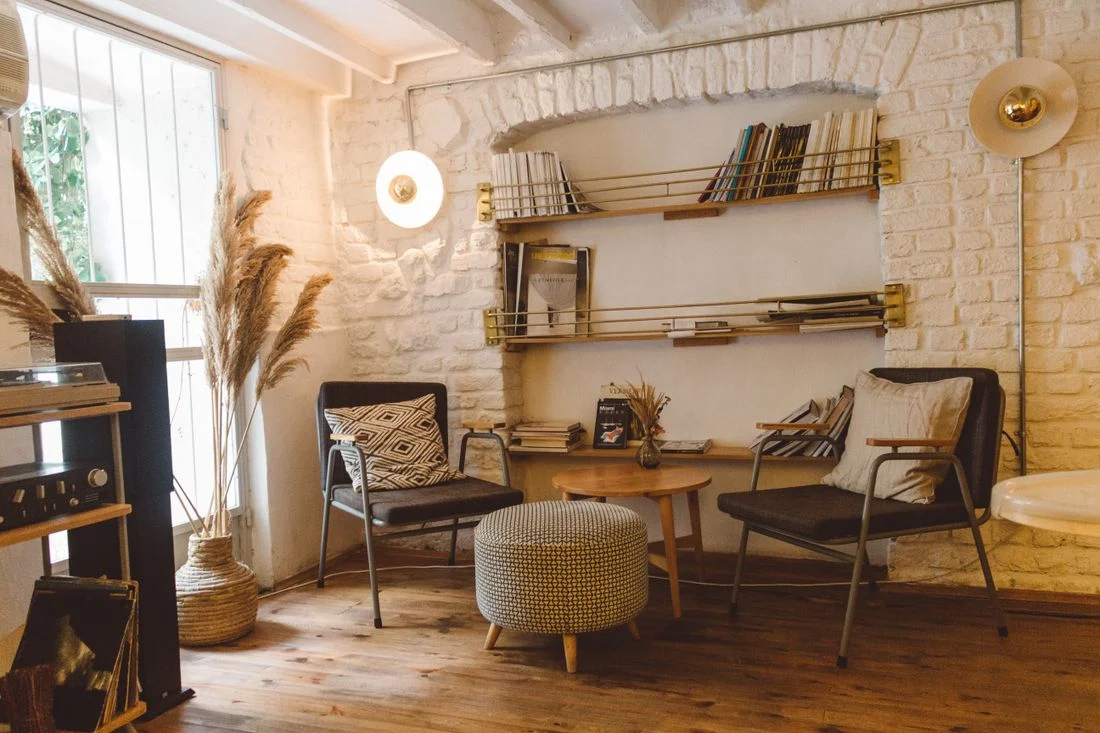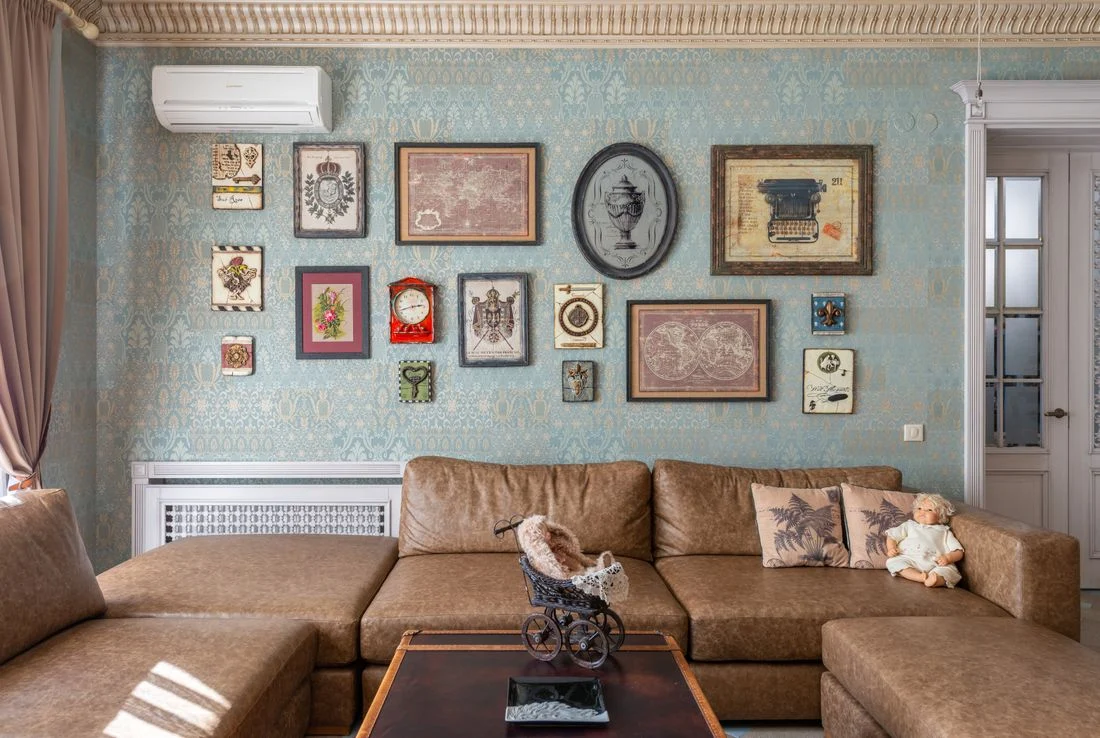
A living room with several doorways can feel as though every wall has already been claimed. Yet the openings also tell you something useful: where furniture cannot make people stop or turn sideways. The first drawing should be a map of movement, not a shopping plan.
Mark each doorway and its full swing. Include the closet door used only occasionally, because furniture that blocks it will eventually need to move. Then trace the routes used most often. They may run along one edge, cross diagonally, or meet near the center.
Find the largest uninterrupted pocket
Look for an area beside those routes that can hold the main sofa and at least one usable surface. The sofa does not need to occupy the longest wall if that wall lies between two busy doors. A shorter sofa in a calmer pocket may make the whole room easier to use.
If the seating must float, choose furniture with finished backs and keep a clear opening into the group. Resist putting a console behind the sofa unless the passage genuinely has room for it. The absence of a wall does not create an obligation to add furniture there.
Use fewer pieces with clearer jobs
Several small chairs and tables can create more obstacles than one sofa and a well-placed chair. Give every piece a specific role. An extra accent chair that nobody uses may be the reason a doorway feels cramped.
Storage works best on a wall where its doors and drawers can open fully. A shallow cabinet may fit between openings, but measure the handles and the space needed to stand in front of it. A cabinet that technically fits the wall can still interfere with circulation when used.
Guide the eye toward the place to sit
Use a rug, artwork, or a coherent furniture arrangement to establish a visual center away from the busiest openings. Keep those elements connected to the seating rather than distributed equally across every remaining strip of wall. The room will feel less fragmented when one area reads clearly as its destination.
Finally, try the routes with the furniture occupied. Somebody stretching out on the sofa or pulling a chair back changes the available space. The successful layout is the one that works with people in it, including the person simply passing through to another room.