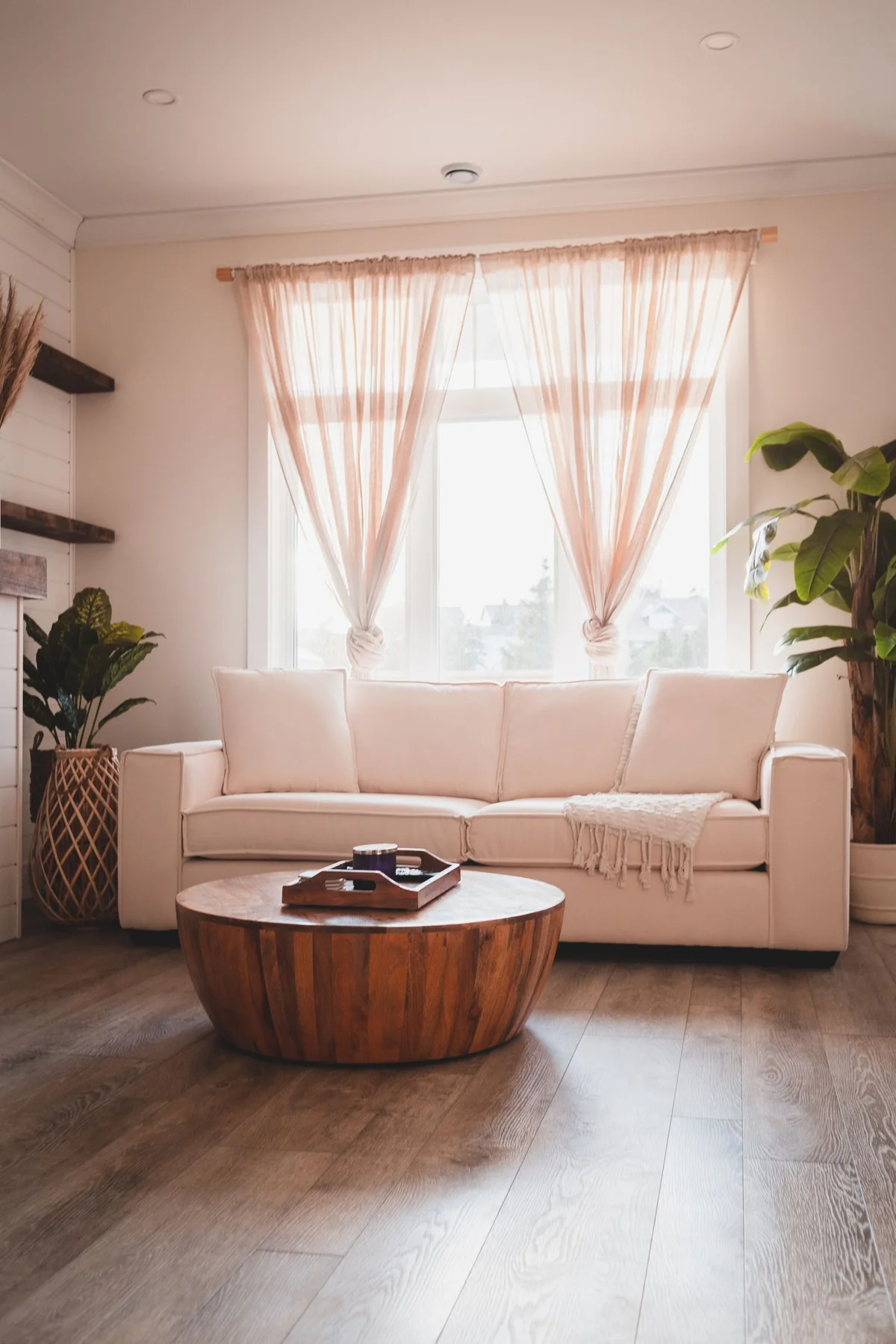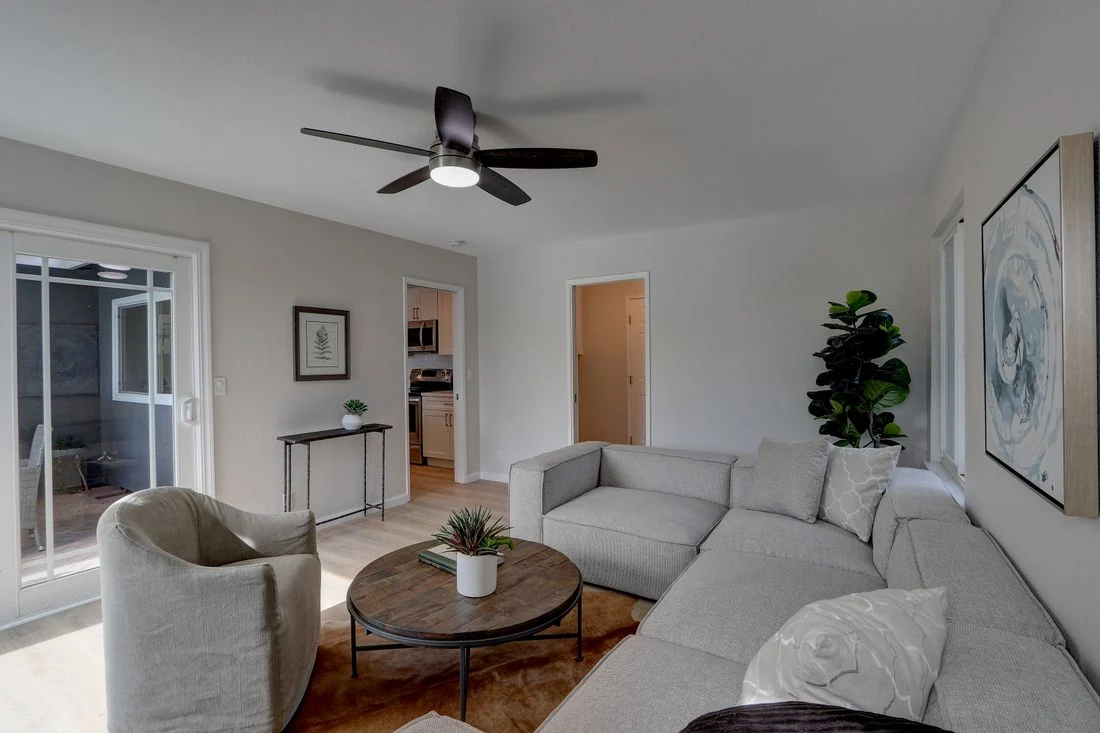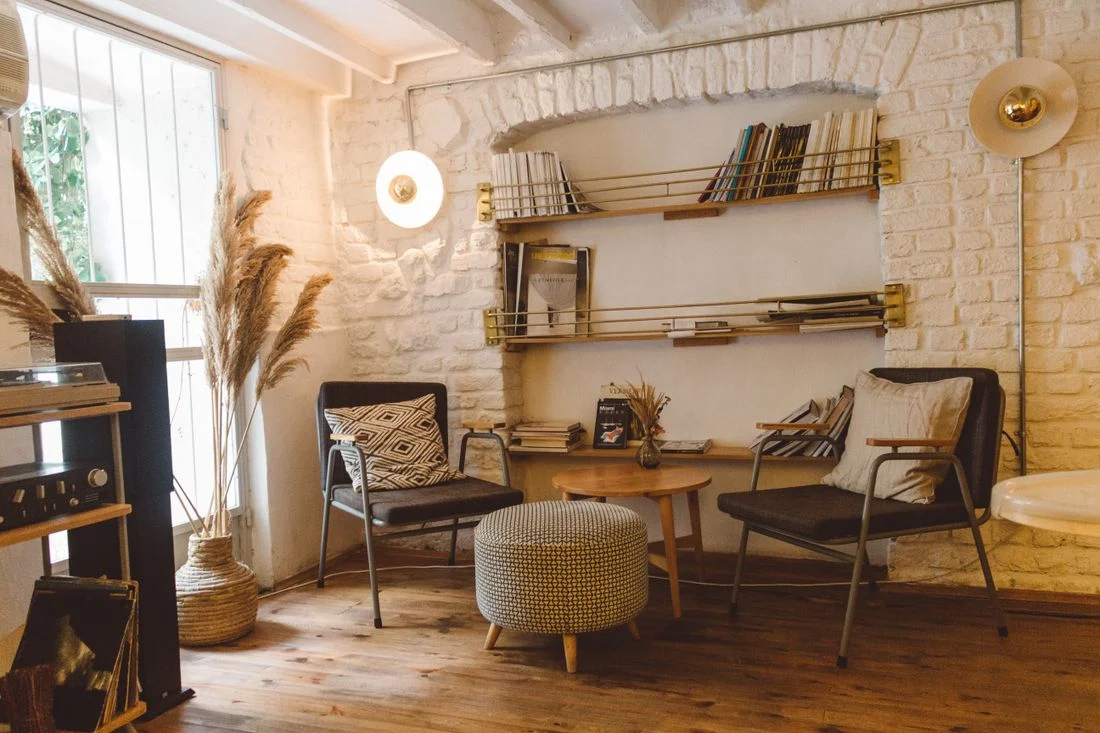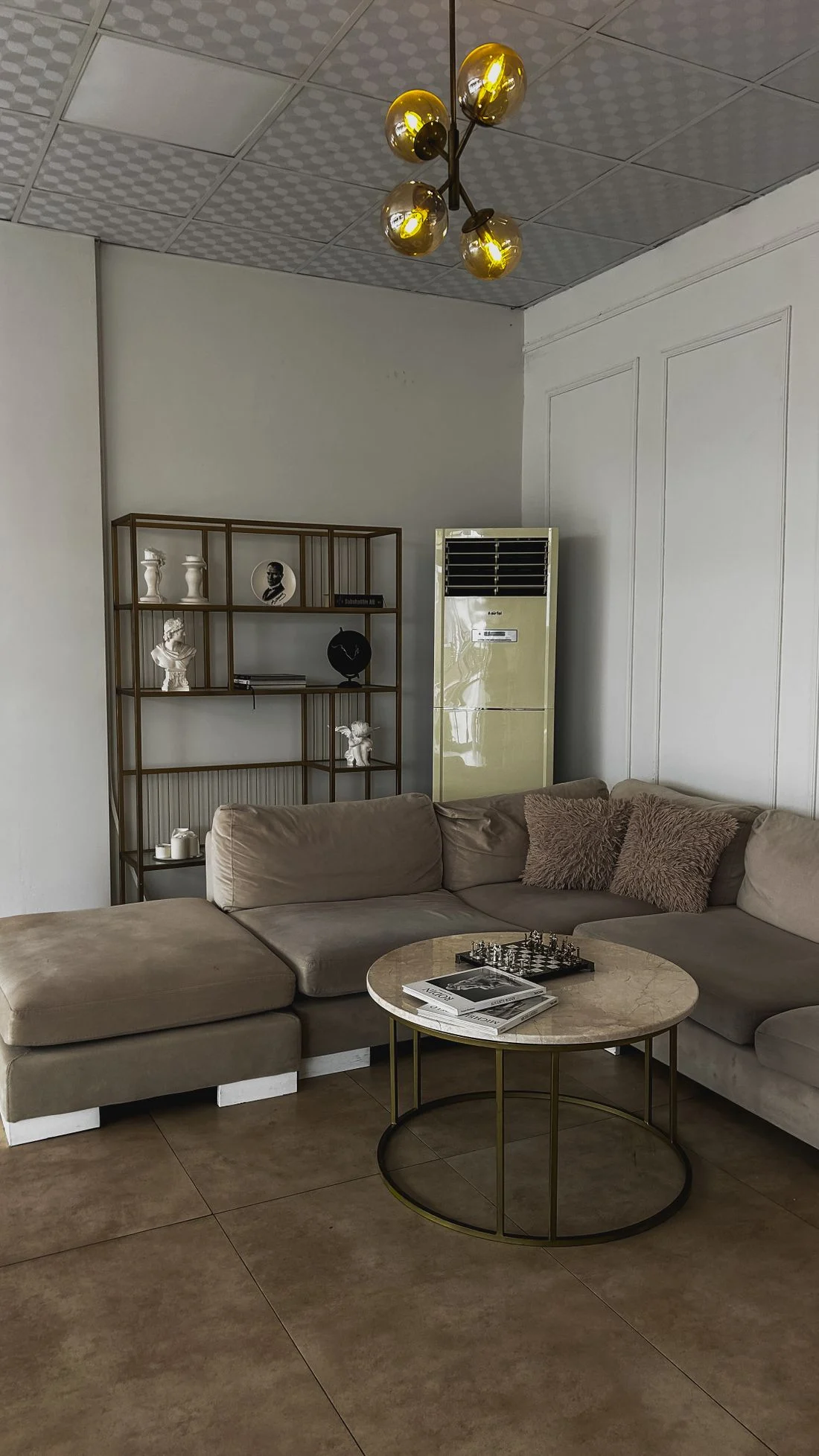
The appeal of a round coffee table is easy to understand in a room with a chaise, angled chairs, or a route that brushes past the seating area. Without projecting corners, the outline can be easier to move around. That does not make every round table small. A generous diameter can occupy more of the central floor than the rectangular table it replaces.
Test a circle on the floor
Use a piece of string to mark the proposed diameter with removable tape, or cut a paper circle from joined sheets. Place it in the actual seating group rather than in the empty center of the room. Sit down, stand up, and walk past it. The table should serve the seats without making the path a continuous sideways shuffle.
A circle works particularly well when several seats face toward one center. With a very long sofa, the people at opposite ends may find it difficult to reach. In that case, a smaller central table plus an end table can work better than increasing the diameter until it fills the room.
Notice the base as well as the top
Four splayed legs may extend close to the table's edge even when the top looks compact. A pedestal frees more surrounding foot space, but its stability and total weight still matter. Check how a nesting table works when both pieces are in use, not only when they are neatly tucked together in a product photograph.
Choose a height that works with the seats. A very low table might suit a low lounge arrangement yet be awkward for setting down a mug from an upright chair. Compare the actual measurements of both pieces and make a temporary surface at the proposed height if you are uncertain.
Decide what belongs on it
A round surface can become crowded quickly when a tray, book stack, and vase each claim a third of the top. Begin with the things the table must hold during an ordinary evening. If snacks or board games matter, leave a substantial clear area rather than treating every inch as display space.
For a room where the central table needs to move frequently, check whether one person can move it comfortably and whether the floor needs appropriate protection. Rounded corners are a shape choice, not a substitute for stable furniture or household safety planning. The best result is a table that supports the way the room is used and still leaves room for feet, movement, and an unplanned extra guest.