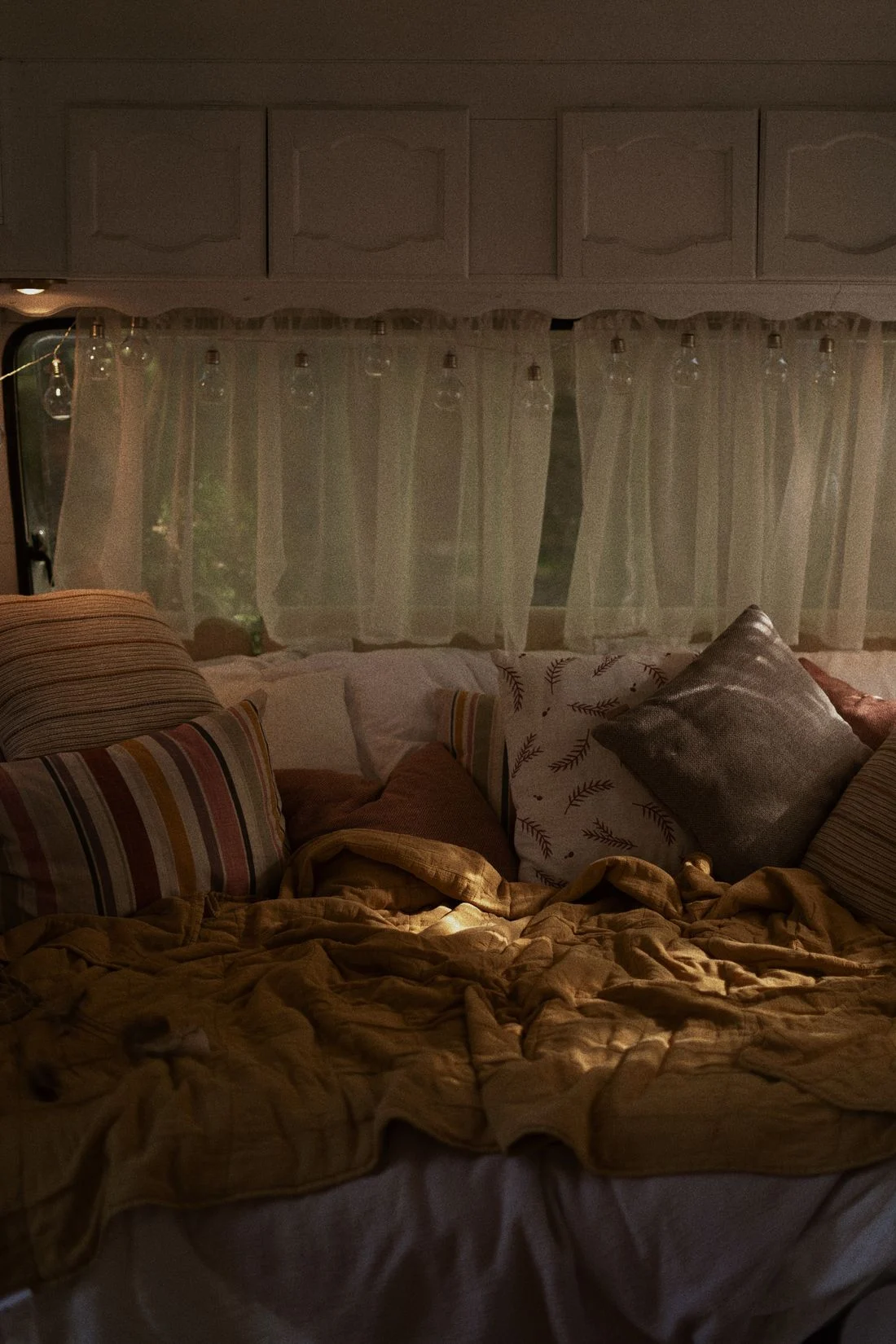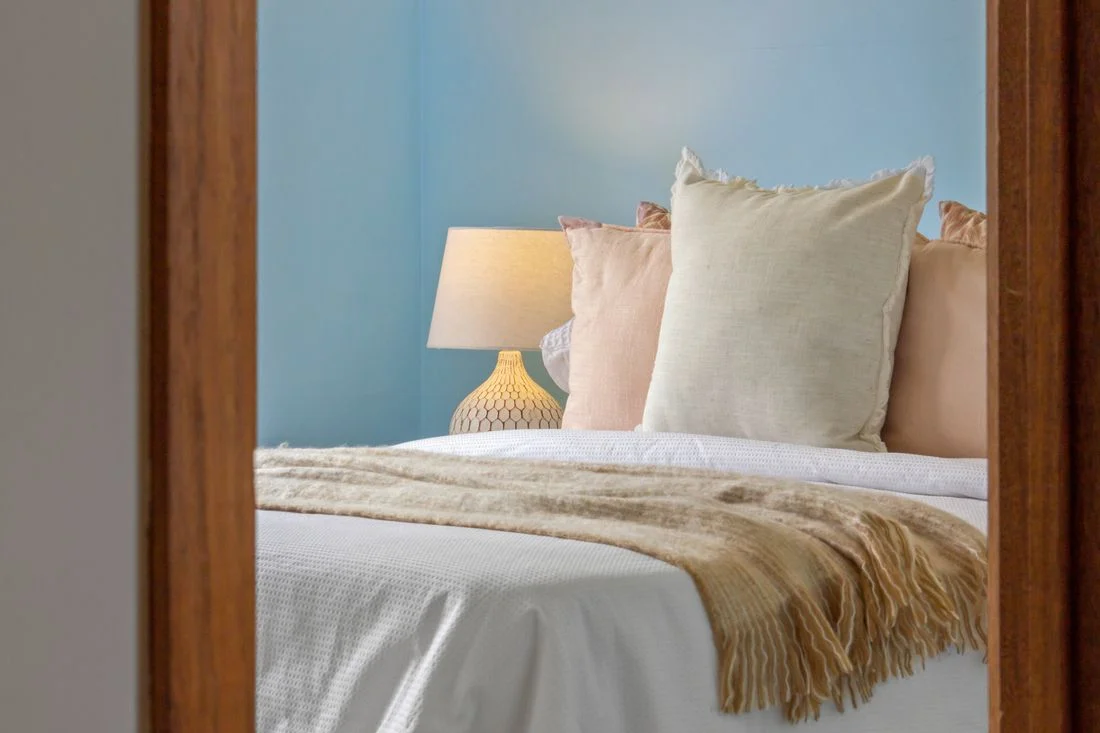
Pale blue can look airy in one bedroom and gray in another. The wall color is only part of that difference. Daylight, nearby wood, bedding, and the lamps used after sunset all affect how the room feels. Start with samples in the actual space rather than trying to copy the appearance of a photograph.
Place a generous sample near the headboard and another where the wall meets a window. View them in the morning and in the evening. A color that looks appealing beside cream curtains may feel quite different next to bright white bedding.
Warm one large surface
Natural wood on a bed frame or dresser can provide a warmer neighbor for blue walls. You do not need to introduce several wood finishes at once. Begin with the piece already in the room and consider whether a blanket, rug, or woven shade could connect it to the rest of the space.
Cream or oatmeal bedding offers a softer transition than a stark white set, but neither choice is compulsory. If you love your white sheets, fold a warm neutral quilt or blanket over part of the bed. The sheets can remain visible while the larger view gains another tone.
Be selective with accents
Rust, ochre, or a muted coral can create a small point of contrast. Try one item, such as a cushion or a piece of art, before distributing the accent throughout the room. A little color is easier to adjust than a collection bought to match all at once.
Avoid confusing warmth with the number of objects. A crowded bedside table will not necessarily make a blue room more welcoming. A comfortable textile and one useful lamp may contribute more than several decorative pieces that have to be moved every night.
Review the room after dark
Look at the wall with your existing lamps on. Bulb appearance, shade material, and the direction of the light can change the color you notice. If you are considering a different bulb, check compatibility with the fixture and controls and compare it in the room before buying several.
The goal is not to eliminate every cool note. Blue can remain the room's clearest color while wood, fabric, and a few warmer details give it company. Stop when the existing pieces feel related; the bedroom does not need a perfectly balanced color formula.