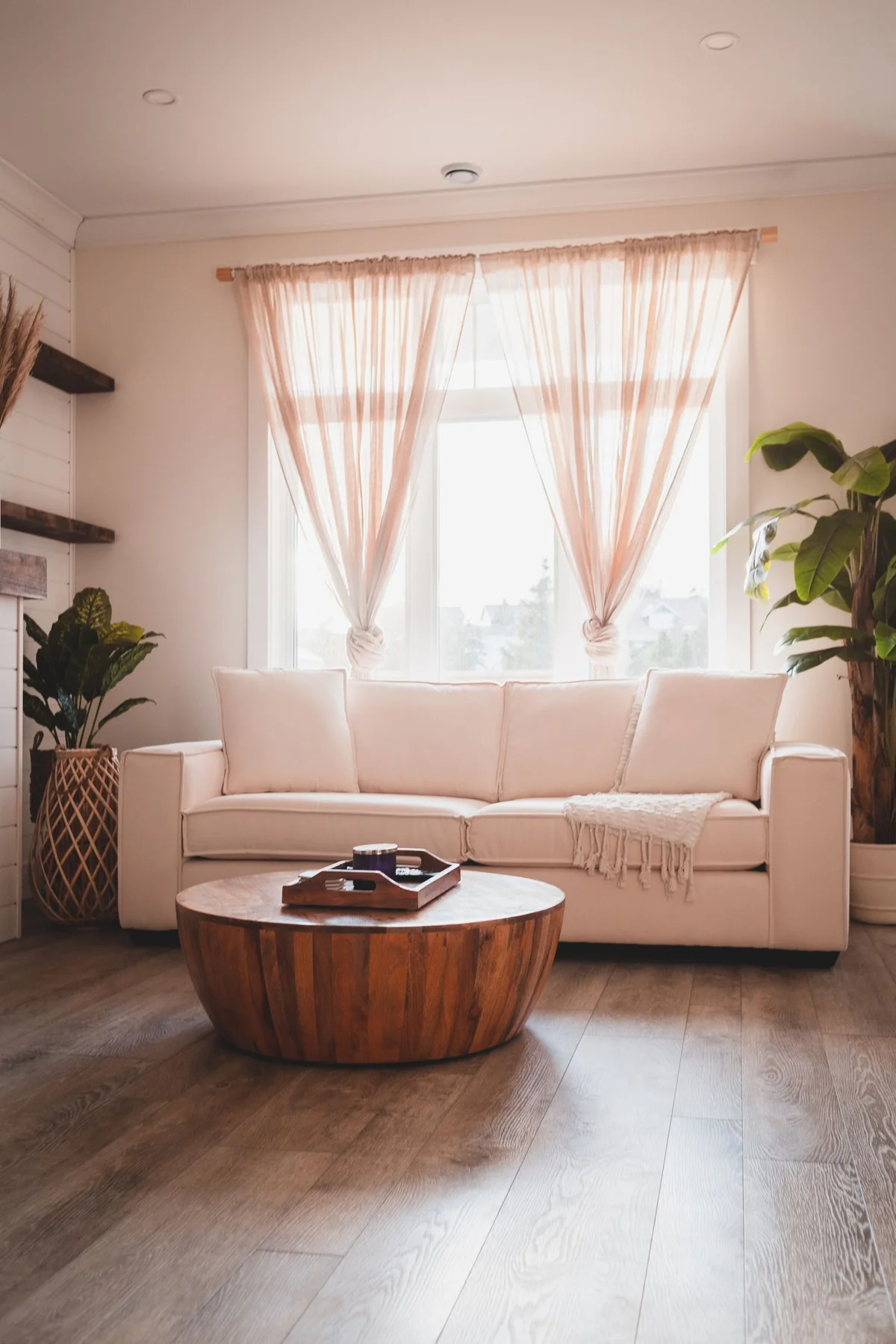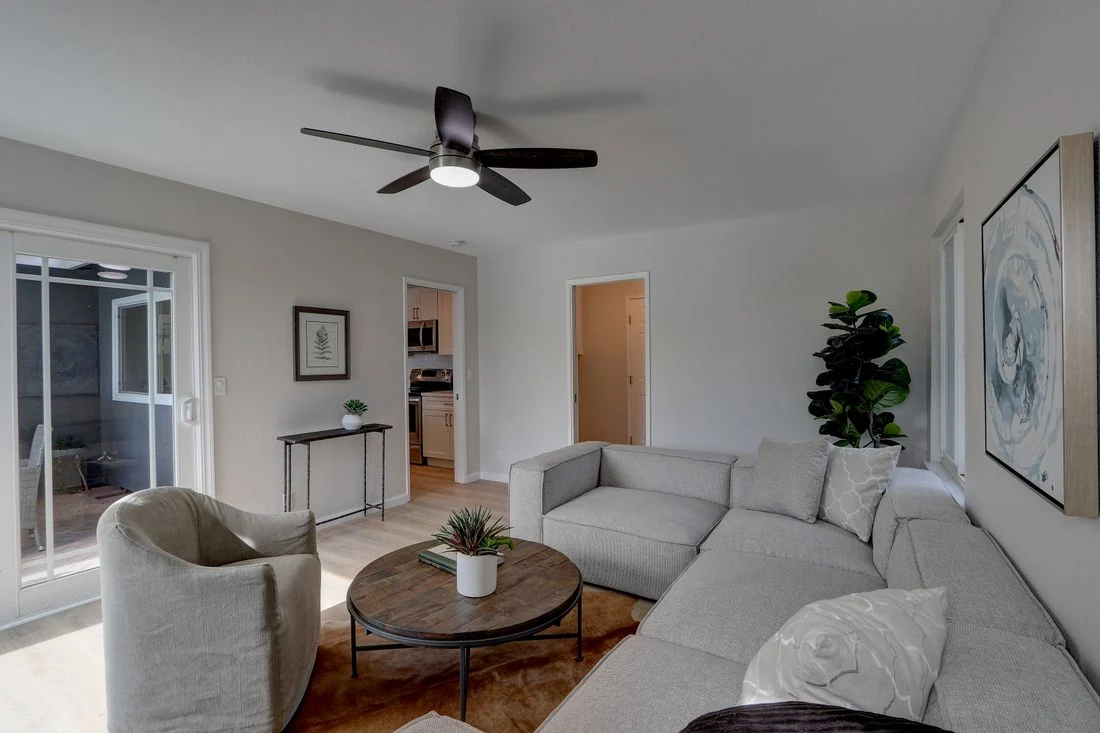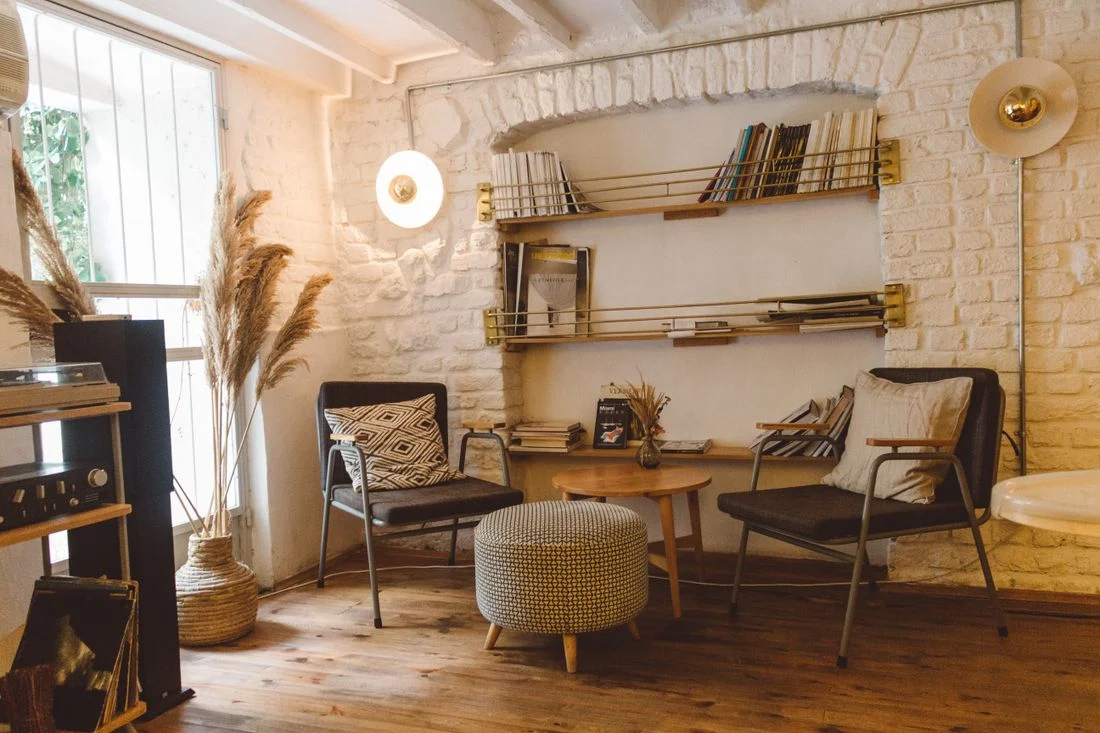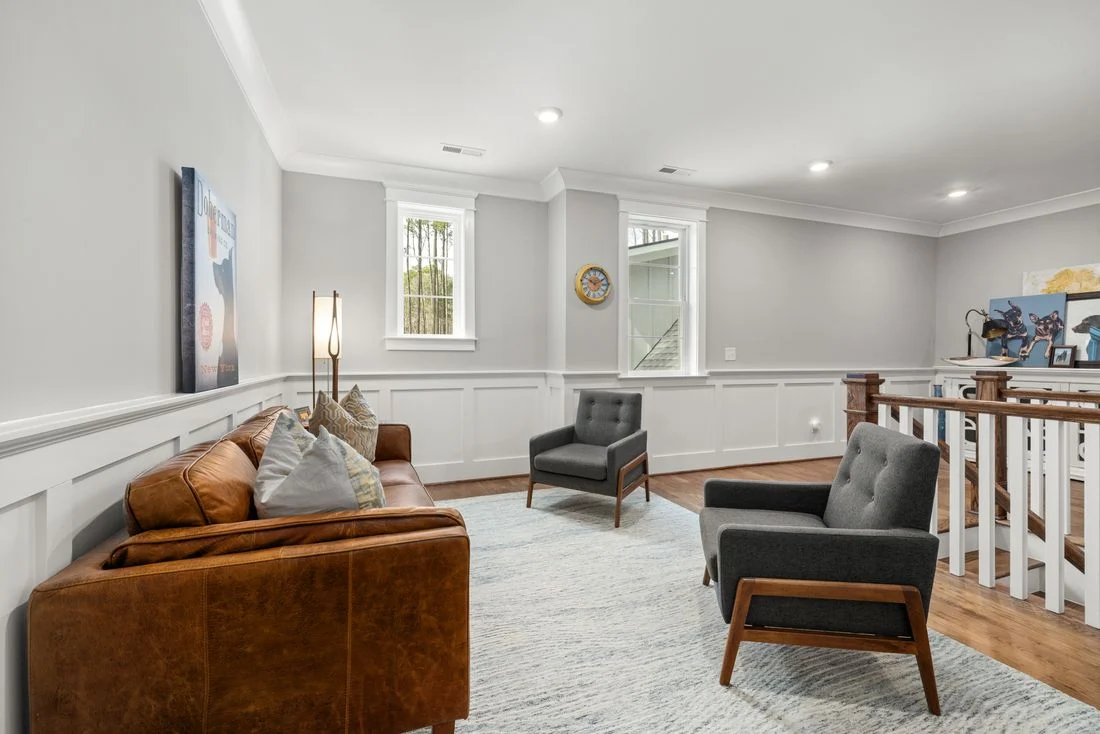
A room can contain six seats and still make a conversation awkward. If every chair faces the television or sits too far from the others, guests end up turning sideways and raising their voices. A conversation-friendly layout begins with where people look and how they enter the group.
Bring the seats into a group
Start with the sofa and one chair. Angle the chair toward the sofa rather than setting it square to the nearest wall. Try sitting in both positions with another person. If you naturally lean forward or turn your whole body to speak, adjust the angle or distance.
A second chair can complete an open-ended arrangement. Leave a clear opening for somebody arriving with a drink instead of enclosing the group on all four sides. That opening should connect with the room's main path, not require a detour behind furniture.
Share reachable surfaces
Not everyone needs a separate table, but everyone should have somewhere sensible to put a glass. A coffee table works for the central seats; a compact side table can support the chair farther away. Keep tall flowers or stacks of objects out of the line of sight between people.
If a television must share the room, consider a chair that can turn easily, provided its movement has enough space. The arrangement does not need to be equally perfect for every activity. It should make your most common use comfortable without requiring a full furniture rearrangement each time.
Keep the welcome open
Place occasional extra seating where it can join the group without blocking a door. A lightweight chair used elsewhere may be more useful than a bulky spare that permanently crowds the room. Check that any stool offered as a seat is intended and rated for that use.
Try the layout during an ordinary visit before buying more furniture. Notice which seats people choose, where bags land, and which table everyone reaches for. Those small observations reveal whether the group needs another surface, a different angle, or simply fewer objects between the people using it.