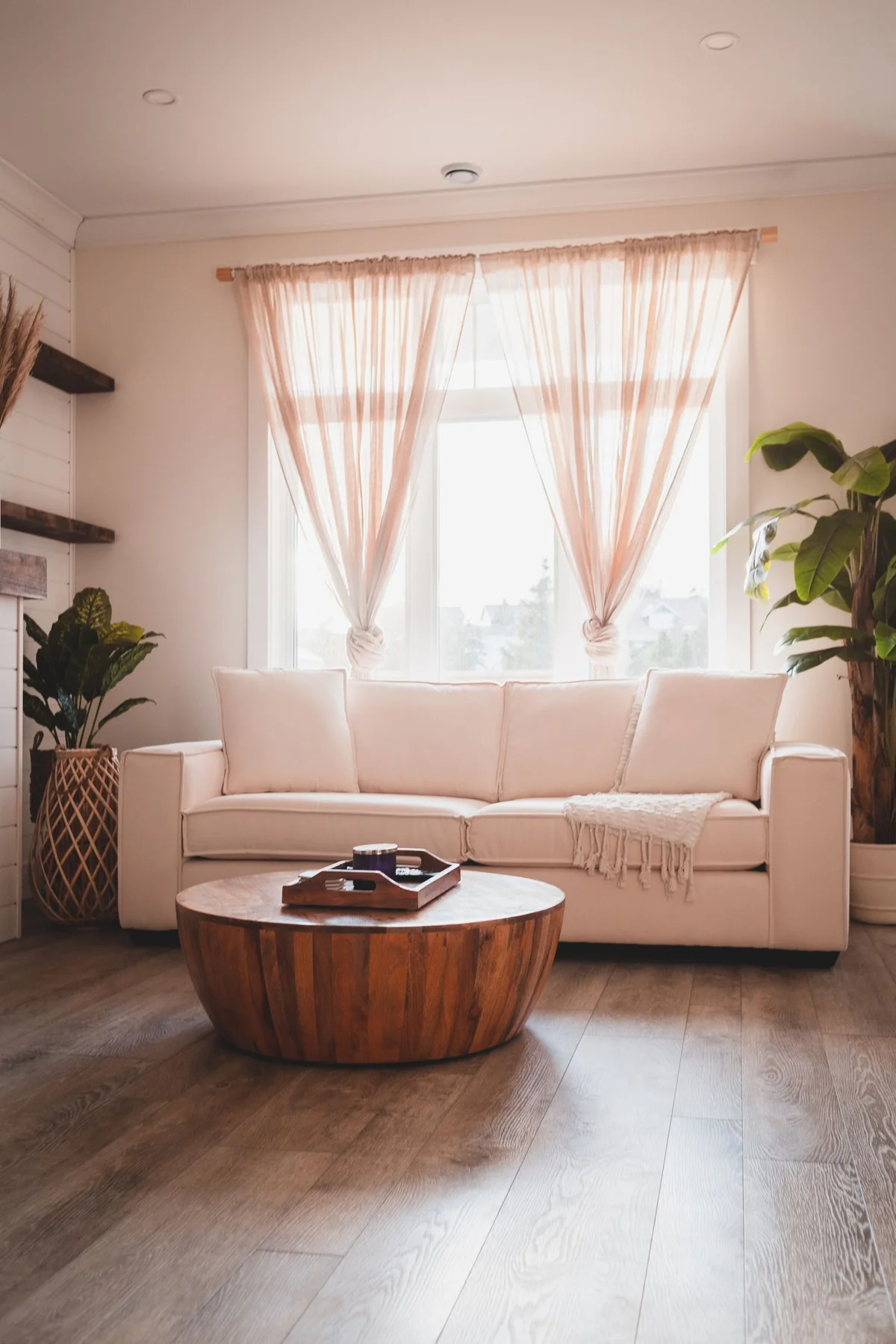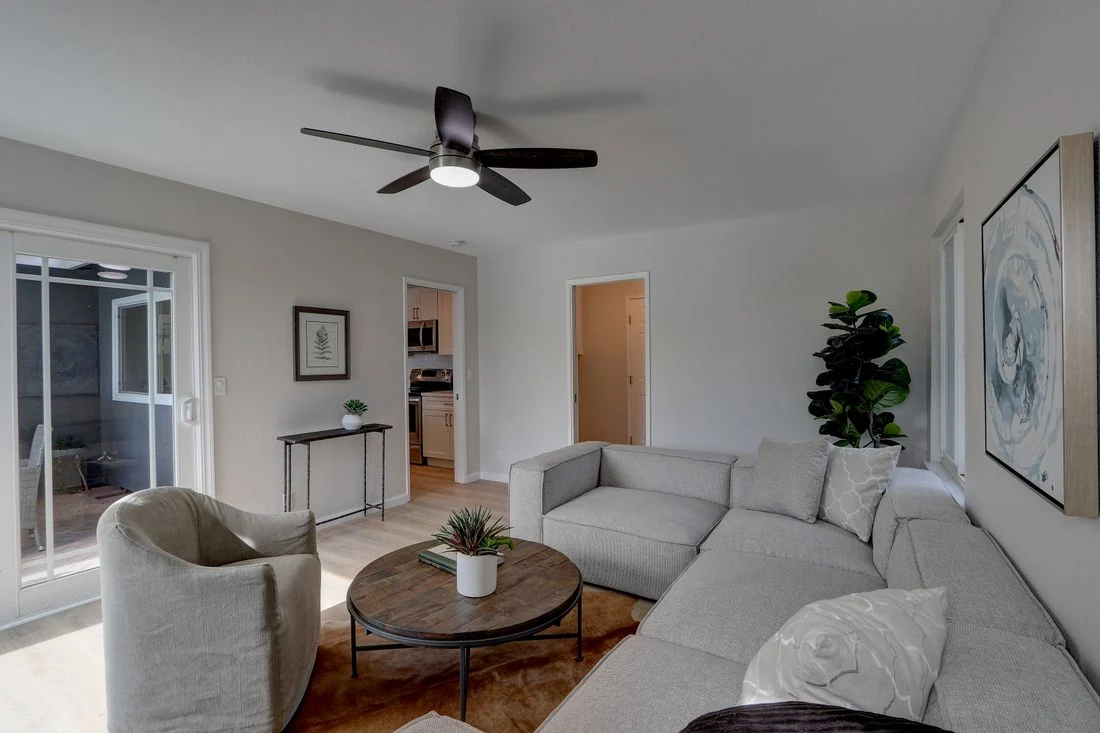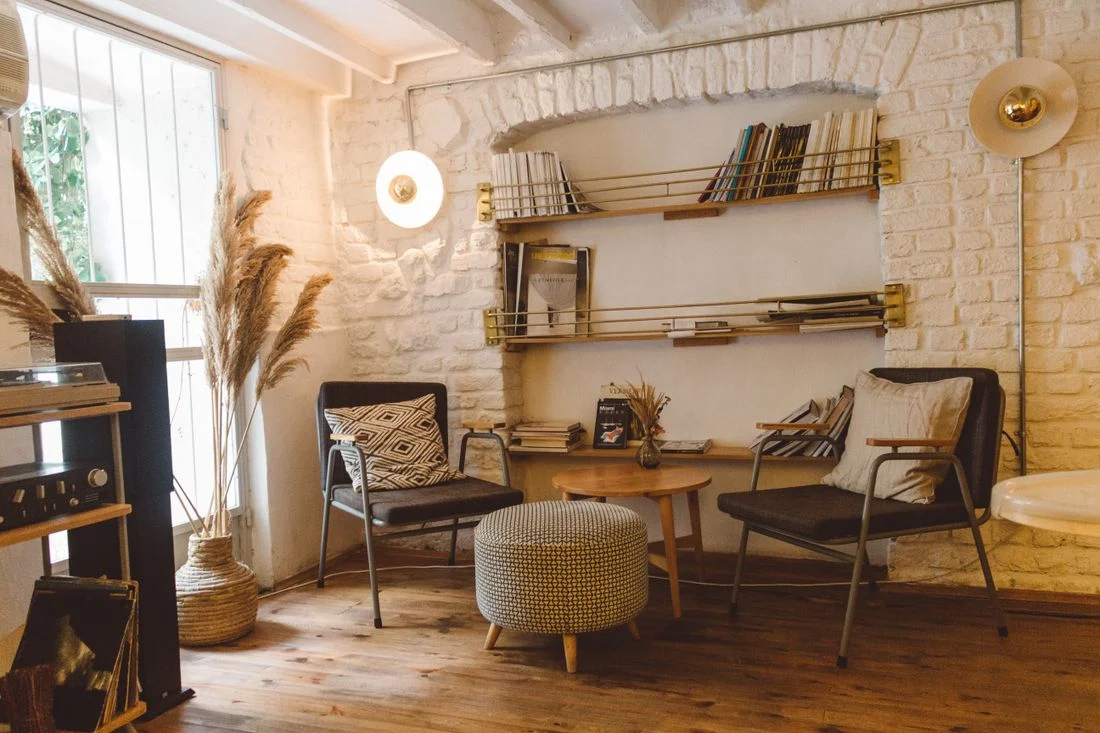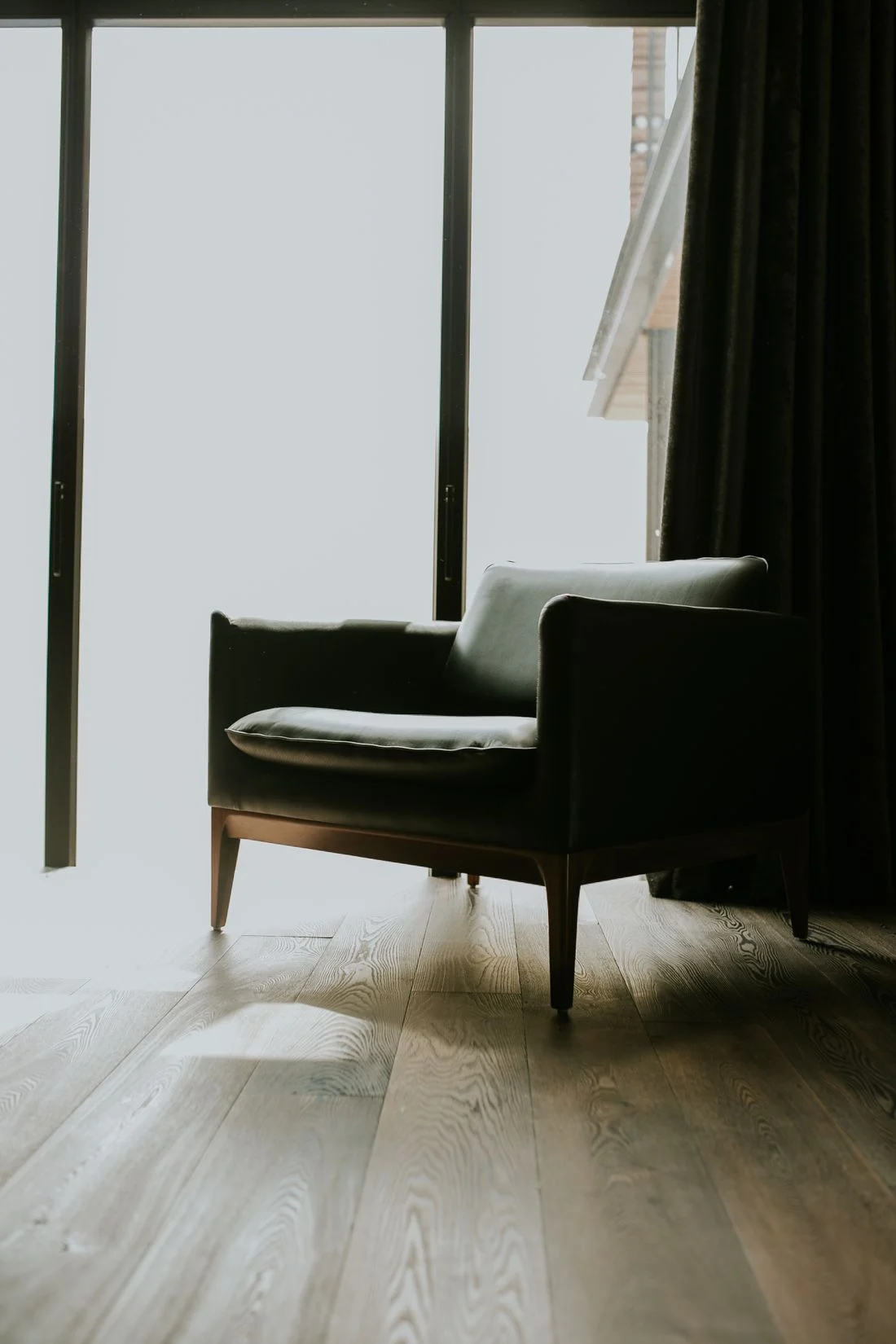
A chair beside a window can become the most used seat in the house, especially when it offers a view away from the television. The useful location is not always directly in front of the glass. A slight angle can preserve the view, allow curtains to move, and connect the chair with the rest of the room.
Try the position at different times
Sit there in the morning and evening. Notice glare, privacy, drafts, and where direct sun falls. A seat that feels pleasant for a few minutes in a photograph may be uncomfortable during the time you actually want to use it. Adjust the angle before assuming the window needs a new covering.
Keep access to handles and required window openings. Do not block an exit window or place furniture against heating equipment without following the relevant clearance requirements. A clear window area can still hold a chair; it simply needs to respect the way the room operates.
Add only what the seat needs
A small surface for a cup or book may be enough. If reading after dark is part of the plan, place an appropriate lamp with a safe cord route. Avoid putting the table where it prevents you from opening the curtain or stepping around the chair.
An ottoman can make the seat comfortable for longer rests, but include its footprint from the start. If it constantly occupies the main passage, choose a different chair position or keep the footrest elsewhere when it is not needed.
Let the seat face two directions
The chair can have a relationship with both the window and the room. An inward angle makes it easier to join a conversation while still enjoying the view. A swivel chair can offer flexibility if there is enough room for its full movement.
Keep decorative objects below or beside the view rather than building a dense display across the windowsill. The daylight and outlook are already doing much of the visual work. A simple arrangement with a comfortable seat and a usable surface usually invites more time there than a corner filled with objects that must be moved before sitting down.