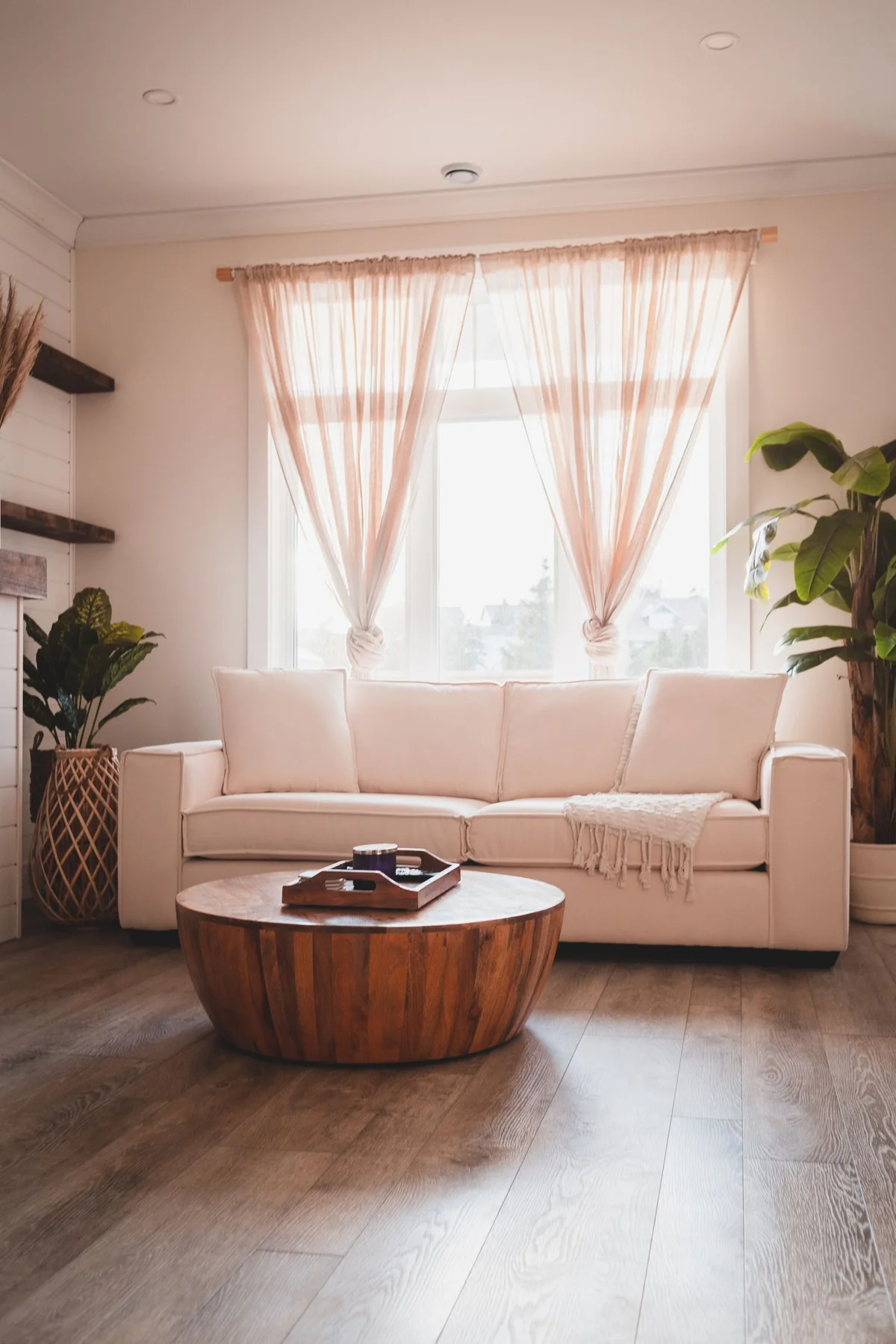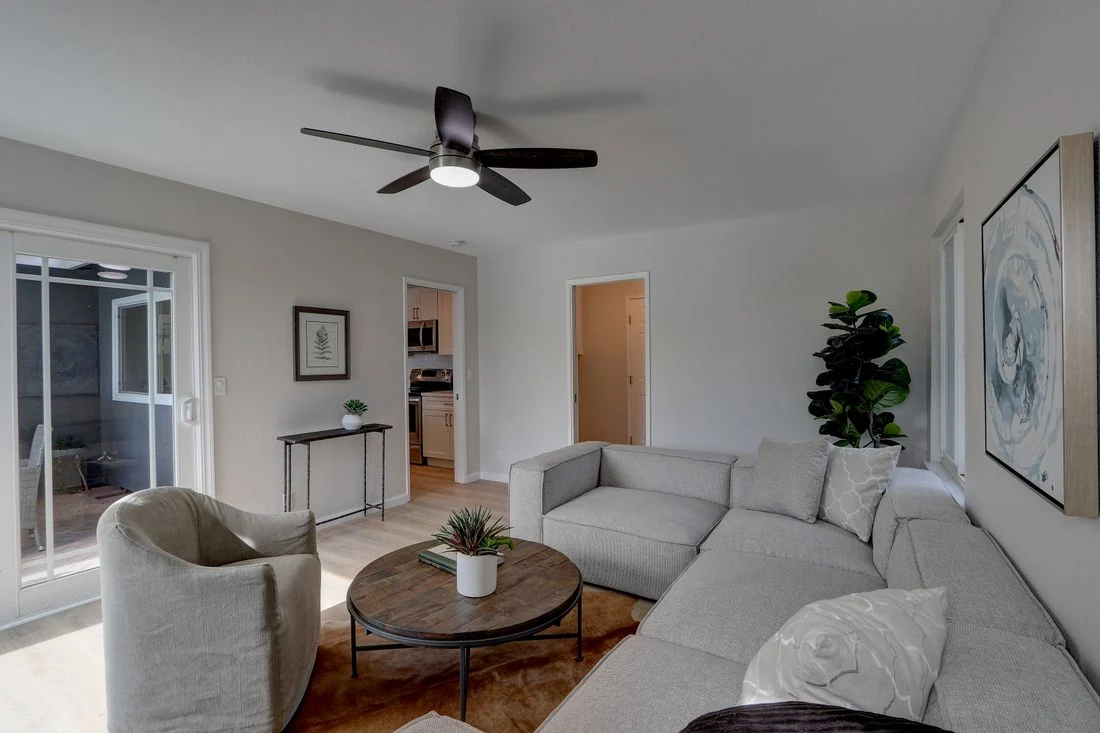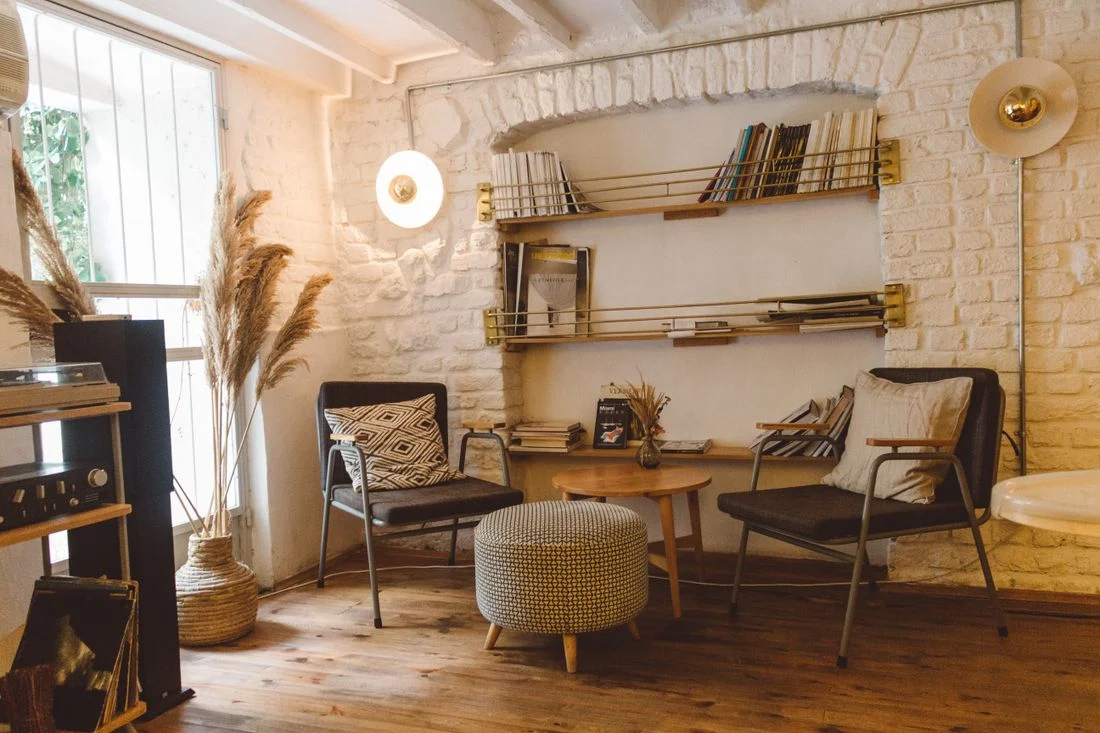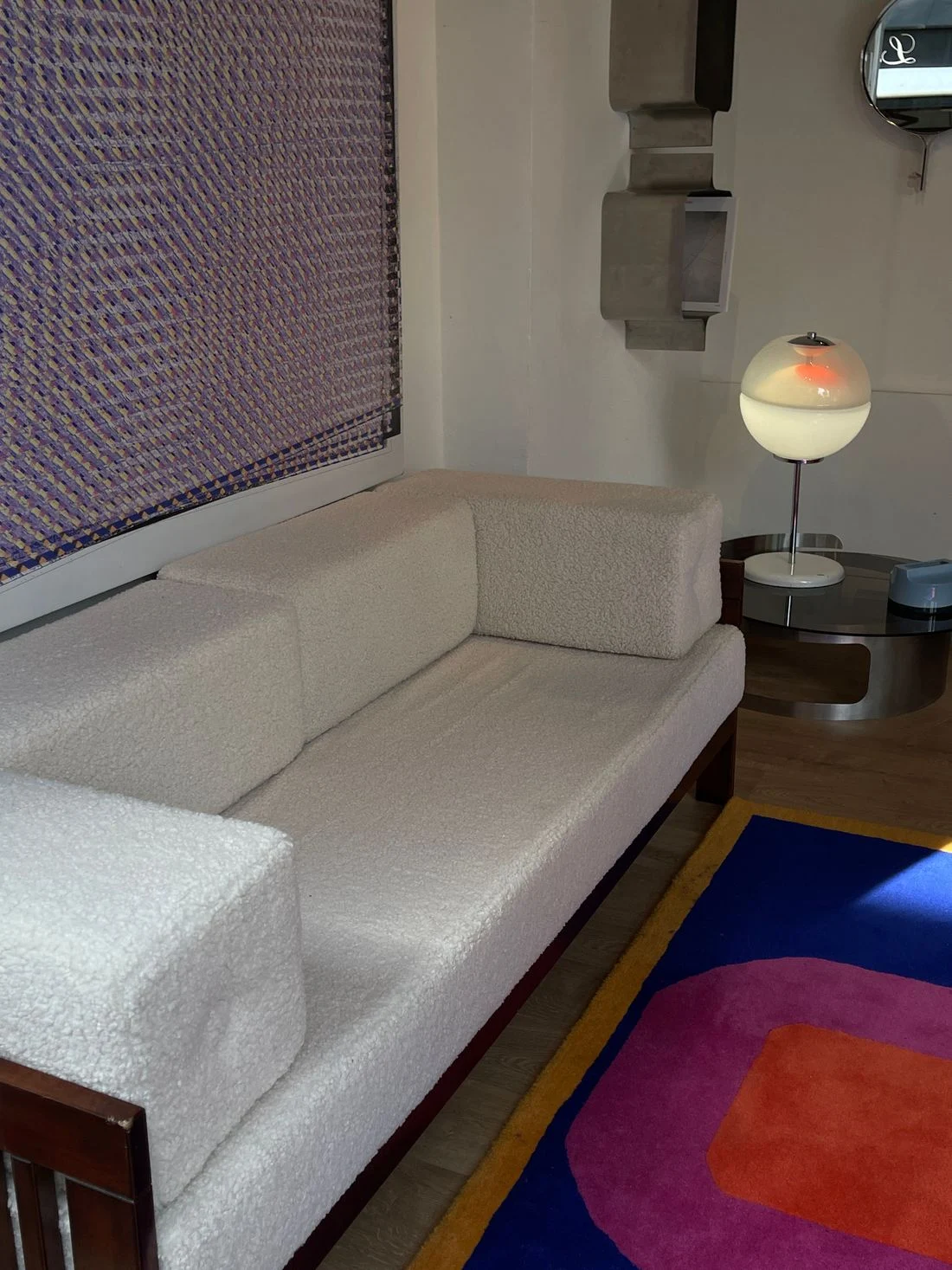
Sometimes a living room feels unsettled even though every individual piece is attractive. The coffee table is tiny beside a long sofa, the artwork floats high above it, or several low pieces leave the upper wall empty. These are proportion problems. Changing them can make a stronger difference than replacing cushions in a new color.
Look at the large shapes first
Take a photograph from the main entrance and temporarily ignore the small accessories. Notice the sofa, chairs, rug, table, and largest wall object as simple blocks. Is one area crowded while another has no visual weight? Does the rug connect the seats or sit like a small island between them?
Move existing pieces before shopping. A larger artwork from another room may suit the sofa wall. Two small tables may work better together than separately. A chair can look more substantial when it sits partly within the rug rather than drifting beyond its edge.
Change one relationship at a time
If the coffee table feels too small, mock up a larger footprint with paper. Check the walking space before replacing it. If wall art looks disconnected, try a lower position using a temporary paper template and appropriate hanging methods. The goal is a relationship to the furniture, not a fixed height copied from a different room.
A tall floor lamp or plant can balance a low seating group where the space and light conditions suit it. Do not add height simply to fill every corner. One vertical element can be more effective than several scattered objects of medium height.
Use fewer small decorations
Many little objects can make a room feel fussy without solving the underlying imbalance. Group a few related items and leave a larger clear area on the tabletop. A substantial bowl or one well-chosen vase may read more clearly than a line of small ornaments.
Once the main proportions work, reassess the colors. You may find that the palette was not the problem at all. Keep the changes reversible while testing them, and live with the new arrangement through an ordinary week. The room should feel better when you are sitting in it, not only in the photograph that helped you diagnose it.