An inherited piece carries a history that new furniture cannot imitate. It may also carry a scale or finish that feels unfamiliar in your home. Before trying to make everything match it, decide what you value about the object and what job it can realistically perform.
Begin with condition and purpose
Check that the piece is stable and suitable for the intended use. A beautiful old chair may need assessment or repair before becoming everyday seating. A cabinet may have shelves or hardware that require attention. If the piece has potential historical or financial value, seek appropriate specialist advice before altering its finish or structure.
Choose a role that suits its dimensions. A small cabinet might hold living-room objects more comfortably than it serves as a media unit. A side table can stand beside a modern sofa without needing another antique beside it. Avoid forcing the piece into the most prominent position solely because it is meaningful.
Let the contrast be visible
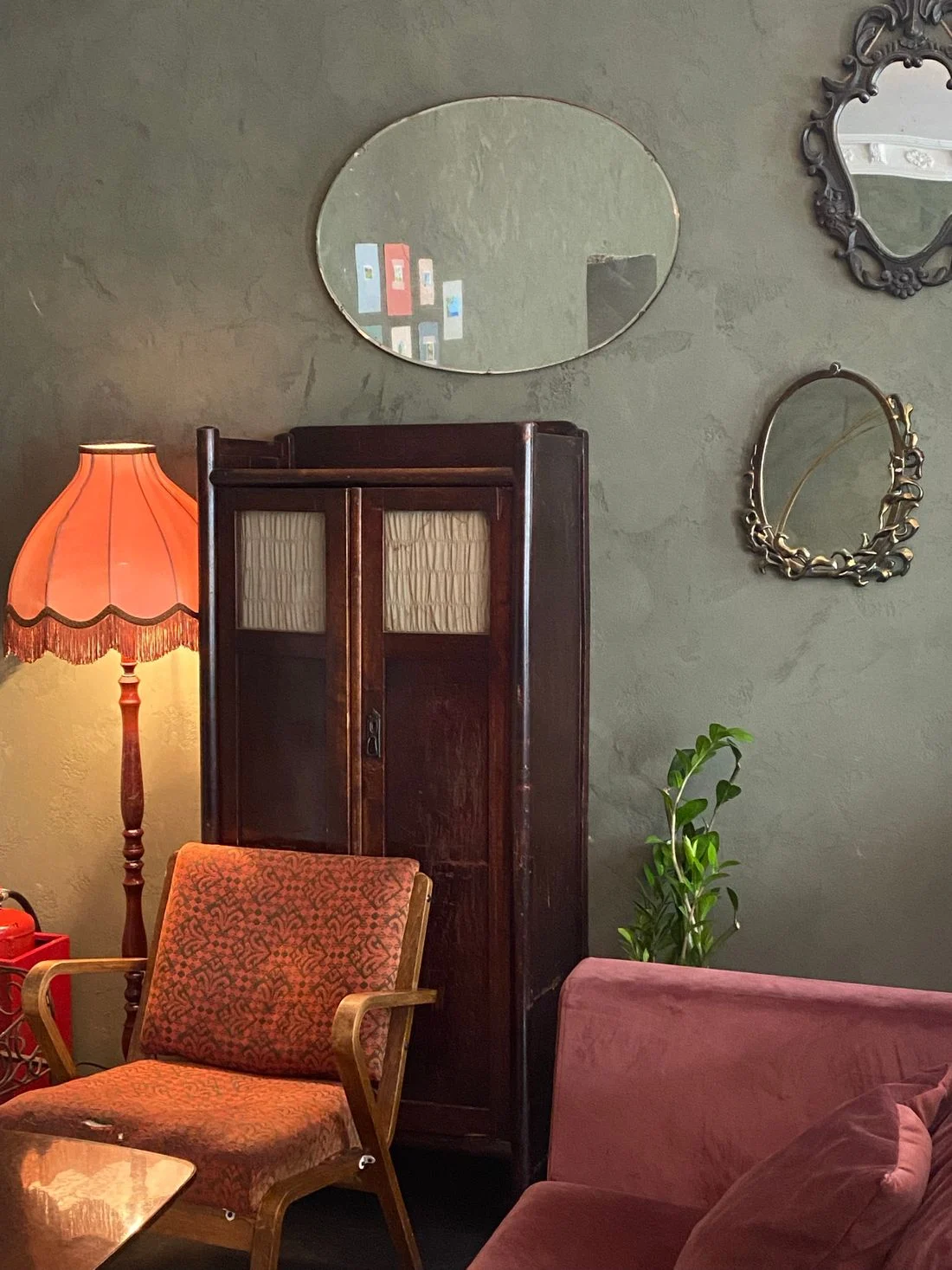
A simple contemporary chair or plain textile can make an ornate older piece easier to appreciate. Repeating every carved detail or dark finish may turn the room into an imitation of a different period. Instead, connect one element, such as a wood tone or a color in the upholstery, and allow the rest to differ.
Give the object enough clear space to see its outline. If it is surrounded by small keepsakes, its form may disappear into the collection. Display a few meaningful items nearby and store the remainder until you want to rotate them.
Work with scale
An older cabinet can feel tall beside low modern seating. That contrast may be attractive if the room has enough space around it. Balance it with a wall object or lamp elsewhere rather than automatically adding another tall cabinet.
If the inherited piece is small, a quiet wall and a deliberate grouping can give it presence. Do not compensate with an oversized ornament that makes the furniture look even smaller. Try its position from several viewpoints, including the view while seated.
You can keep the memory without keeping every original arrangement. The piece belongs to your current home now, with different routines and furniture. A useful, well-considered place often honors it more than preserving a formal display nobody approaches.