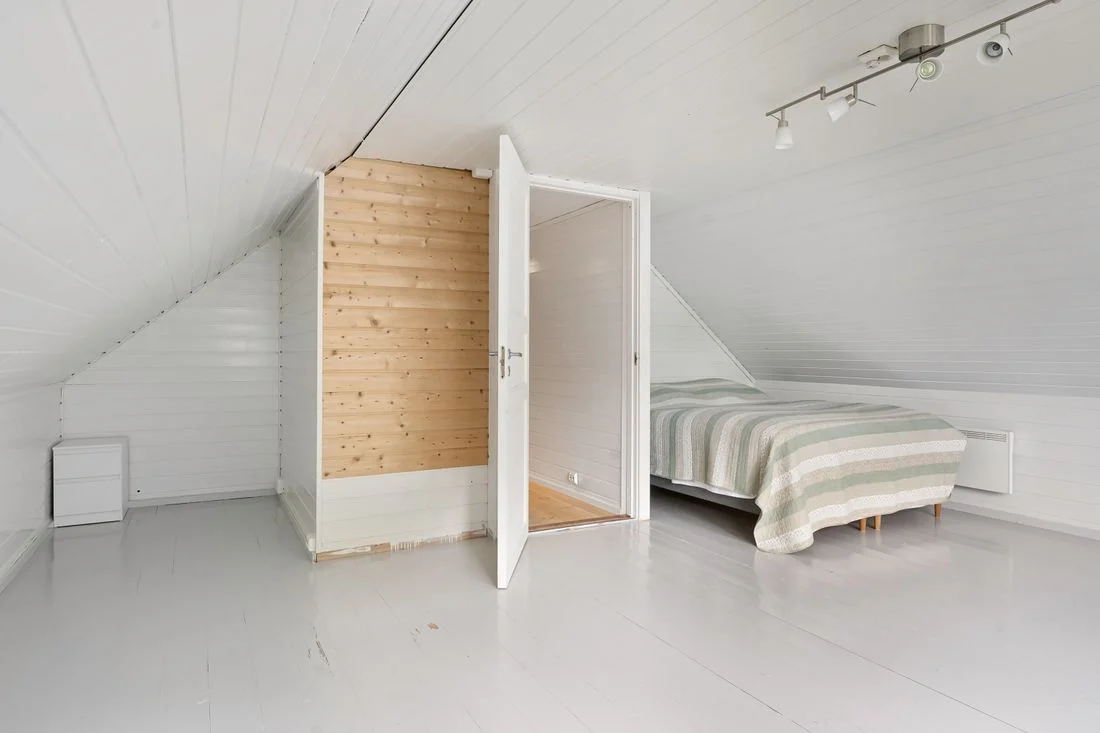
In an attic bedroom, usable floor area changes with headroom. The low edge may hold a bed or low furniture, while the center remains necessary for standing and dressing. Plan an existing finished room around those movements rather than treating every square foot as equally available.
This is a furniture-layout exercise, not advice for converting unfinished attic space. Structural work, required exits, ventilation, and other building matters need the appropriate professional assessment. Within an established bedroom, preserve access to windows, doors, and equipment as you arrange the furniture.
Map height as well as width
Measure the ceiling height at several points along the slope. Note where you can stand comfortably and where you naturally need to duck. Mark those changes on a simple floor plan. The bed may fit under a low section, but you still need enough room to sit up and get out without hitting the ceiling.
Test the actual movement. Sit on the edge of the mattress, rise, and reach toward a bedside surface. A layout that works when lying flat can be inconvenient during all the other parts of the day.
Give low areas suitable jobs
Low cabinets or baskets may fit beneath the slope, but check access before filling them. Deep storage in a low recess can require kneeling and reaching farther than expected. Keep frequently used clothing where it is easy to retrieve, and reserve awkward areas for less frequent needs if suitable.
Avoid placing a tall dresser where the top disappears into the slope and its drawers still occupy valuable standing space. A different wall or a lower piece may make better use of the geometry. Secure furniture according to its instructions even when it sits beneath an angled ceiling.
Keep the main path simple
Leave the best headroom for walking, dressing, and opening doors. A bench at the foot of the bed can be attractive in a conventional room but unnecessary here if it occupies the only comfortable standing zone. Let the distinctive ceiling provide character rather than adding furniture to every edge.
Use bedside lighting that works with the available surfaces and follows its installation requirements. Do not squeeze a tall lamp into a location where the shade contacts the ceiling. The arrangement should feel natural when you are tired and moving through the room, not require constant awareness of every low corner.