A bookshelf can be a working library and a decorative part of a room at the same time. It does not need to sacrifice readable spines for a perfectly neutral photograph. Start with how you find a book, then decide where an object might give a long row a pause.
Group books in a way that makes sense to you: subject, author, format, or frequency of use. Color can be one layer of the arrangement, but it should not make finding a familiar title frustrating. The shelf will look more convincing when its organization supports an actual reader.
Use horizontal stacks selectively
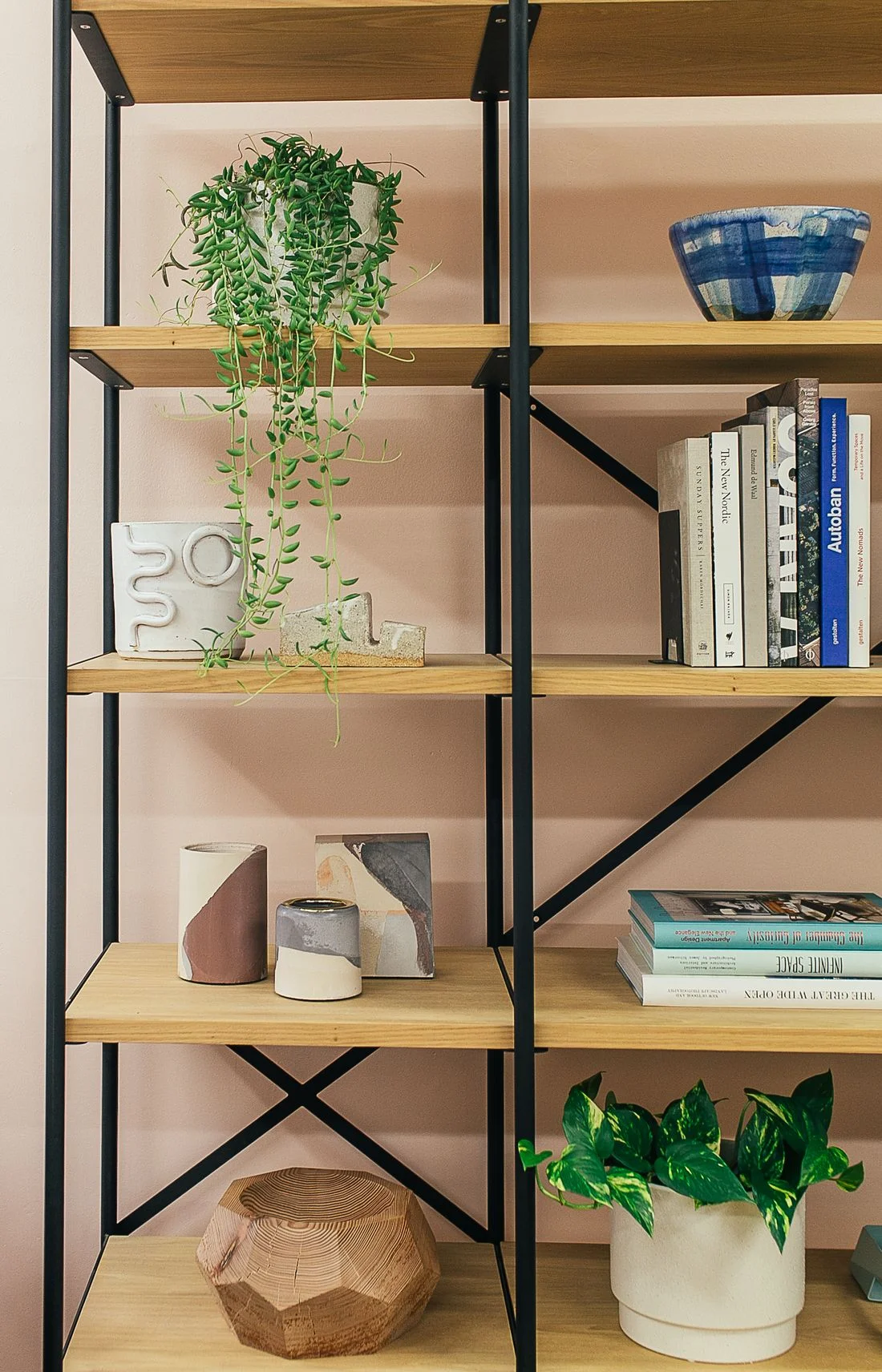
A short stack can change the rhythm of upright books and provide a base for a small object. Reserve that approach for books you do not need constantly. Putting a heavy bowl on the novel you are reading creates an unnecessary daily negotiation.
Keep stacks low enough that removing the bottom book remains manageable. Large illustrated books need support suited to their size, and fragile or valuable volumes may require more careful storage than an ordinary display shelf provides. If you are unsure, prioritize the book's condition over the composition.
Let objects interrupt, not obstruct
A piece of pottery can separate two subject groups. A framed photograph can occupy the end of a shelf with spare depth. Leave enough space to grasp the books beside it without knocking anything over. A display that requires both hands to dismantle is too elaborate for a frequently used shelf.
Try repeating one material at different heights rather than placing matching objects on every level. Two ceramic pieces and a wooden box can create a relationship without looking like a kit. The books themselves already bring plenty of color and texture.
Make the unit belong to the room
Consider the nearby furniture. A shelf next to a dark armchair might welcome a few light objects where they can be seen; a pale open unit may need a darker piece to define one area. These are visual choices, not reasons to replace books or buy filler.
Review the bottom and top of the unit together. Keep heavier storage within the furniture's rated arrangement and follow anchoring instructions. Avoid filling the top with fragile objects simply to achieve height. A calm upper outline can make the entire wall feel less crowded, while the shelves below remain full of the books you actually want.