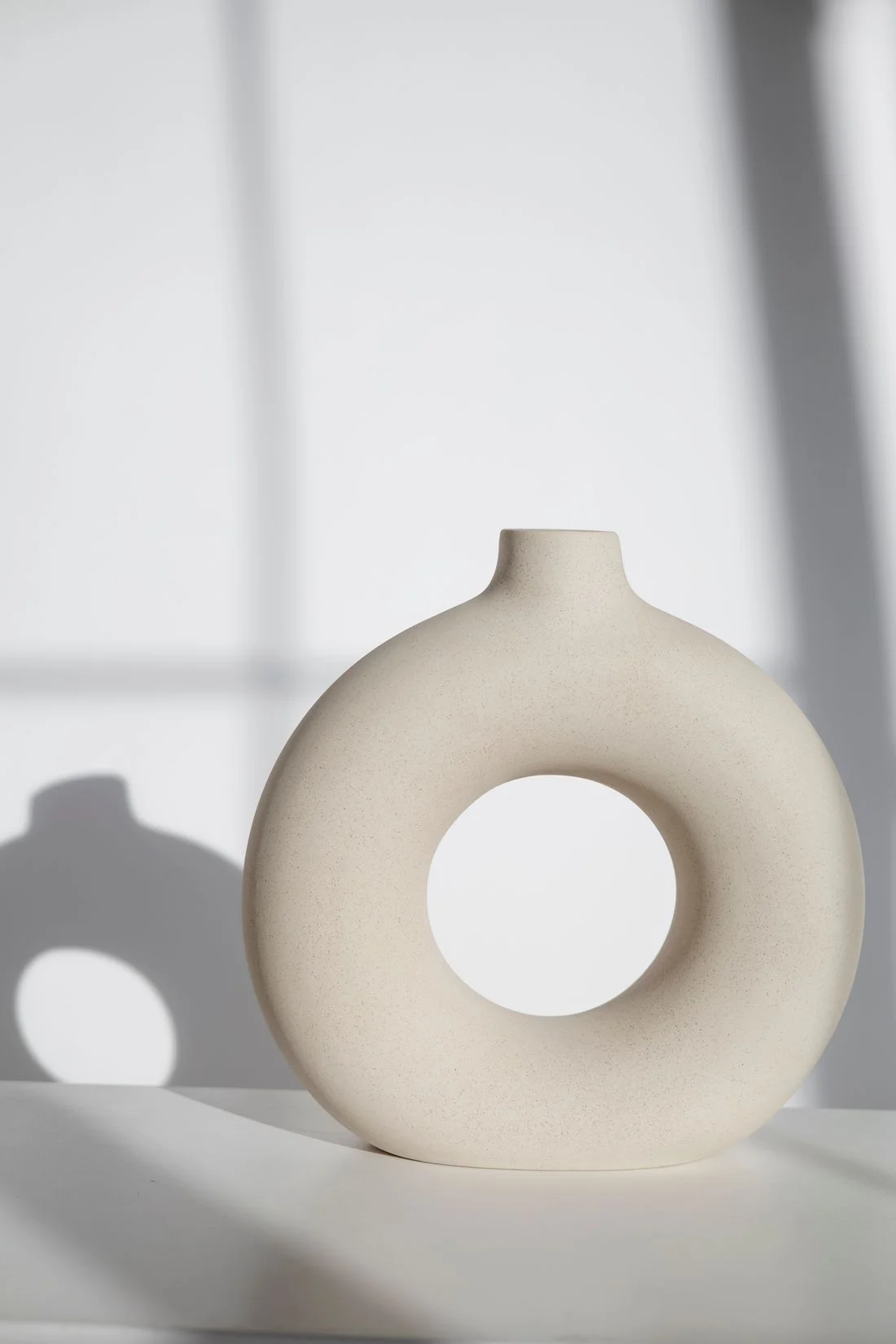
Some vases are interesting before anything goes inside them. A circular opening, an uneven rim, or a broad curved body can provide the entire composition. Filling such a vessel with a large bouquet may conceal the shape that attracted you in the first place.
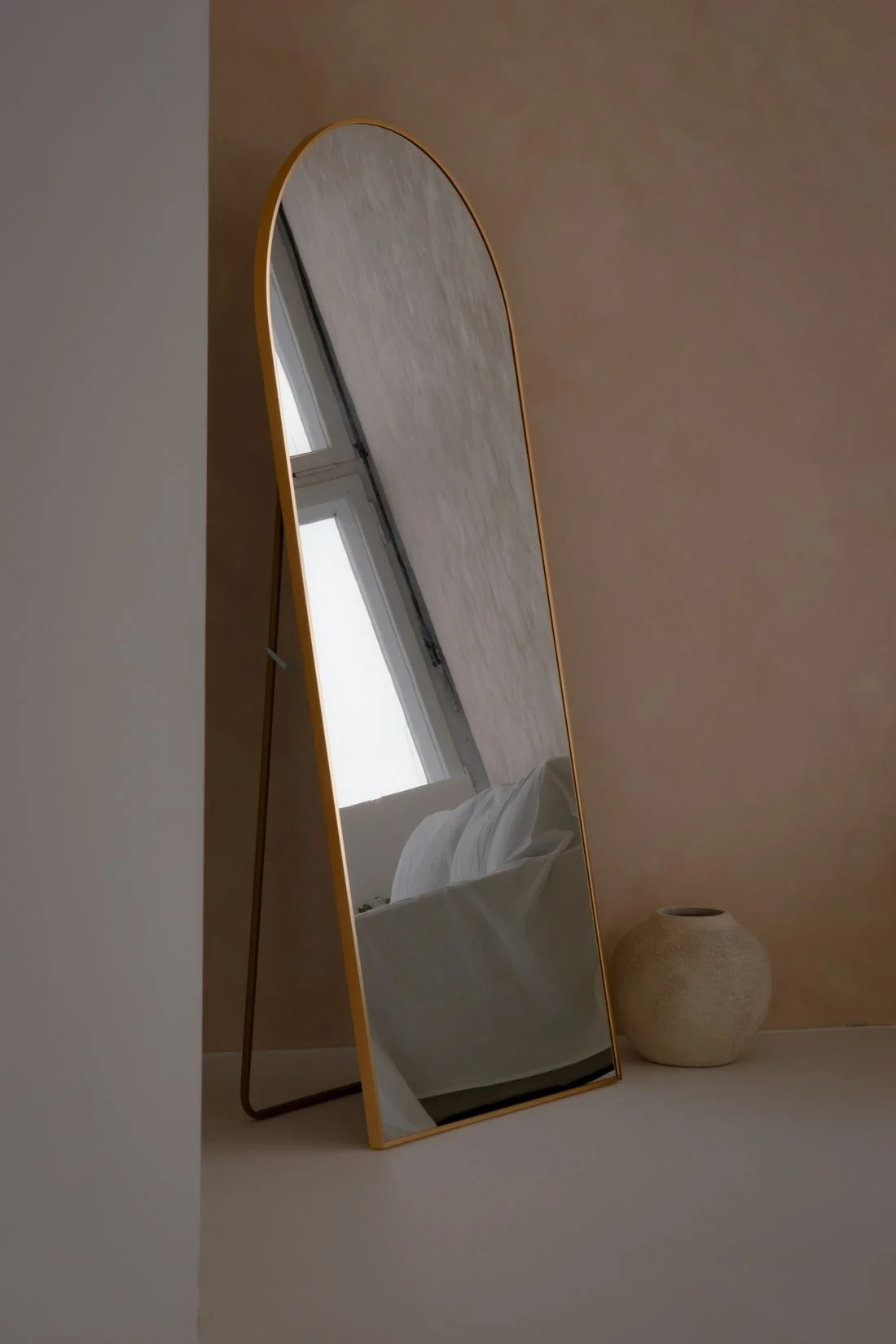
Place the empty vase where you are considering using it and look from the doorway. Does its outline read clearly against the wall? If not, move it before adding anything. A pale vase may need a darker background or a little side light; a dark one may need a simpler, lighter setting.
Consider the surface around it. A sculptural vase on a narrow shelf can feel crowded if its widest point almost touches the shelf above. On a deep console, it may benefit from sitting slightly forward rather than being pushed against the wall. Keep it safely away from edges and normal hand movements.
Decide whether a stem adds anything
Try one branch or flower rather than a full bunch. It should extend the composition without hiding the vessel's opening or competing with its curves. If the shape looks better empty, stop there. A vase does not have to hold flowers to earn its place.
Confirm whether the piece is intended to hold water. Decorative ceramics are not all watertight, and a description such as handmade or stoneware does not settle the question by itself. Use the maker's guidance and protect the furniture from moisture or a rough base.
A nearby object can provide scale, but choose it carefully. A small book stack or a low bowl might give the vase a setting. Another tall sculptural object of similar size can make the display feel like two pieces competing for the same role.
Leave enough space to lift the vase for cleaning without moving half the room. Then live with the simplest version for a few days. If the vessel still feels complete on its own, you have already finished the arrangement.