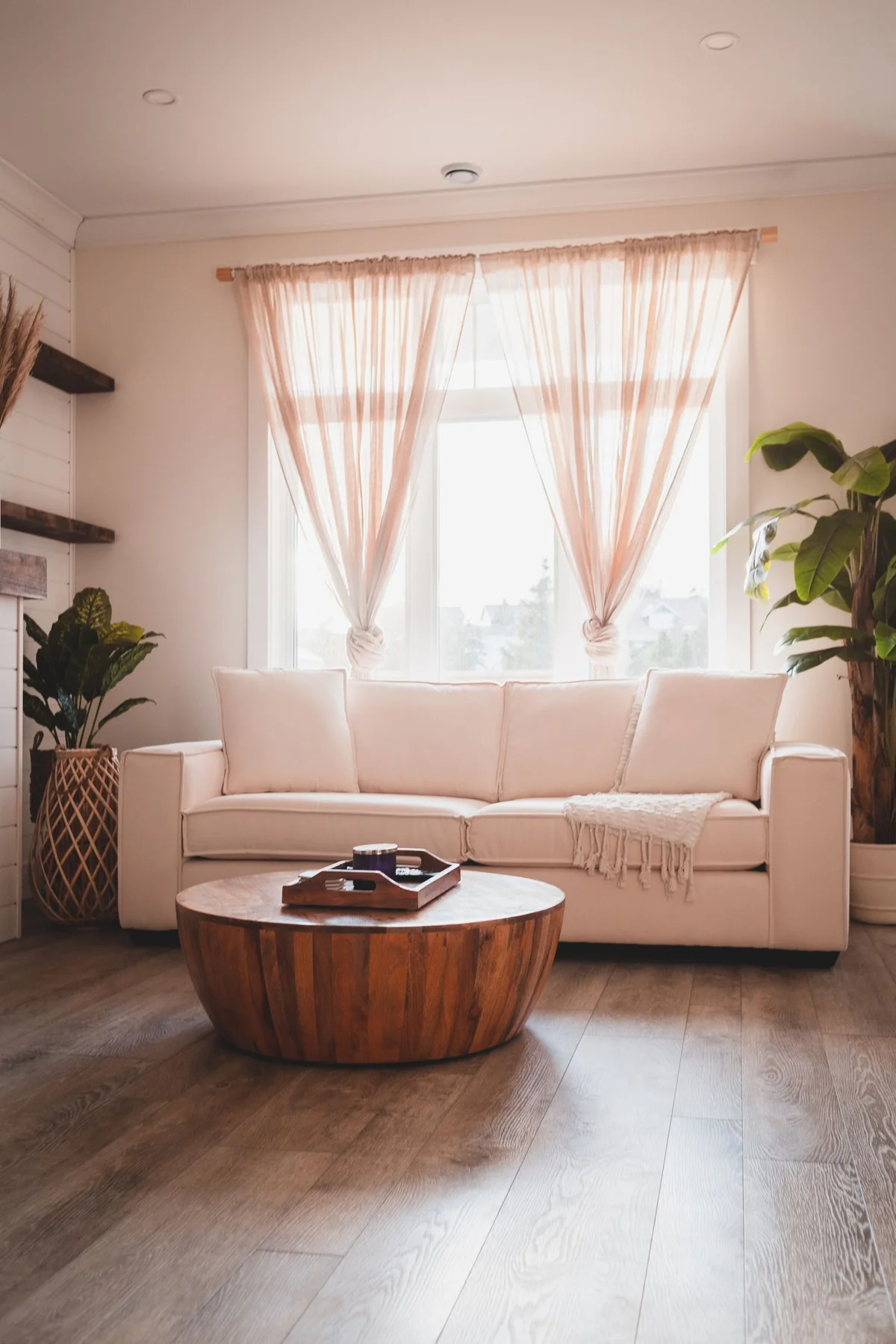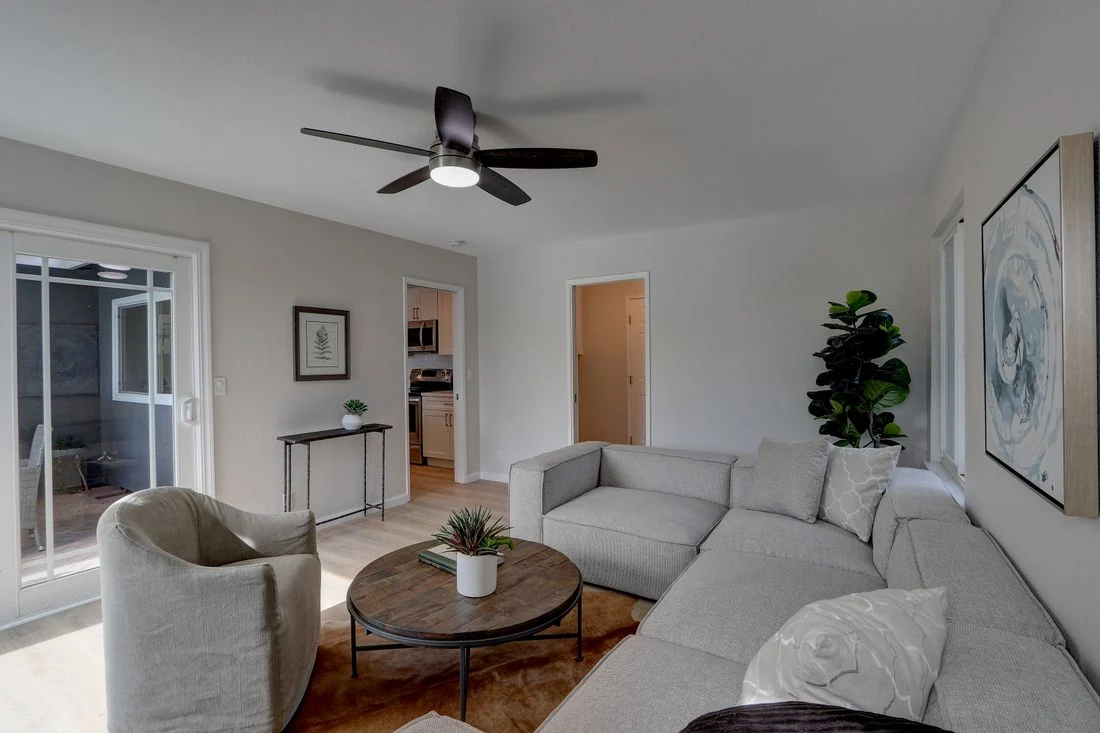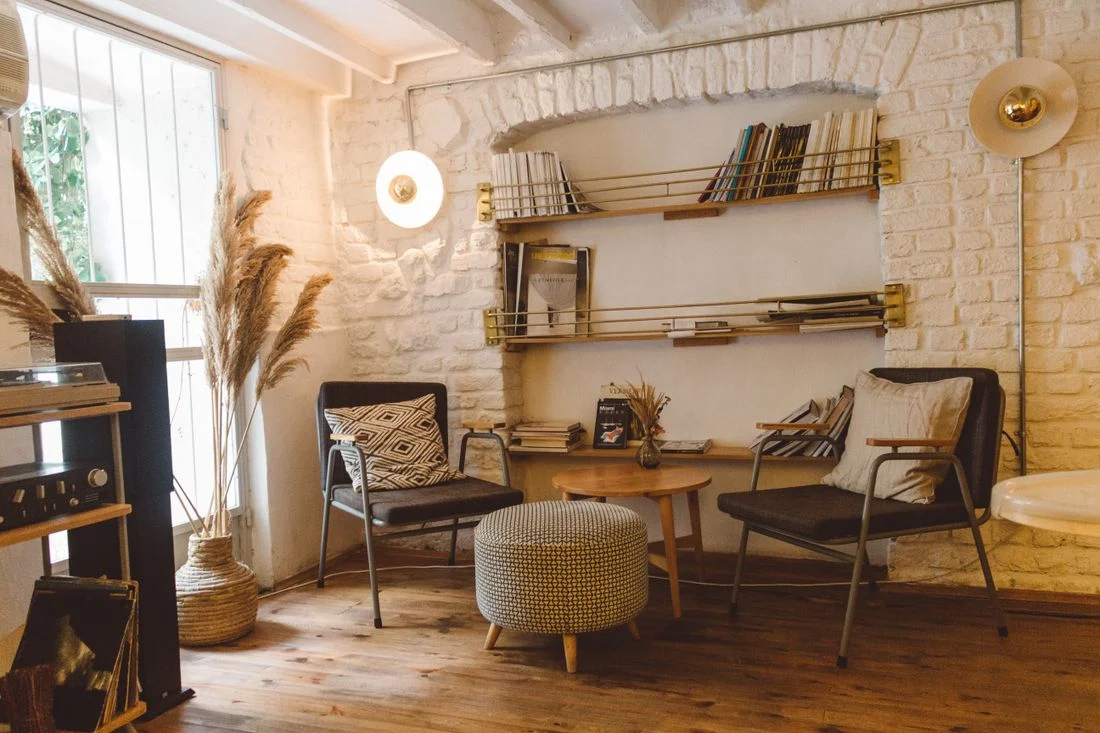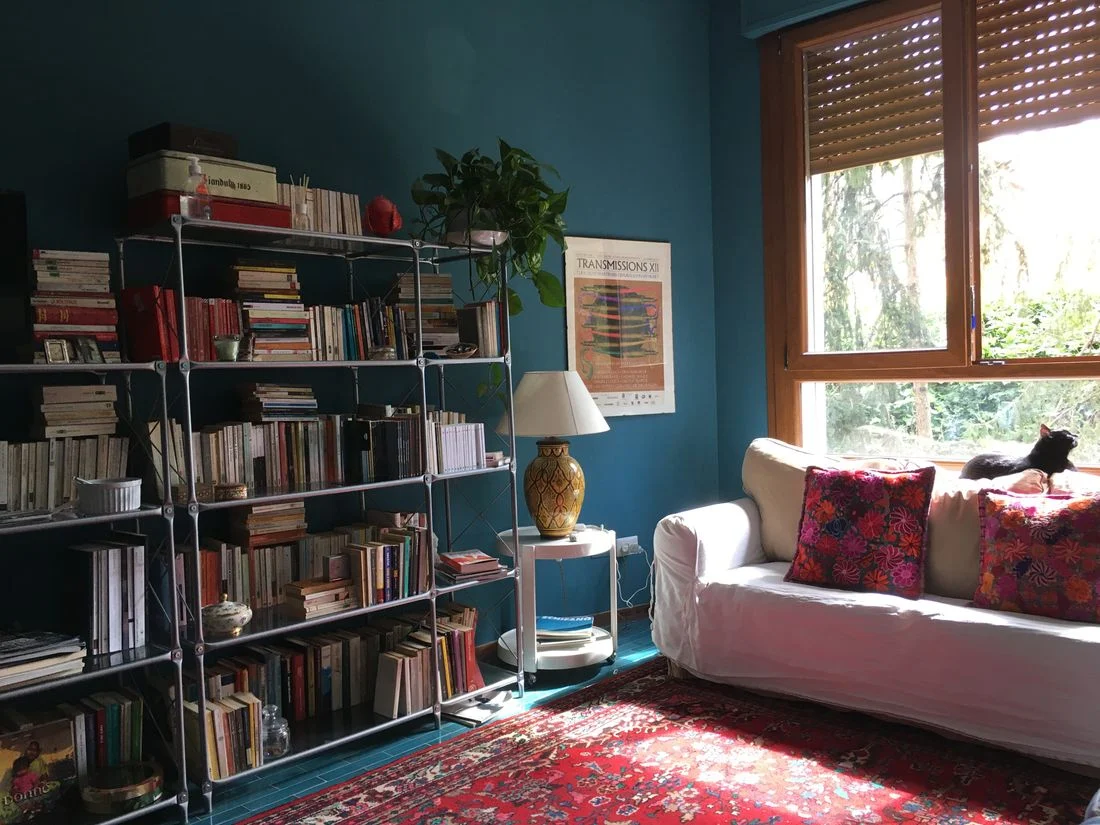
A living room with many books is a furniture-planning problem before it is a shelf-styling problem. The collection needs enough wall space and support, while the seating still needs room to breathe. Begin with the real volume of books, including tall editions and the titles likely to arrive later.
Choose a wall by access
A long uninterrupted wall may be a better home for shelves than several small gaps scattered around the room. Check the doorway swing, window access, and any heating or service points before committing. Shelves that fit on paper can still be inconvenient if a sofa blocks the lower levels or curtains cannot move beside them.
Consider the depth of the collection. Most books do not need an unusually deep cabinet, but oversized volumes may. Check the shelf load rating and install or anchor the furniture according to the manufacturer's instructions. The CPSC's furniture tip-over guidance is relevant even when a unit looks heavy and stable.
Relate the shelves to the seating
A sofa can sit near a book wall without pressing against it. Leave enough room to reach the shelves you plan to use, or deliberately reserve the inaccessible lower section for closed storage that can be accessed another way. Do not design a collection that requires moving a heavy sofa whenever you want a book.
If the room is small, one comfortable chair beside the shelves may be more useful than additional storage inserted between every seat. The chair gives the collection a reason to be in the living room and preserves a clear place to sit with a book.
Keep the window side workable
Tall shelves beside a window can make that side of the room feel enclosed. Look at the amount of light and the view from the sofa before adding a second full-height unit. A lower cabinet under an appropriate section of wall may preserve openness, but never block window operation or required access.
A rug can connect the book area with the main seats. It does not have to stretch across every shelf. The important visual relationship is that the books and furniture belong to one room rather than forming a storage aisle beside it.
Plan for ordinary growth
Leave some capacity instead of filling every shelf on installation day. Measure the existing collection in shelf lengths, then allow a realistic margin for future books. If the room cannot hold more, decide which books deserve this location before purchasing another unit. A coherent book wall with clear access usually serves both reading and living better than an expanding ring of furniture around the room.