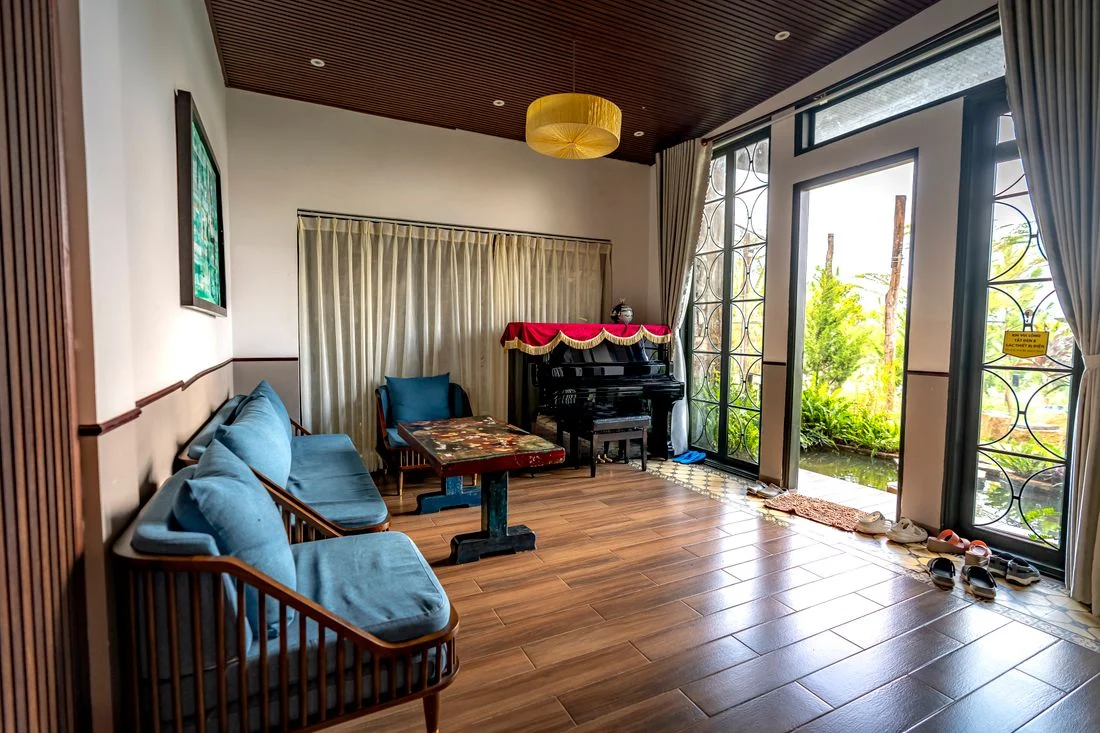
A hobby earns space through use. A piano, drawing setup, or small collection of craft tools can belong naturally in a living room when the room is planned around the activity rather than around hiding every trace of it. Start by naming the equipment that must stay accessible and the parts that can be stored.
Measure the activity, not only the object
An instrument needs room for the player and any seat. A drawing table needs space for a chair to move and for materials to spread out. A board-game area needs enough clear surface and somewhere for the box. These working dimensions are often much larger than the object's storage footprint.
Choose a position that does not interrupt the main doorway or require moving the sofa each time. Consider sound, light, and the needs of other people using the room. Follow the equipment manufacturer's placement and care guidance, especially for instruments affected by nearby heat or direct sun.
Keep setup manageable
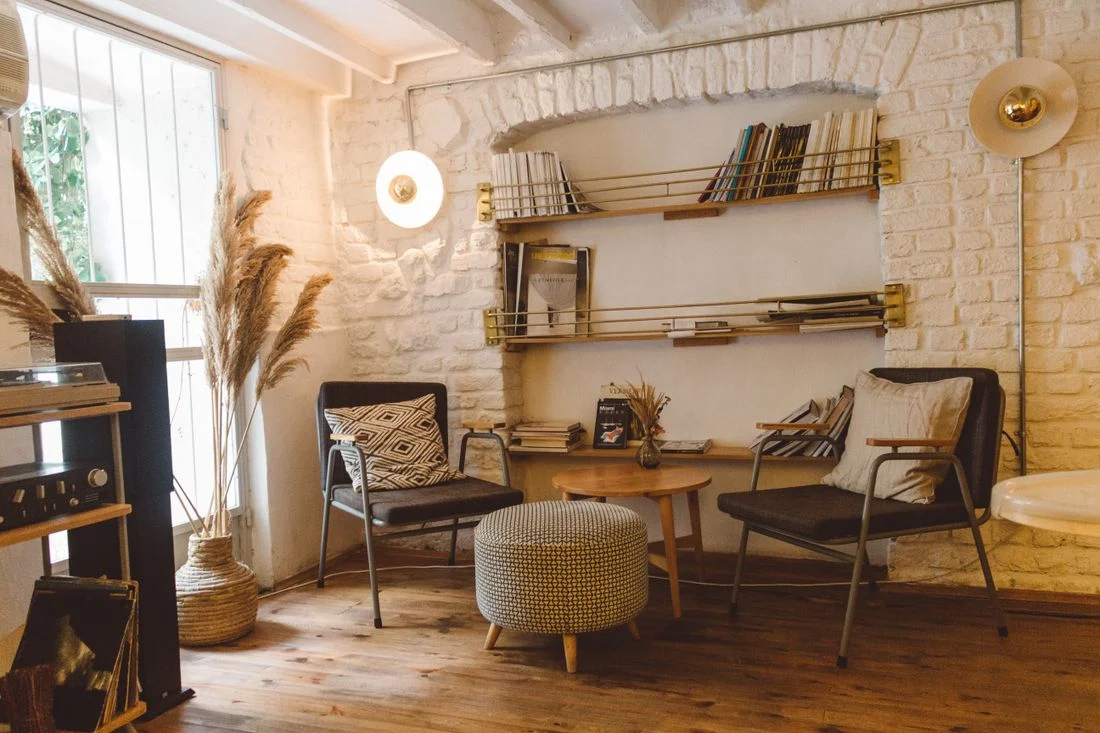
Put the tools used most often near the activity. If every session begins with collecting supplies from three rooms, the arrangement is likely to become a permanent pile instead. A drawer, closed cabinet, or purpose-built stand can make setup shorter without disguising the hobby as decoration.
Store delicate or hazardous materials appropriately for the household. Do not leave sharp tools, paints, or small components accessible simply because an open shelf looks attractive. The storage should suit the materials as well as the room.
Connect the corner to the seating
Repeat a wood finish, metal tone, or color from the living-room furniture to make the activity area feel related. Keep the rest of the corner relatively simple if the equipment already has a strong visual presence. A piano does not need a crowded collection of ornaments to make it belong.
Leave the main seating group complete and comfortable. The hobby area should not borrow every useful table or lamp when it is in use. If two activities conflict regularly, consider a movable surface or a different schedule before purchasing more furniture.
After several sessions, notice what remains out. Keep genuinely useful equipment accessible and improve storage for the rest. A shared living room can express the interests of the people who live there while still offering a clear place to sit, talk, and pass through.