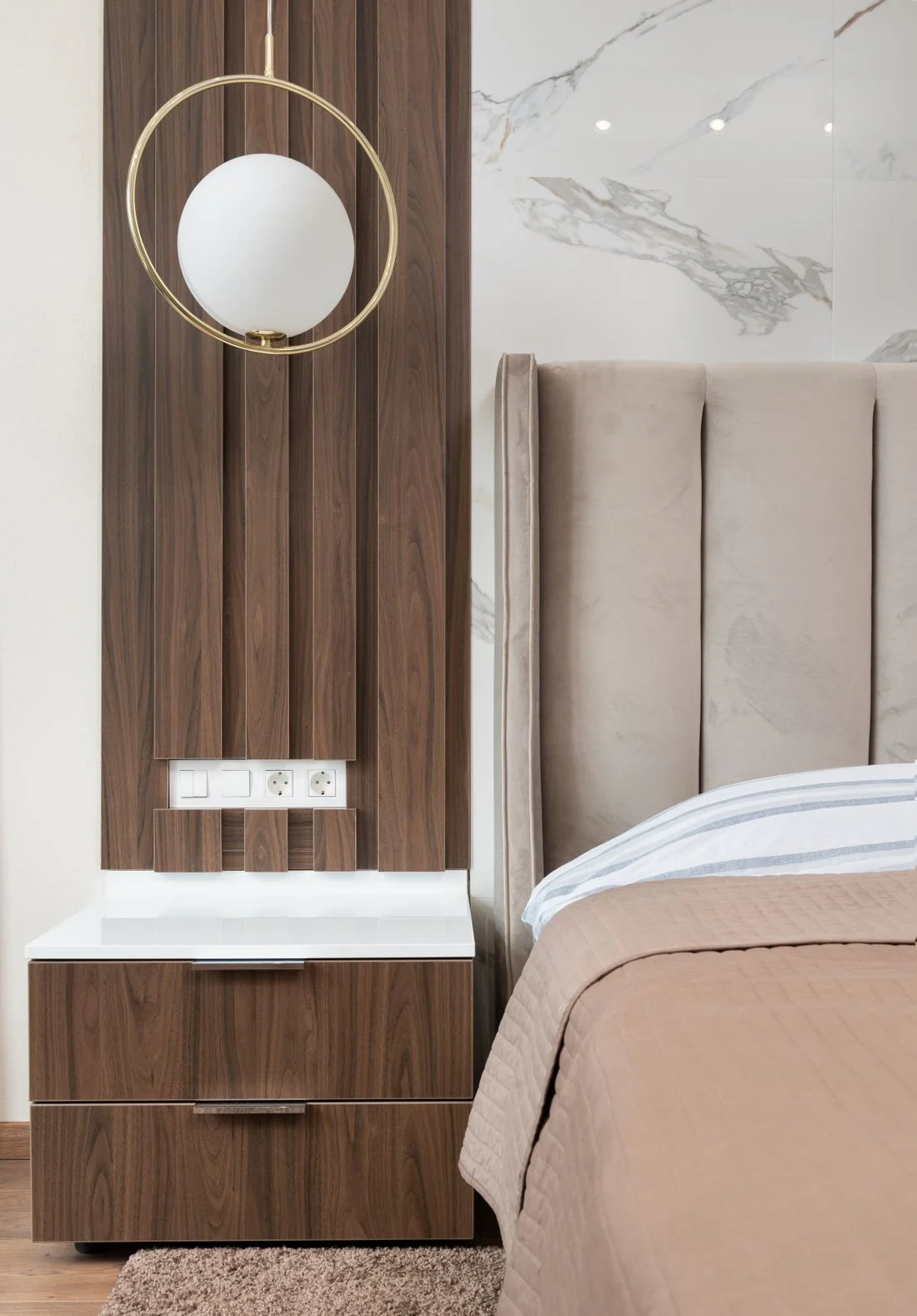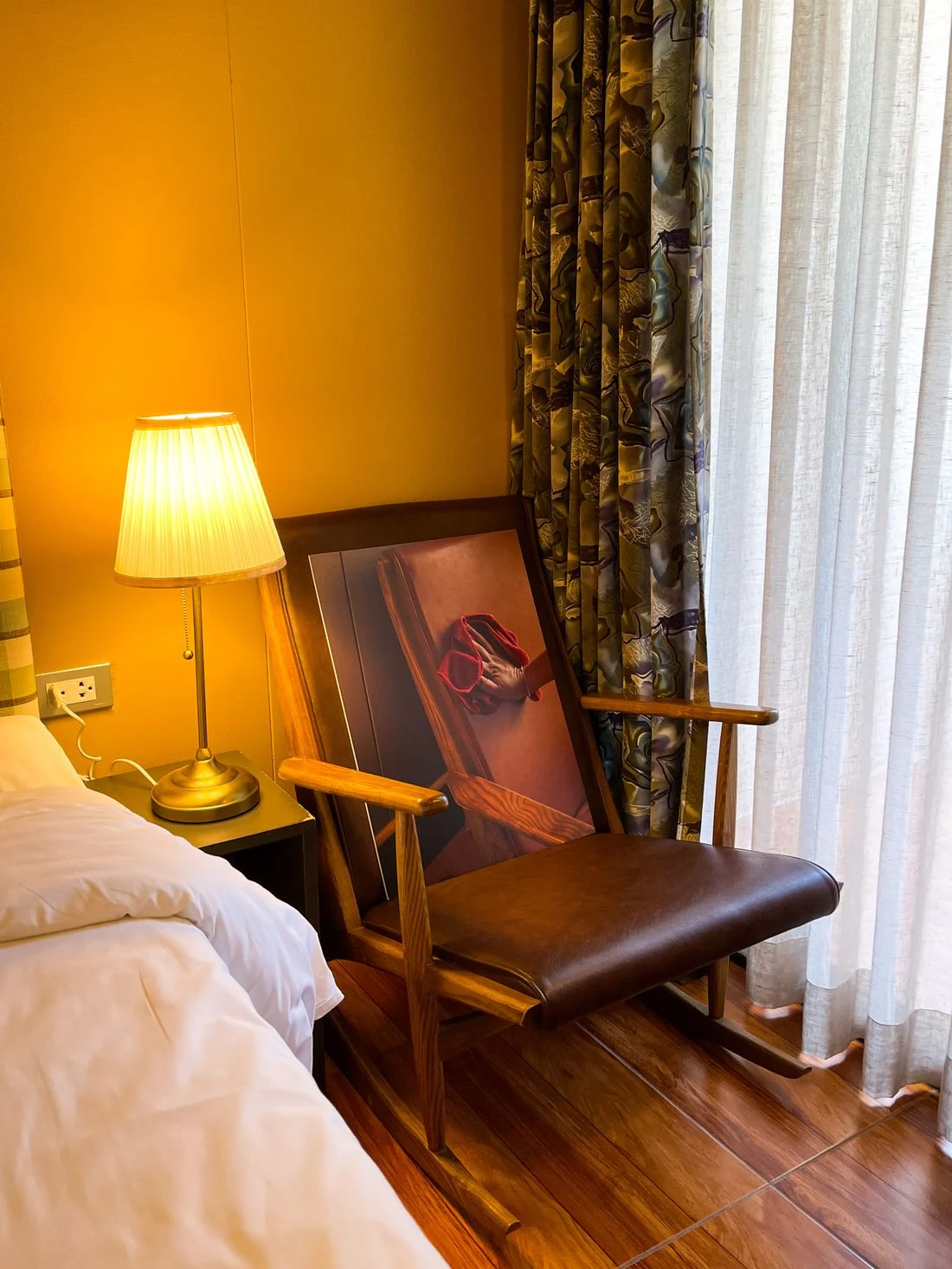
A chair in a bedroom is useful when it provides somewhere to read, pause, or put on shoes. It is less useful when it blocks the wardrobe and collects everything that should be put away. Decide which activity matters before choosing the chair's shape and location.
Protect the bed's access
Place the chair where it does not narrow the route between the bed and door. Include the space needed to sit down and stand up, plus any footrest. A chair angled attractively into the room can occupy much more floor than its rectangular measurements suggest.
If the only available corner sits beside a window, preserve the window's operation and any required exit access. Keep the chair clear of heating equipment according to the relevant instructions. The pleasant view should not make the room harder to use.
Build a modest reading setup
Test the seat with a book rather than sitting upright for a few seconds. Check whether the arms support the position you prefer and whether a cushion is genuinely helpful. A very small occasional chair may be fine for putting on shoes but uncomfortable for a longer reading session.
Add a reachable surface and suitable light if reading is the purpose. A table large enough for a drink and glasses is sufficient. Position the lamp so it serves the page without shining directly into your eyes, and keep its cord out of the walking route.
Prevent the clothing pile
If clothes routinely land on the chair, identify why. You may need an appropriate place for items that will be worn again, or simply a clearer route to the hamper and closet. Do not add a chair and then expect it to remain available when the existing clothing routine has nowhere else to go.
Keep decorative pillows and throws limited to what improves comfort. Every object removed before sitting is another small barrier to using the chair. If the corner is too tight for the complete activity, leave it open or use a simpler seat for a narrower purpose. A bedroom does not become more restful just because it contains another piece of furniture.