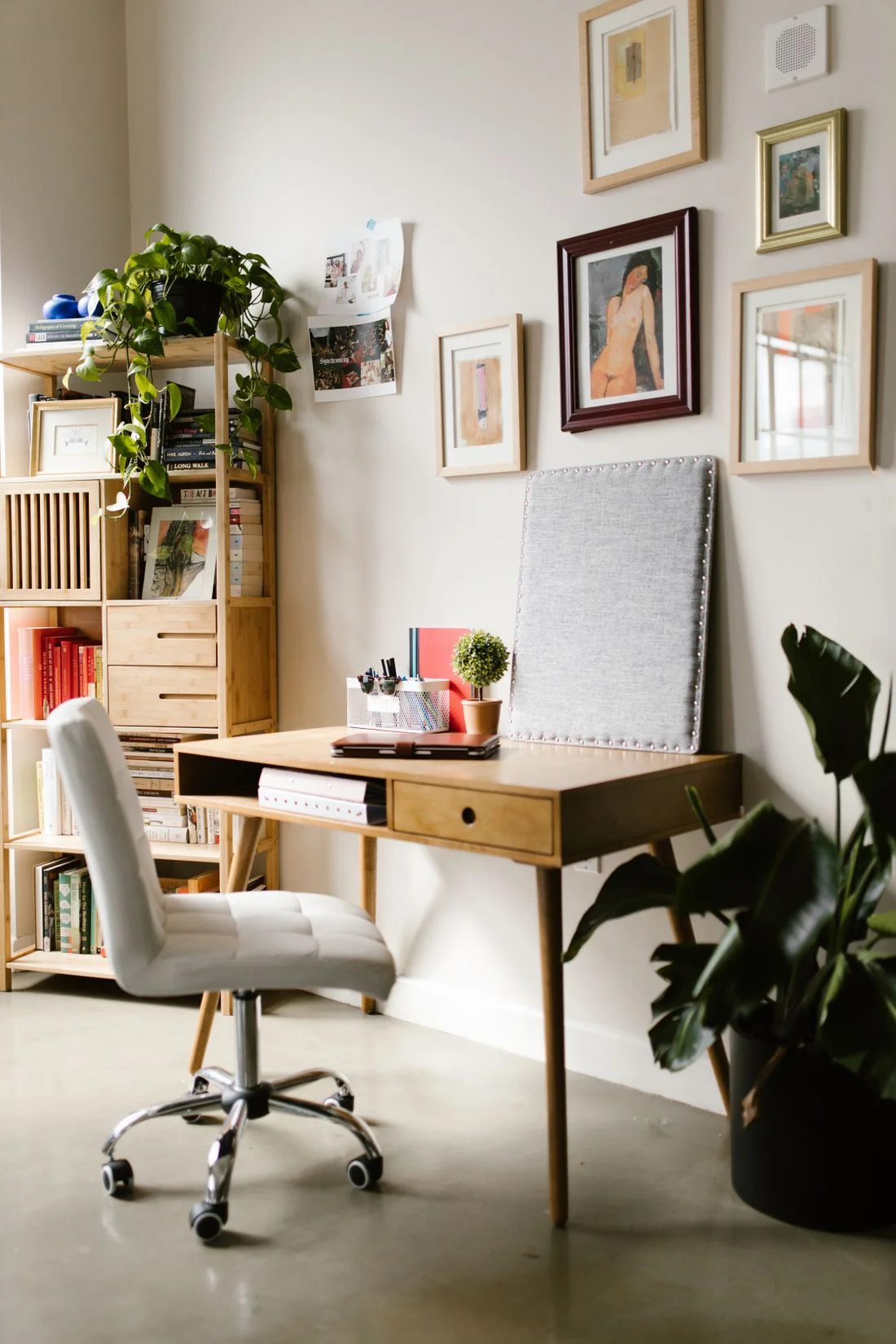
Art behind a desk is part of both the work setting and the wider room. It may also appear in video calls, though that does not mean the wall needs to become a staged backdrop. Choose pictures you enjoy seeing and arrange them around the actual desk position rather than around the camera alone.
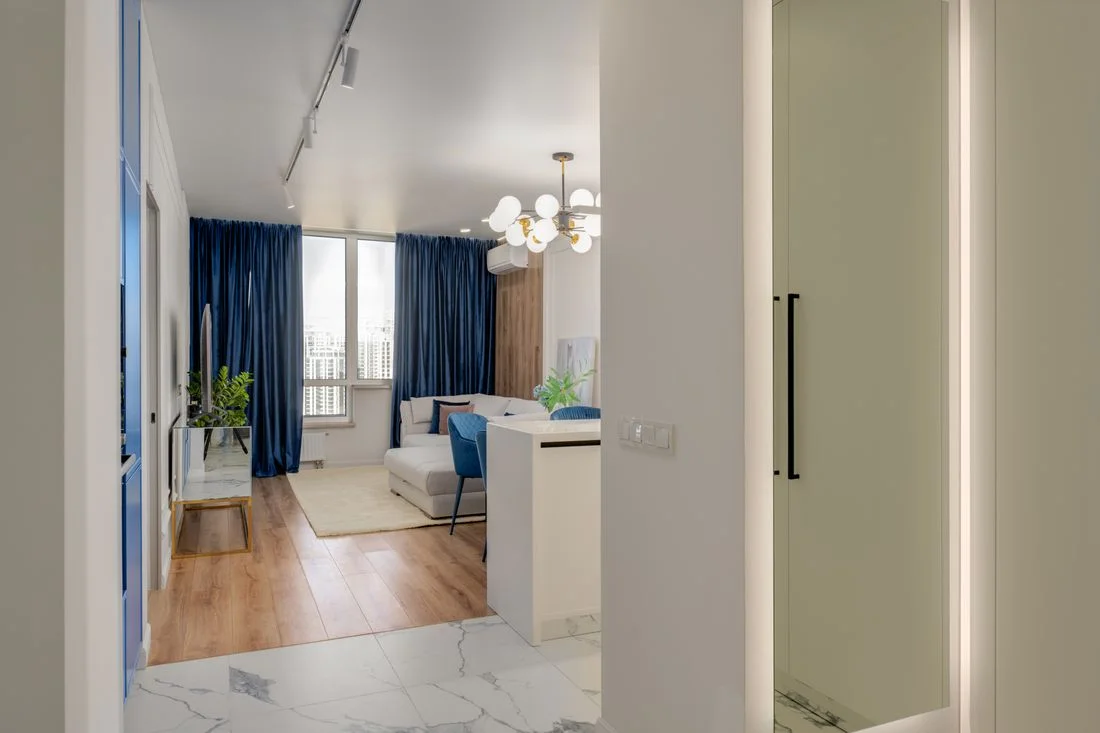
First, photograph the wall from the room entrance. Include the desk, chair, monitor, and any storage beside it. This reveals the available visual space more accurately than looking at the bare wall while standing directly in front of it.
Work with the desk's outline
A single medium-size work can give a compact desk a clear center. Several smaller pieces make sense if the wall is wide enough to hold them as a group. Avoid spreading little frames across the entire room just to fill empty space; the gaps can become more noticeable than the pictures.
Use paper templates to compare arrangements. Keep one edge or center line consistent as a starting point, then adjust for the shape of the desk lamp and screen. There is no need to make the art perfectly symmetrical if the furniture beneath it is not. A tall lamp at one end already contributes height to the composition.
Consider your working view
Art on a side wall may be easier to enjoy during the day than art directly behind a large monitor. If the desk faces a wall, leave enough quiet space near the screen so the setup does not feel visually compressed. The most detailed picture might work better a little farther from your direct line of sight.
Glass can reflect a window or task light. Check the proposed positions with the lamp on and from a seated angle. Moving a frame a few inches or choosing a different wall may solve the problem without changing the artwork. Valuable or delicate works deserve advice from a framer about glazing, light exposure, and suitable display conditions.
Keep the rest of the desk legible
Choose a limited family of frame finishes. The pictures themselves can vary in subject and size; repeating one frame material provides enough connection. A mix of warm wood and a small amount of black can relate to a desk and chair without looking like a purchased set.
After hanging, remove a few loose objects from the desktop and look again from the entrance. If the wall has become the decorative focus, the working surface can remain simpler. Leave space for a notebook to open and for the lamp to move. A successful work wall supports the room while allowing the desk to keep doing its ordinary job.