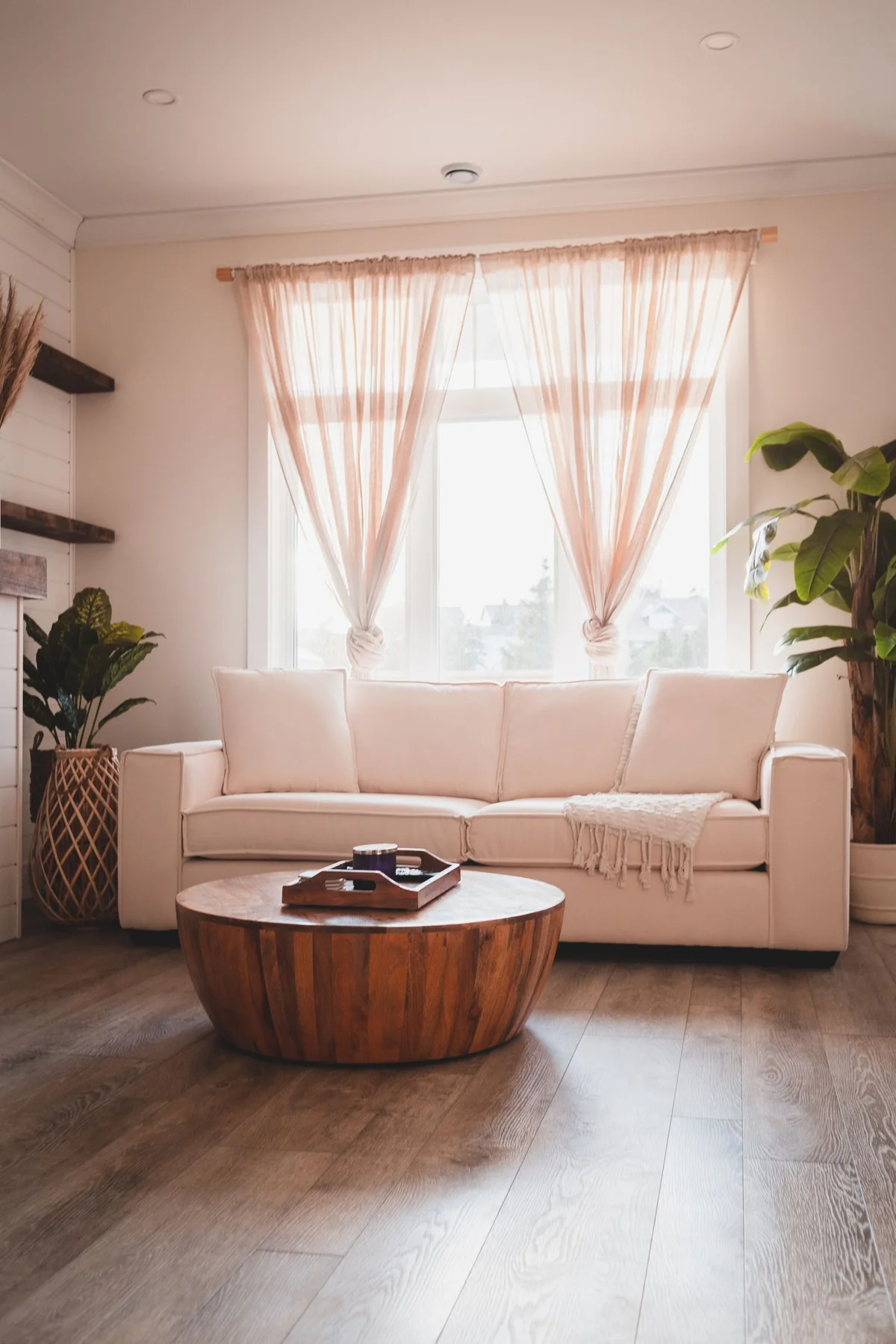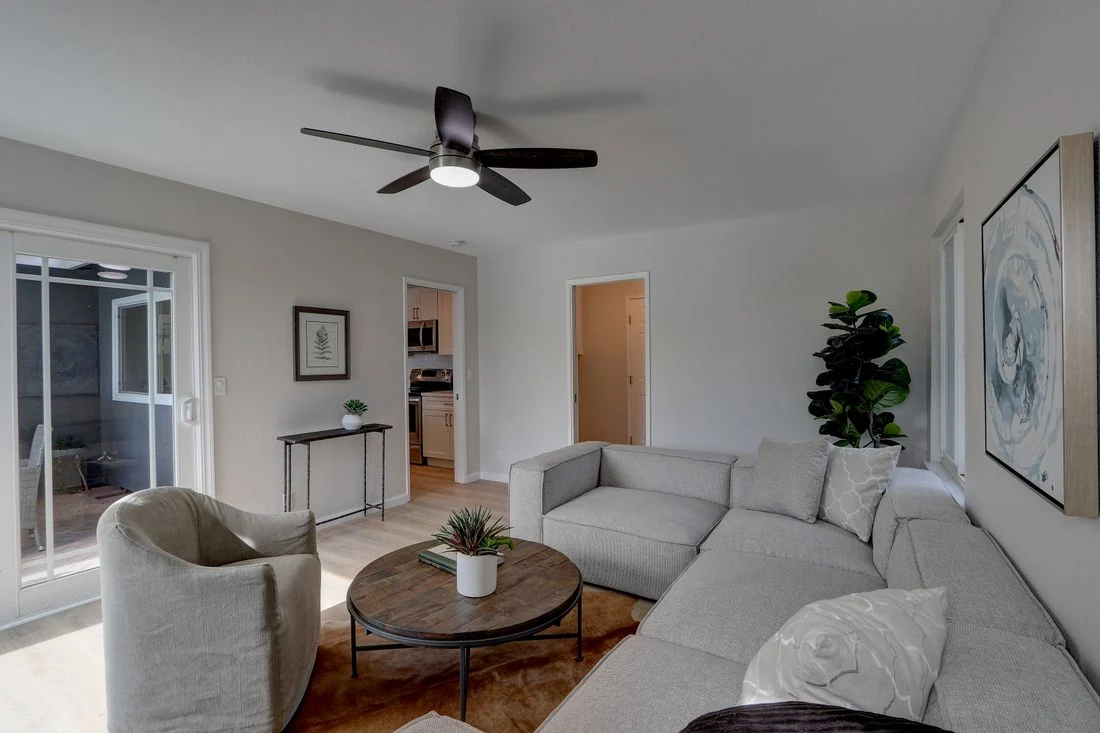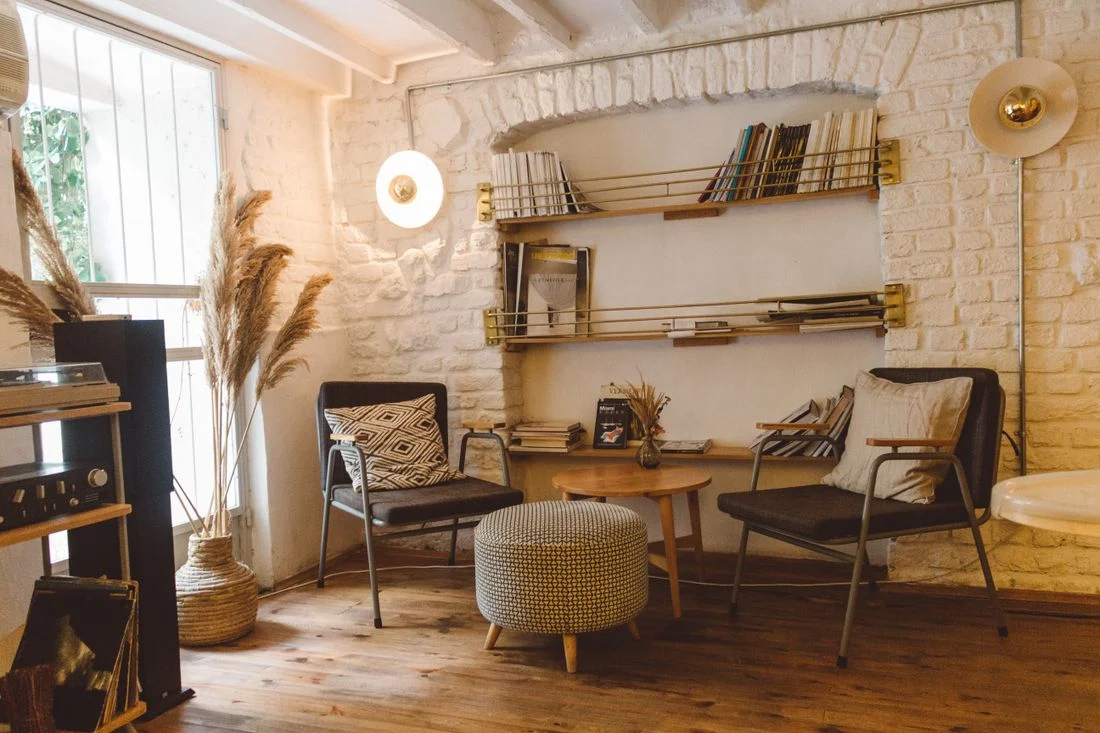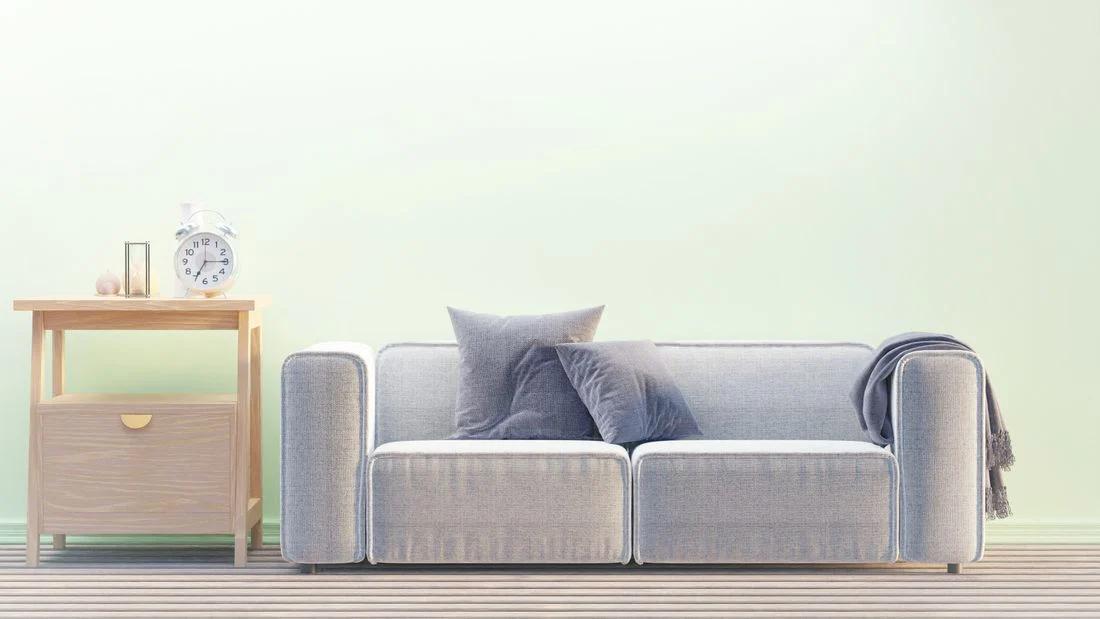
The most useful test for a side table is simple: sit down and reach for it. A beautiful table placed too high, too far back, or beyond a wide sofa arm may be awkward every time you set down a drink. Begin with the seat and the objects you use there.
Match the working height
Measure the sofa or chair arm, then compare it with the proposed tabletop. The goal is an easy reach without an exaggerated lift or lean. Armless chairs and deeply cushioned sofas may need a different relationship than an upright armchair. Test with an existing small table or a stable temporary surface before ordering.
Think about where the table will stand. Beside a sofa arm, it may need enough depth to reach the seated person. Next to a chair angled into the room, a round top can be convenient from more than one position. Check that the base does not put a leg exactly where your feet land.
Choose an honest surface area
List the things that routinely live there. A lamp, glasses, drink, and book can fill a small top quickly. If the table is also the landing place for mail, solve that separate habit rather than buying an enormous surface beside the sofa.
A drawer can contain remotes or charging cables, but only if it opens without hitting the furniture. An open lower shelf is useful for books you reach for, less useful when it merely collects objects that have no other home. Leave enough room to clean around and beneath the table.
Let a pair be related rather than identical
Two sides of a sofa do not always need the same table. One may hold a reading lamp while the other supports only a mug. Similar heights, a shared material, or a repeated color can connect different forms. Keep both visually appropriate to the sofa rather than forcing symmetry onto different tasks.
Before settling on the position, open nearby doors and walk through the room. A side table that improves one seat but obstructs the main path is in the wrong place or the wrong size. It should make sitting down easier without complicating the journey past it.