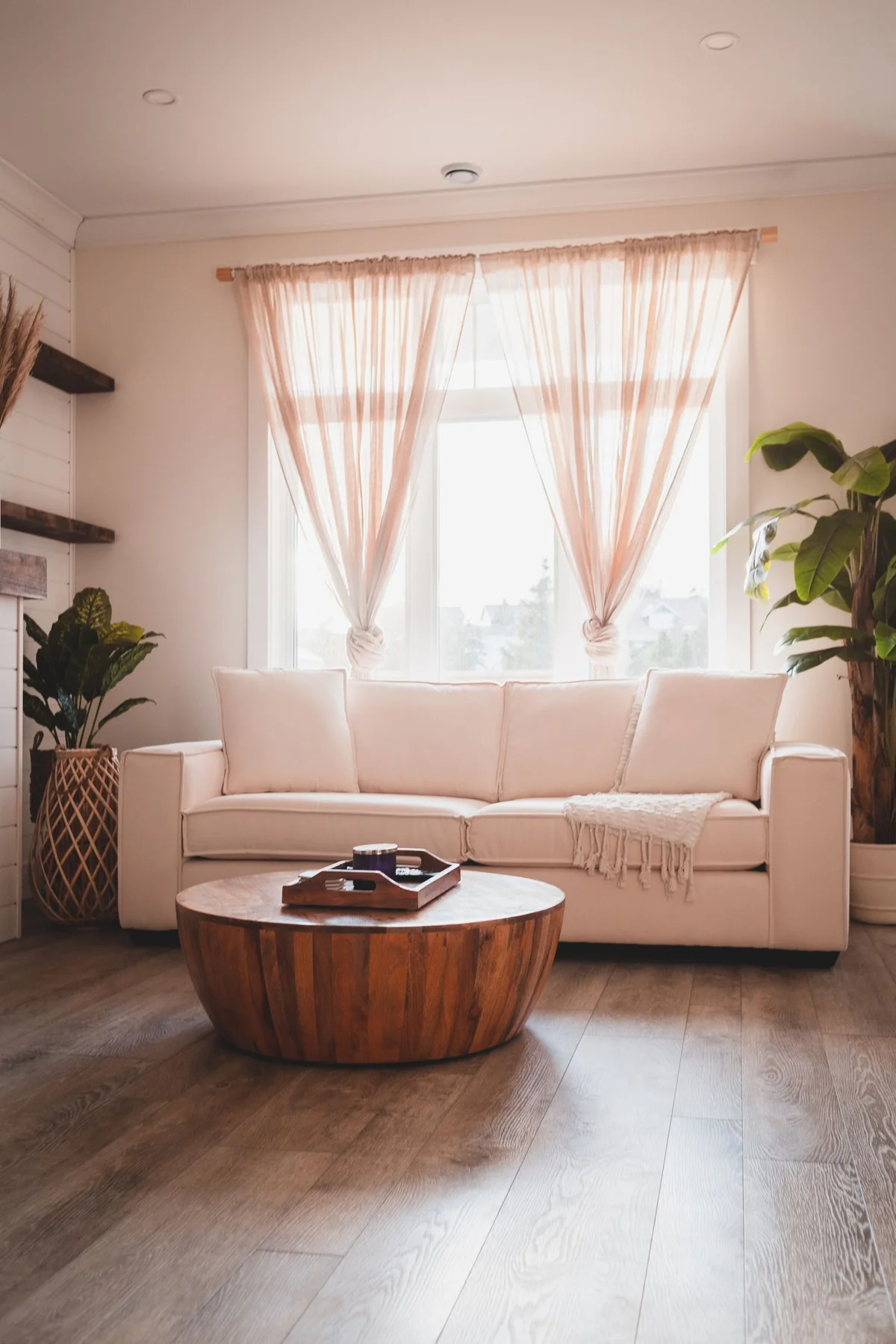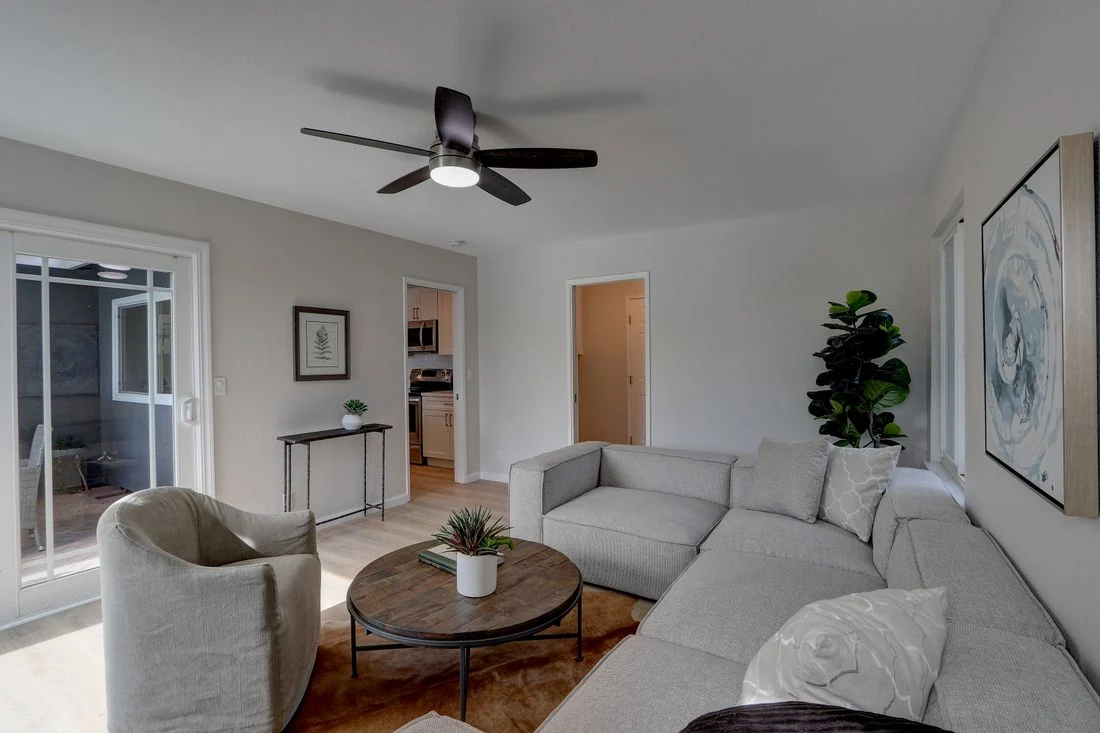
Furniture bought for a home you may leave soon needs to work now without becoming impossible to place later. That does not mean every piece should fold, stack, or hide storage. It means avoiding unnecessary dependence on one very specific room shape.
Watch the dimensions that limit movement
Overall length is only one concern. Deep sofas, tall cabinets, and wide arms can be difficult to carry through doors or around stair landings. Read the packaged and assembled dimensions, and check whether legs or other parts are designed to be removed. Do not assume a piece comes apart simply because it looks modular.
Measure the delivery route in the current home as carefully as the intended position. If the next home is unknown, moderate dimensions offer more placement options than a very large piece chosen to fill the current wall exactly.
Prefer clear, useful roles
A compact side table can move from a sofa to a bedside. A freestanding cabinet can serve different rooms when its proportions and interior suit more than one collection. A dining chair may occasionally join a living-room conversation. These second uses are valuable only if the piece performs its main job well.
Be cautious about furniture that claims too many functions. A desk that is uncomfortable for work will not become a good purchase because it can also be a console. A storage ottoman should be comfortable and appropriate for sitting if you plan to use it as a seat.
Keep combinations separable
A sofa with separate chairs offers different arrangement options from a large fixed sectional. Smaller shelving units can sometimes stand together or apart, provided each is installed and secured as instructed. Buy connecting components only after understanding how the system is intended to be assembled.
Keep assembly instructions and spare hardware with a clear label. When disassembling furniture for a move, follow the manufacturer's process and protect the parts. Repeated assembly is not equally suitable for every construction, so ask about that if moving is a likely part of the plan.
Avoid overfitting the look
Choose finishes you can imagine beside different floors and wall colors. That does not require everything to be beige. A favorite strong-colored chair can adapt well when it has a manageable size and an independent role. Highly specific built-in effects or unusually shaped pieces may demand more from the next room.
Before buying, imagine two alternative arrangements using the piece. If you can only picture it in the exact current corner, decide whether its immediate value justifies that limitation. Adaptability is a useful advantage, but it should be a concrete choice rather than an excuse to buy furniture you do not enjoy.