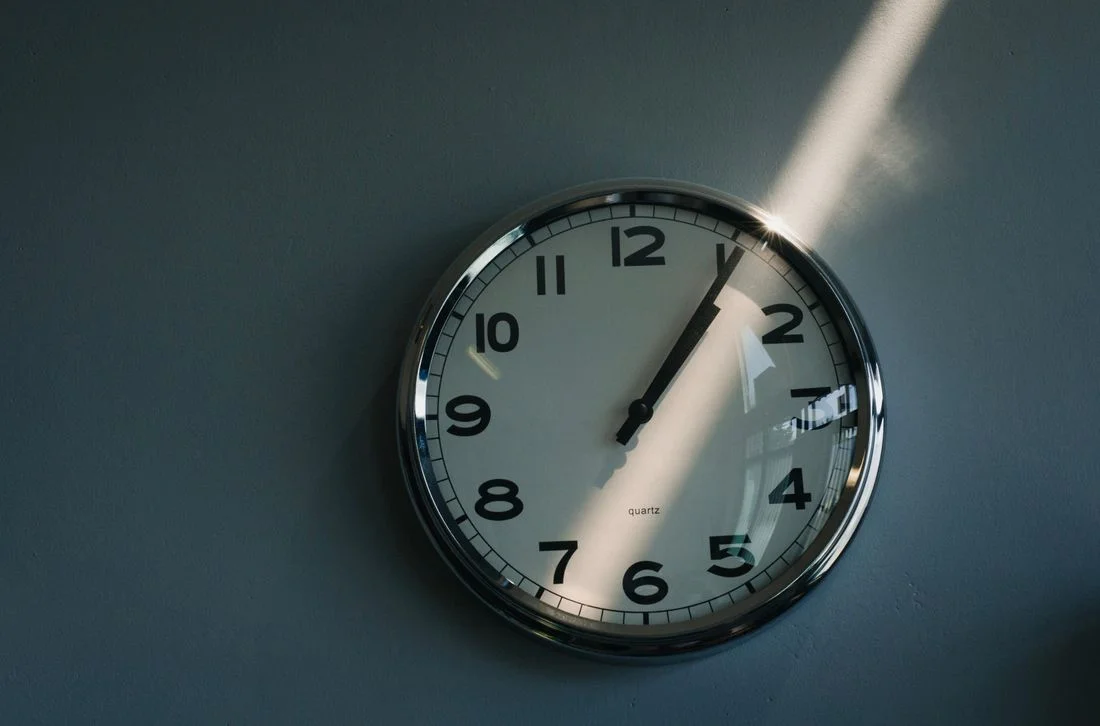
A wall clock is one of the few decorative objects you expect to read from across a room. That makes its face more important than the product photograph suggests. Thin hands on a pale dial may look elegant close up but disappear from the sofa, especially in evening light.
Start at the place where you are most likely to check the time. Measure the distance to the proposed wall and note the angle. A clock beside the television, above a doorway, or near the dining table will have a different relationship to your normal line of sight.
Make a full-size test
Cut a paper circle to the advertised diameter and sketch a simple face on it. Hold it in position and look from the seat. The test is not a perfect substitute for the actual dial, but it quickly shows whether the size is implausibly small or dominates the wall.
Look for contrast between the hands and background, and between the hour marks and face. If quick reading matters, familiar numerals may serve you better than a completely blank dial. Check whether a glass cover reflects the window or lamp from the main viewing position.
Listen as well as look
A ticking mechanism can become noticeable in a quiet sitting room or an open-plan bedroom. Read the movement description and, where possible, listen to the actual clock. Terms such as silent are worth confirming through the seller's specifications and return policy rather than assuming every clock with a similar appearance works the same way.
The frame can repeat one material already in the room: wood, black metal, or a small amount of brass. Avoid surrounding it with many equally round objects unless that repetition is deliberate. A clock often looks more settled with a little clear wall around it.
Finally, think about battery access and mounting. You will need to remove or reach the clock occasionally, so a high awkward location creates recurring work. Follow the manufacturer's hanging instructions and keep the dial level. A clock that is simple to read, quiet enough for the room, and easy to maintain can remain useful long after a decorative trend passes.