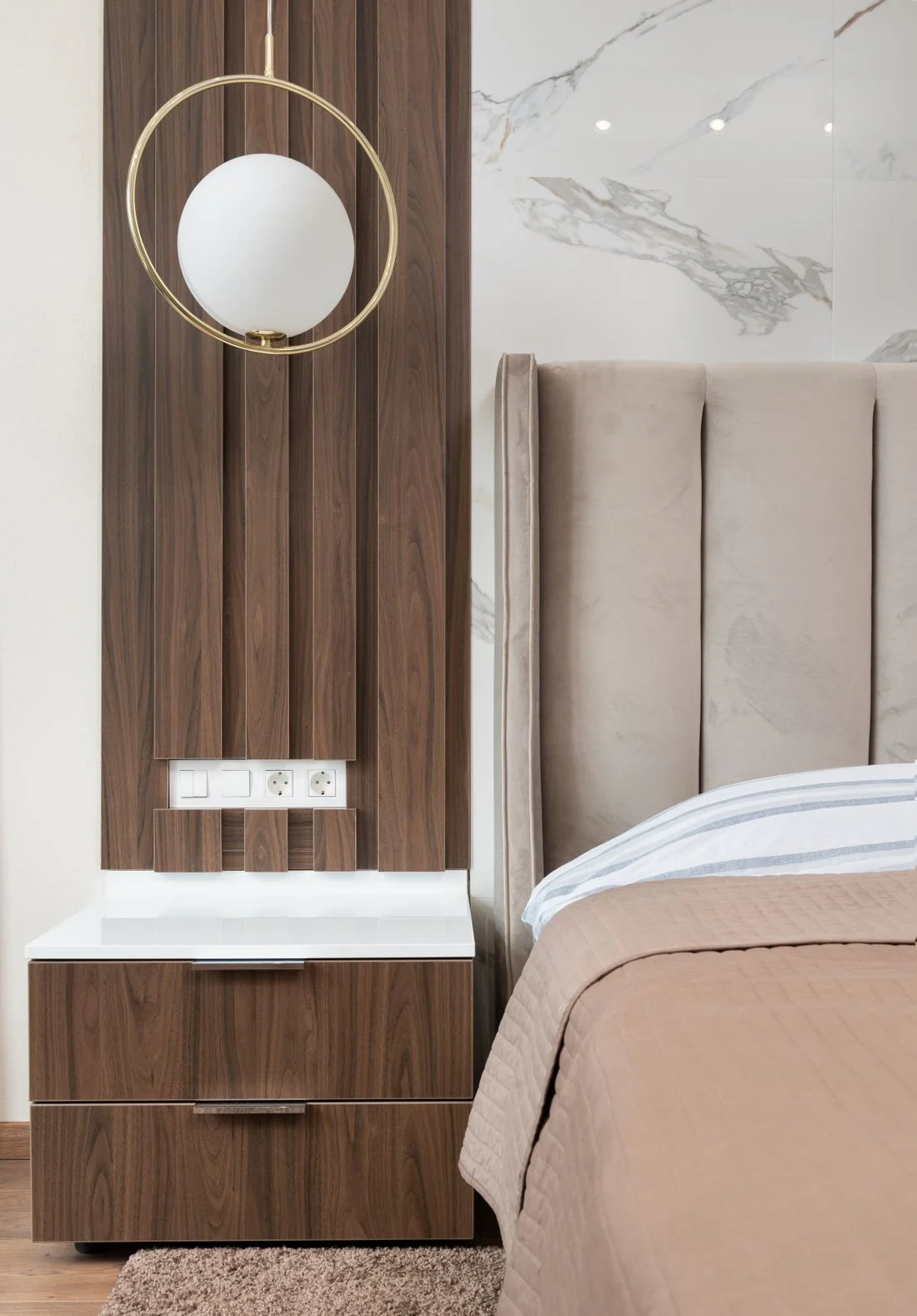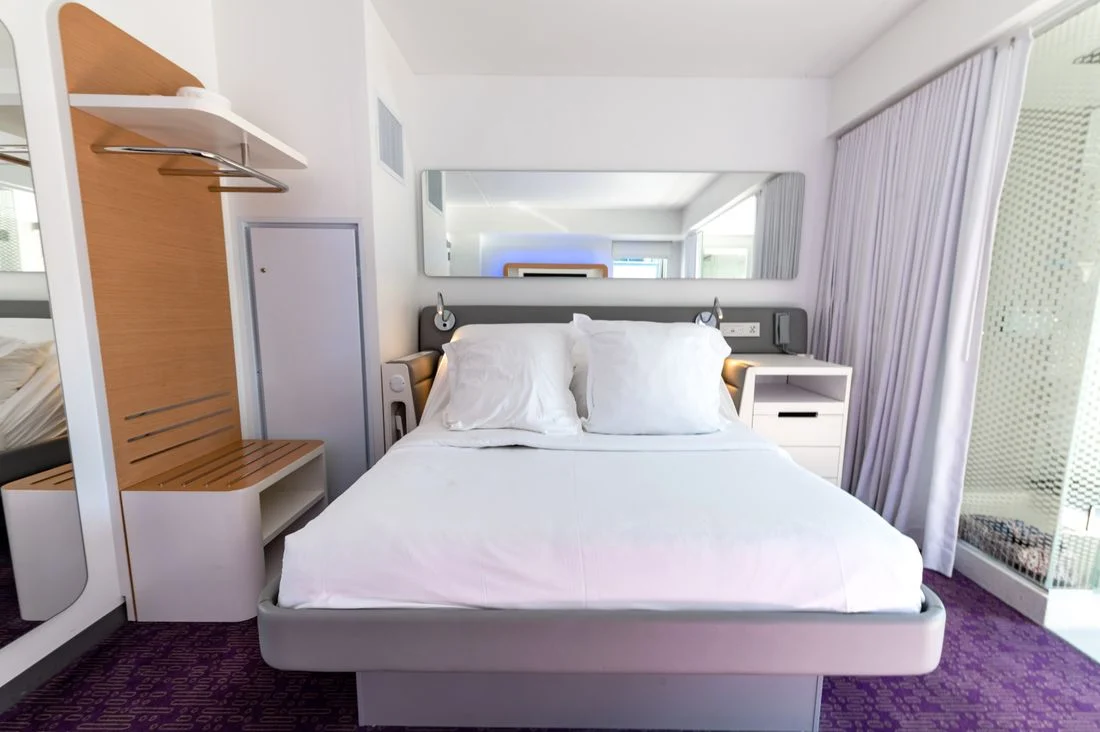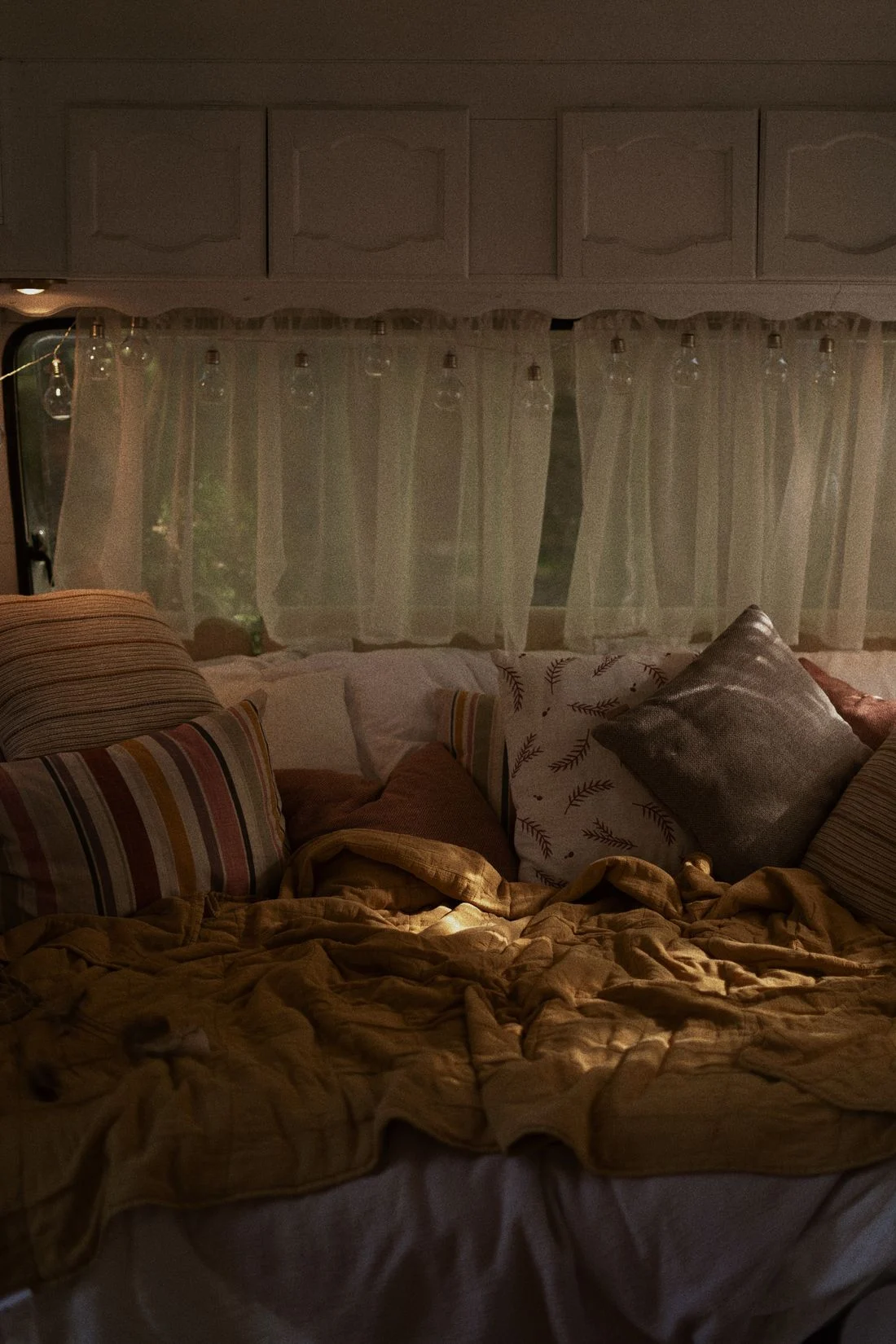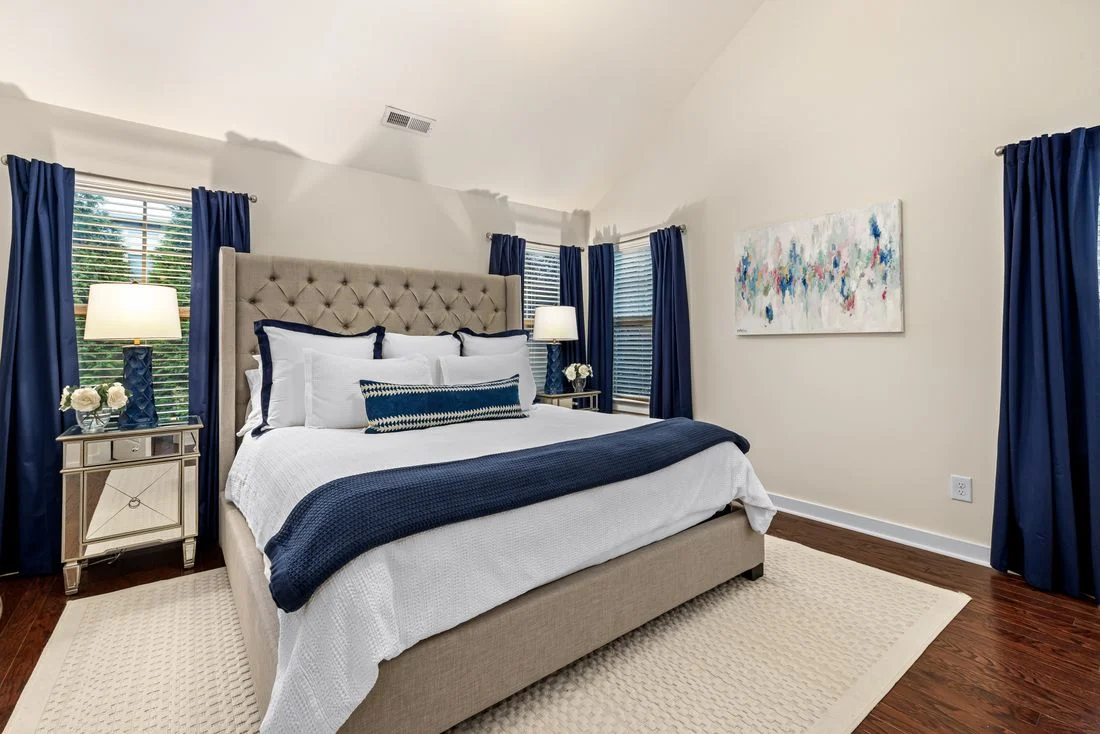
A bedroom rug is most useful where you step out of bed. A large section hidden beneath the mattress may help connect the furniture visually, but it does little for your feet if the exposed strip is too narrow. Begin by marking the places where you stand and walk each morning.
Compare a large rug with separate runners
A single rug can extend beneath the bed and out along its sides and foot. It creates one clear field, but moving it for cleaning may require shifting heavy furniture. Two smaller bedside runners can serve the landing areas while leaving more of the floor visible.
Neither approach is automatically correct. A shared bed with access on both sides may benefit from symmetrical landing areas, while a bed against one wall has different needs. Consider the room's doors, wardrobe, and actual routes before choosing a familiar rug size.
Mock up the exposed edges
Measure the complete bed frame, including rails and projecting legs. Tape the rug outline on the floor and look at the visible area around the bed. For example, a rug only slightly wider than the frame may disappear beneath a hanging duvet, leaving little usable surface at either side.
Decide whether bedside tables will sit on the rug or on the floor. Avoid an accidental position where a table has an unstable combination of feet on different levels. Check the thickness of the rug and any underlay against nearby door swings.
Think about care and movement
Use a pad suitable for the rug and flooring, following the relevant instructions. Keep exposed edges flat and avoid creating a trip point on the route to the door. A plush pile may feel pleasant but can make a rolling chair or storage drawer harder to use if those share the same area.
Read the care requirements for the actual rug. A washable label does not mean a very large piece will fit the washer you have. Consider how the rug will be lifted, dried, and returned beneath the furniture before choosing it mainly for that feature.
Finally, view the pattern with the bed in place. A large central motif may be mostly hidden, while a border remains visible. Choose for the portion you will actually see and use. The rug should improve the room at floor level, not merely make sense as a complete rectangle in a product photo.